The Human Rights Writers Association of Nigeria (HURIWA) has expressed profound concern over the recent judgment of the Federal High Court in Lokoja setting aside its earlier decision that led to the registration of the Nigeria Democratic Congress (NDC).
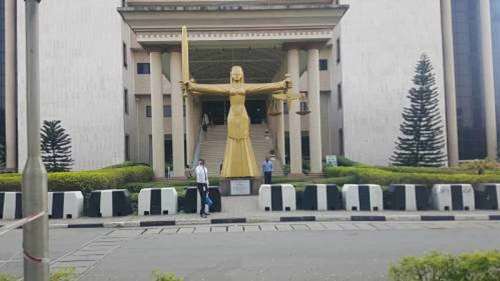
HURIWA noted that the development has generated widespread apprehension among democratic stakeholders, civil society organisations and millions of Nigerians who believe in political plurality and constitutional democracy.
While HURIWA respects the authority of the courts and acknowledges the constitutional right of litigants to seek judicial remedies, “we are compelled to state that the circumstances surrounding this judgment have raised troubling questions about the sanctity of judicial decisions, the stability of democratic institutions and the future of opposition politics in Nigeria.”
“At a time when Nigerians are grappling with unprecedented economic hardship, worsening insecurity, rising unemployment and declining public trust in governance, it is unfortunate that the nation’s political discourse is increasingly being dominated by controversies that create the impression that democratic institutions are being deployed to constrict rather than expand political participation.”
The Group noted “The controversy surrounding the NDC is no longer merely a legal matter. It has evolved into a national democratic concern because of the implications it carries for political inclusion, electoral competition and citizens’ constitutional rights to freely associate and participate in governance.”
In a statement signed by the National Coordinator, Emmanuel Onwubiko and made available to VDCInsights, HURIWA said it was “particularly concerned by the growing perception among Nigerians that opposition politics is coming under coordinated pressure ahead of the 2027 general elections. Whether such fears are justified or not, the responsibility lies with state institutions to act transparently, independently and in strict compliance with constitutional principles in order to maintain public confidence.”
The group pointed out “Democracy thrives when political competition is encouraged, when citizens have multiple choices at the ballot box and when institutions remain neutral arbiters in political disputes. Democracy begins to weaken when citizens perceive that political outcomes are being predetermined through administrative, judicial or extra-political mechanisms.”
HURIWA stressed “The judiciary occupies a sacred position in any democracy. It is the final refuge of the ordinary citizen and the last line of defence against abuse of power. Consequently, judges and judicial officers must be guided not only by the letter of the law but also by the overriding obligation to preserve public confidence in the integrity, impartiality and independence of the justice system.”
HURIWA warns that any perception that judicial processes are being weaponised for political ends poses a grave danger to constitutional democracy. History has repeatedly demonstrated that democratic institutions are weakened not only by overt authoritarianism but also by subtle and incremental encroachments on political freedoms and institutional independence.
We are equally disturbed by recent political developments which, when viewed collectively, are fuelling concerns about the shrinking of democratic space. The increasing use of state institutions in politically sensitive matters, the apparent hostility towards emerging political platforms, and the growing atmosphere of uncertainty surrounding opposition politics have created a climate that requires urgent reassurance from those entrusted with the stewardship of the Nigerian state.
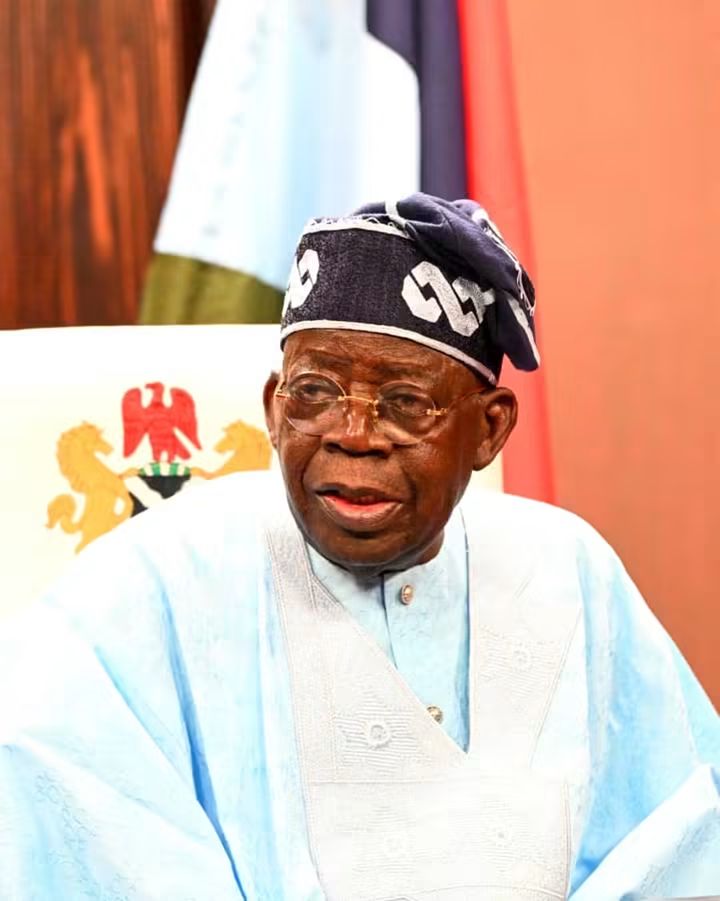
HURIWA therefore calls on President Bola Ahmed Tinubu to publicly and unequivocally reaffirm his commitment to multiparty democracy, political inclusion and free electoral competition. A government that enjoys the confidence of the people should have no reason to fear opposition parties, dissenting voices or alternative political movements.
We also call on the Independent National Electoral Commission (INEC) to maintain strict neutrality and ensure that its actions are guided solely by the Constitution and relevant electoral laws. The Commission must resist any pressure, direct or indirect, capable of undermining public confidence in its independence.
Furthermore, we urge the National Judicial Council (NJC) to continue strengthening mechanisms that promote judicial accountability, transparency and public trust. The integrity of the judiciary must never be allowed to become a casualty of partisan political contests.
To the international community, democracy advocates and development partners, HURIWA urges sustained attention to developments within Nigeria’s democratic space. The preservation of democratic values, electoral integrity and institutional independence remains essential to political stability and sustainable development.
We equally call on political parties, civil society groups, youth organisations, professional associations and democratic activists to remain vigilant and committed to peaceful, lawful and constitutional engagement in defence of democratic principles.
The struggle to preserve democracy is not the responsibility of politicians alone. It is the collective responsibility of all Nigerians.
What is at stake today extends far beyond the registration or deregistration of any single political party. What is at stake is the future of democratic competition, the independence of public institutions, the credibility of the electoral process and the constitutional right of Nigerians to freely choose those who govern them.
Nigeria’s democracy was built through decades of sacrifice, resistance and struggle. It must not be weakened by actions that create doubts about the neutrality of institutions or the openness of the political process.
HURIWA therefore urges all stakeholders to place national interest above partisan calculations and ensure that Nigeria remains a vibrant, inclusive and genuinely democratic nation where no citizen, political party or political movement is denied its legitimate place within the democratic process.