For decades, Sokoto State has grappled with some of the most difficult educational challenges in Nigeria. High rates of out-of-school children, inadequate school infrastructure, low female enrolment, shortages of qualified teachers, and poor learning environments have combined to slow human capital development in a state historically renowned as a centre of Islamic scholarship and learning.
These challenges have not merely affected the education sector; they have shaped the state’s broader development trajectory. In today’s knowledge-driven world, states that fail to invest in education inevitably struggle with poverty, unemployment, insecurity, and economic stagnation. Conversely, societies that prioritize education build the foundation for prosperity, social stability, and sustainable growth.
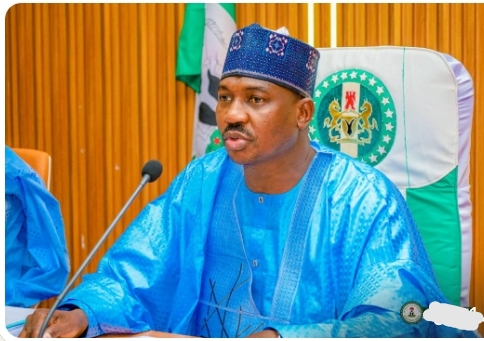
It is against this backdrop that Governor Ahmed Aliyu’s education agenda deserves serious attention. Since assuming office, the governor has treated education not as a routine government responsibility but as a strategic instrument for transforming Sokoto State. This commitment is reflected in policy choices, budgetary priorities, infrastructure investments, and targeted interventions designed to expand access to quality education across the state.
Perhaps the most ambitious manifestation of this vision is the ongoing implementation of the Adolescent Girls Initiative for Learning and Empowerment (AGILE) Project. Under the programme, the Sokoto State Government recently commenced the construction and upgrading of 56 secondary schools across the state.
This intervention addresses one of the state’s longstanding educational challenges: inadequate access to secondary education, particularly for girls and children in underserved communities. The project will upgrade 28 primary schools into Junior Secondary Schools and elevate another 28 Junior Secondary Schools to Senior Secondary School status.
The significance of this intervention goes beyond the physical construction of classrooms. By bringing secondary education closer to communities, the government is tackling one of the major barriers to school attendance, especially among adolescent girls who often face cultural, economic, and logistical obstacles in accessing education.
The project also demonstrates an understanding that educational quality matters as much as access. Each of the 56 schools is being equipped with modern laboratories for Chemistry, Physics, Biology, and Computer Science, alongside classrooms, multipurpose halls, solar-powered water facilities, and sanitation infrastructure.
For a state seeking to prepare its young population for participation in a rapidly changing economy, investments in science, technology, and digital learning are particularly significant. They signal a shift from merely increasing enrolment figures to improving learning outcomes and enhancing competitiveness.
The focus on girls’ education is equally noteworthy. Across the developing world, evidence consistently shows that educating girls produces far-reaching social and economic benefits. Educated girls are more likely to become economically productive adults, contribute to healthier families, delay early marriage, and invest in the education of future generations.
By supporting programmes that remove barriers to girls’ education, the Ahmed Aliyu administration is making an investment whose dividends will extend far beyond the classroom. This commitment is further reflected in the establishment of the Sokoto All Girls Science Academy, equipped with modern facilities designed to encourage more girls to pursue careers in medicine, nursing, engineering, and other professional fields.
The administration’s educational vision is not limited to brick-and-mortar projects. Recognizing that the future belongs to digitally literate societies, the government has embarked on initiatives aimed at integrating technology into teaching and learning.
The decision to provide 2,500 computers and free internet access to 100 secondary schools represents a strategic intervention in a state where many students have historically had limited exposure to digital tools. This effort is complemented by the training of hundreds of teachers in digital literacy skills, ensuring that technology investments are matched by human capacity development.
In the contemporary global economy, digital literacy is no longer an optional skill. It has become a prerequisite for participation in education, employment, entrepreneurship, and innovation. By exposing students and teachers to digital learning tools, the administration is helping to bridge the technological divide that has historically disadvantaged many northern states.
Another indication of the governor’s commitment to educational development is reflected in the state’s 2026 budget. The allocation of ₦115.95 billion to education represents one of the largest sectoral commitments in the budget and accounts for approximately 15.3 percent of total expenditure.
This is significant not merely because of the amount involved but because budgets reveal government priorities. In an environment where states face competing demands for infrastructure, healthcare, security, and social services, allocating such a substantial share of resources to education sends a clear message about the administration’s development philosophy.
The funds are targeted at critical areas including school rehabilitation, construction of new facilities, procurement of learning materials, support for tertiary institutions, and improvement of teaching and learning conditions. The allocation also aligns with UNESCO’s recommended benchmark of 15 to 20 percent budgetary commitment to education, underscoring the administration’s determination to place human capital development at the centre of governance.
Equally important are interventions that directly support students and families. The government’s payment of WAEC and NECO examination fees, settlement of scholarship obligations, and provision of educational materials have reduced some of the financial burdens that often force students out of school.
These measures are particularly relevant in a state where many families struggle with economic hardship and where even relatively modest educational expenses can constitute barriers to learning.
Beyond classrooms, laboratories, and digital learning facilities, the Ahmed Aliyu administration is also addressing a less-discussed but equally important challenge confronting many students in Sokoto State: access to school itself.
In many communities, particularly those located on the outskirts of urban centres and in semi-rural settlements, the distance between home and school can become a major obstacle to regular attendance. For children from low-income families, transportation costs often constitute an additional burden, while long daily treks discourage attendance and contribute to absenteeism and dropouts.
Recognizing this reality, the Sokoto State Government has expanded its free school bus programme as part of a broader strategy to remove barriers to education. In the latest phase of the initiative, additional school buses were deployed to serve students in Arkilla and surrounding communities.
The routes were carefully designed to cover densely populated areas and educational corridors, ensuring that students from communities such as Rugga Waru, Arkilla Federal Low Cost Housing Estate, Arkilla State Low Cost Area, Kalambaina, Wajake, and Gumbi can commute to school safely and at no cost to their families.
The significance of this intervention extends beyond transportation. Educational research consistently shows that improving access and reducing the hidden costs of schooling can significantly boost enrolment, attendance, retention, and academic performance. For many families, especially those with multiple school-age children, free transportation can make the difference between regular attendance and sporadic participation in formal education.
The programme is particularly important for girls’ education. By providing safe and reliable transportation, the government is helping to address concerns that often discourage parents from sending adolescent girls to distant schools. This complements other initiatives such as the AGILE Project and the Sokoto All Girls Science Academy, both of which seek to expand educational opportunities for female students.
Perhaps most importantly, the administration has demonstrated a commitment to sustainability by assuming responsibility for fueling, servicing, and maintaining the buses while involving community leaders in monitoring their use. This approach reflects an understanding that educational interventions must be sustained over time if they are to produce meaningful results.
The administration’s response to the plight of Sokoto medical students displaced by the conflict in Sudan further illustrates its commitment to human capital development. Rather than allowing the affected students to become casualties of circumstances beyond their control, the government facilitated their transfer to Usmanu Danfodiyo University Medical College, ensuring continuity in their education.
Beyond the humanitarian dimension, the intervention protected an important investment in the state’s future healthcare workforce. Every medical student successfully trained today represents a future doctor who may contribute to improving healthcare delivery in Sokoto and beyond.
There are also encouraging indications that these educational investments are beginning to yield results. According to state officials, more than 800,000 children have now been enrolled in basic education schools across the state, reflecting a significant increase in public school enrolment. While long-term indicators such as examination performance, retention rates, and learning outcomes will ultimately provide the clearest measure of success, rising enrolment remains an important signal that confidence in the public education system is being restored.
No serious observer would suggest that Sokoto’s educational challenges have been completely resolved. The problems accumulated over decades cannot disappear within a few years. However, what is increasingly evident is the emergence of a coherent strategy aimed at addressing both access and quality simultaneously.
From the construction of new schools and laboratories to teacher training, digital literacy programmes, free transportation services, examination support, scholarships, and tertiary education interventions, the Ahmed Aliyu administration appears to understand that educational transformation requires a comprehensive approach rather than isolated projects.
Significantly, these interventions have been pursued alongside the administration’s broader commitment to fiscal discipline. State officials maintain that many of these achievements have been accomplished without resorting to new commercial borrowing, a development that further highlights the government’s emphasis on prudent resource management.
The true measure of leadership lies not merely in managing present realities but in preparing society for the future. By placing education at the centre of governance, Governor Ahmed Aliyu is making a strategic wager on human capital as the engine of Sokoto’s development. If sustained, these investments could help produce a generation better equipped to compete, innovate, and contribute meaningfully to the state’s economic and social progress.
For a state seeking lasting transformation, few investments are likely to yield greater returns than the education of its people. On that score, Governor Ahmed Aliyu’s administration has positioned education not simply as a sector of government activity, but as the foundation upon which a more prosperous, competitive, and inclusive Sokoto State can be built
By Louis Achi