There are moments in the history of a state when a leader’s decision is hastily and harshly judged, not on the possibilities it could create, but on the argument that there are more “pressing issues” demanding attention. In 1979, the late Chief Sam Mbakwe mobilised the people of the old Imo State to build the Imo Airport, now the Sam Mbakwe International Cargo Airport. The decision was fiercely criticised at the time, with many questioning its necessity and priority.
Yet decades later, the airport has become one of the busiest in the country, serving millions of travellers and connecting the South-East to other parts of Nigeria. What appeared to some at the time to be a “misplaced” undertaking has ultimately become an enduring piece of economic infrastructure, demonstrating that some decisions whose value is not immediately apparent can, with time, prove to be among the most consequential investments in a state’s future.
That history offers an instructive parallel for Sokoto State.
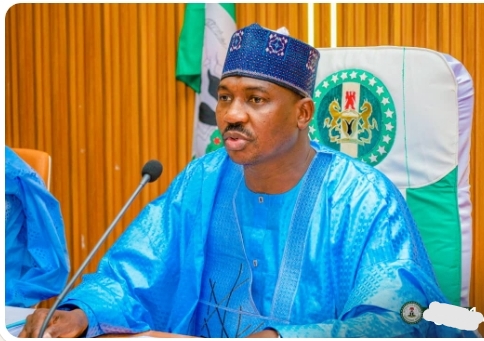
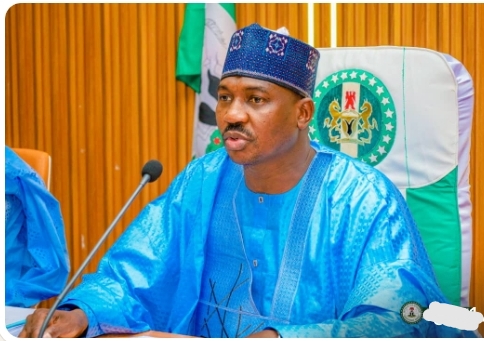
Since the news broke that Governor Ahmed Aliyu had established Caliphate Air, named after the state known as the Seat of the Caliphate, the immediate reaction has, understandably, centred on the timing and whether a state facing some development challenges, like many others, should venture into commercial aviation. These are legitimate questions, and public investment must always be subjected to scrutiny. But history often judges monumental decisions differently from the way they are judged at the moment when they are made. Experience has shown that transformative infrastructure is often conceived ahead of existing demand, and to take advantage of future growth. Roads, airports, railways and other strategic investments do not merely respond to development; in many cases, they help create the conditions that make development possible.
Given the enormous cost of developing and maintaining aviation infrastructure, several state governments have increasingly been compelled to play a more active role in Nigeria’s commercial aviation industry. From building airports to establishing scheduled passenger services, sub-national governments are beginning to recognise aviation not merely as a means of moving people from one place to another, but as strategic infrastructure capable of opening new economic possibilities. Akwa Ibom State, the pioneer in this regard, has demonstrated what is possible through Ibom Air, which has not only strengthened the state’s connectivity but has also given Akwa Ibom State valuable visibility and publicity across the country,and outside.
Sokoto State’s entry into the aviation business through Caliphate Air will prove to be one of those decisions whose full significance will only become apparent with time. Years from now, the professionally managed airline, commercially sustained by a growing passenger base and integrated into the state’s wider economy, including the export of the state’s agricultural products, Governor Ahmed Aliyu, who is increasingly proving himself to be a leader with a clear vision of the future, would be remembered not simply as the governor who established an airline, but as the leader who had the foresight to recognise that the state situated on Nigeria’s north-western frontier could not fully unlock its economic potential without confronting the constraints imposed by distance and limited connectivity. The real measure of his decision, therefore, will be that the Caliphate Air ultimately becomes a dependable economic link between Sokoto, the rest of Nigeria and the world.
Sokoto State has now joined this growing league with the unveiling of two 50-seater Embraer ERJ-145 aircraft in July 2026, with a third aircraft expected to join the fleet before the end of the year or early 2027. The choice of the ERJ-145 is also deliberate, it reflects the need to balance operational efficiency with safety and cost-effectiveness. The aircraft are relatively economical to operate, making them suitable for an emerging airline seeking to build a sustainable passenger base without imposing unnecessarily high operating costs. For Caliphate Air, therefore, the decision to begin with these aircraft is about starting with a fleet that matches the airline’s present market projection while providing room for gradual expansion as passenger demand and Sokoto’s wider economic activity grow.
The real significance of Caliphate Air lies in what Sokoto State intends to achieve with the airline.
Governor Aliyu has explained that the airline is designed to provide scheduled passenger services, promote tourism and business travel, facilitate the easy movement of agricultural and livestock products, and strengthen connectivity for Hajj and Umrah travellers. Given the Governor’s background as an accountant and his emphasis on financial discipline, these objectives are expected to be pursued with a clear eye on efficiency, sustainability and measurable results. He clearly wants a successfully ran Caliphate Air, which will be an important component of state’s broader economic strategy, linking the people, businesses, agricultural products and investment opportunities to markets within Nigeria and beyond.
Sokoto State’s geographical position makes the argument for improved connectivity particularly compelling. The state sits at the north-western edge of Nigeria, sharing borders with Niger Republic and lying considerable distances from the country’s major commercial centres. For businesses, investors, and visitors, travel by road can be very discouraging. Time spent travelling is itself a cost, while unreliable or unreliable transportation can discourage investors that are critical.
This is where Caliphate Air’s strategic value should be assessed.
The airline is potentially a powerful tool that will reduce the economic penalty that distance has imposed on Sokoto State. Reliable and regular connections between Sokoto and major commercial centres such as Abuja, Lagos and Kano will make it easier for investors, government officials, development partners and other travellers to reach the state without the time-consuming challenges often associated with long-distance road travel. Improved air connectivity will also make the state more attractive to investors who value accessibility, while enabling businesses already operating in the state to maintain stronger links with their customers, suppliers and partners across the country. In this sense, Caliphate Air is not simply about moving passengers; it is about bringing Sokoto State closer to the markets, and opportunities that can accelerate its economic development.
The real test, which the state government hasn’t taken any chances with is that Caliphate Air is built around a credible and commercially sustainable business model. This is an issue the Sokoto State Executive Council recognises and which is why the consultant handling the project is constantly subjected to necessary questions; on its viability, operational structure, profitability and long-term sustainability. The objective is not simply to launch an airline, but to ensure that every critical aspect of its operations is properly considered. That level of scrutiny is important because the success of Caliphate Air will ultimately depend on the soundness of the decisions taken to keep it flying efficiently and profitably.
The initial decision to operate with two aircraft, with a third expected, will provide the airline with some operational flexibility. An airline dependent on a single aircraft can be vulnerable whenever that aircraft undergoes mandatory maintenance or encounters an operational problem. A small fleet makes it easy to maintain schedules and develop routes more systematically.
Caliphate Air will have to identify its strongest markets, develop commercially viable routes, maintain high aircraft utilisation and keep operating costs under strict control. Its long-term must be built around a broad passenger base comprising of business travellers, traders, tourists, students, medical travellers, religious travellers and Nigerians seeking safe, reliable and convenient connections. Equally important, the airline must build a reputation for punctuality, safety and dependable service, because in aviation, passengers quickly write off airlines that become known for delays etc. it’s pricing should also be competitive.
This makes the development of Sokoto’s aviation ecosystem equally important.
The establishment of Caliphate Air must be considered alongside the infrastructure and services at Sadiq Abubakar III International Airport, because an airline can only deliver its full economic potential when the airport serving it has the capacity to support its growth. The state government is already investing in this direction with the construction of a world-class lounge, and other supporting infrastructure. As Caliphate Air expands its operations, the airport must evolve alongside it, becoming not merely a point of departure and arrival, but a critical component of the wider economic ecosystem that the airline is expected to stimulate,especially modern cargo facilities to handle agricultural products.
The opportunity definitely extends beyond passengers.
Sokoto’s economy is heavily dependent on agriculture, with significant production of grains, onions and livestock. Caliphate Air might not replace roads as the principal means of moving bulk agricultural commodities. But better air connectivity can support the transportation of perishable commodities. Over time, the development of appropriate cargo and cold-chain facilities will create additional opportunities for high-value and time-sensitive agricultural products.
The same logic applies to tourism.
Sokoto possesses an extraordinary historical inheritance. As the spiritual headquarters of the Sokoto Caliphate and a centre of Islamic scholarship for centuries, the state has a cultural and religious heritage that remains largely underdeveloped as an economic asset. Improved air access could make it easier for scholars, pilgrims, researchers, tourists and cultural visitors to experience Sokoto’s historic sites.
This calls for investment in hotels, and hospitality tour operators who can package religious and cultural events. While Caliphate airline can bring in the visitors; the wider tourism economy must give them reasons to stay.
There is also a potentially important religious-travel market. Sokoto State’s historical and religious significance makes Hajj and Umrah an obvious area for strategic partnerships. The immediate opportunity may not necessarily be to operate long-haul flights independently, but to develop partnerships, charter arrangements and convenient connections that will make religious travel easier for passengers from Sokoto and the neighbouring states.
The state’s proximity to international borders adds another important dimension to the argument for setting up the airline. Better flight connections can strengthen commercial relationships with neighbouring countries, particularly Niger Republic, while facilitating the movement of people, goods, investors and business opportunities across the region. This is especially important given the significant gap in intra-African air connectivity. Despite the geographical proximity of many African countries, travelling between them by air can be surprisingly difficult and expensive because there are few direct routes. A Nigerian travelling to Equatorial Guinea, for instance, may have to travel through Ethiopia to connect to a flight, rather than flying directly from Nigeria. Similar challenges affect travel to countries such as Niger, Chad and Mali. Caliphate Air could therefore position itself not merely as a domestic airline, but as a regional carrier capable of connecting Sokoto to neighbouring countries and, in the process, opening up new commercial and economic opportunities for the state.
The state should therefore establish clear performance benchmarks covering passenger numbers, aircraft utilisation, load factors, revenue, operating costs, route performance, employment, cargo volumes and the investment and tourism activity generated by improved connectivity. Citizens should periodically be told how the airline is performing against those benchmarks.
Going forward Professional management is critical. Aviation is an unforgiving industry, and history contains numerous examples of airlines that collapsed due to wrong commercial decisions. Caliphate Air must therefore be run by aviation professionals, with strong corporate governance, rigorous maintenance standards, regulatory compliance and financial discipline.
Where appropriate, before the end of Governor Aliyu’s second term, the government can begin the process of bringing in credible private investors to ensure that the airline survives long after his tenure,which is an objective that he desires. A 49 per cent stake by the state in a functional and profitable airline will most certainly earn the state money. The government will also generate additional revenue through the eventual sale of shares, while using the private-sector participation to bring in more capital. In this way, Caliphate Air can gradually transition from a government-led initiative into a public-private enterprise capable of surviving and thriving beyond the life of the administration that established it.
Governor Ahmed Aliyu has made the bold decision to enter an exceptionally demanding and highly competitive industry, and the success of Caliphate Air will require the support of the people of Sokoto State. The airline has the potential of far more than a means of transportation; it can become a powerful economic asset and one of the most effective sources of free publicity for the state. Unlike Rwanda and Emirates, which invest heavily in global sports sponsorships and pay top football clubs to promote their brands, Caliphate Air can put Sokoto directly before millions of people simply by flying, connecting cities and carrying the name of the state across Nigeria and beyond. Every aircraft, every destination and every passenger it carries can become a moving advertisement for Sokoto.
The airline will ultimately be one of Governor Aliyu’s most enduring legacies—an investment that generates revenue, creates opportunities and keeps the name of Sokoto in the public consciousness long after his tenure in office.
By Abubakar Dan Ali