In my last intervention titled “From Reforms to Reality,” which was widely published and kindly received across the country, I commended President Bola Ahmed Tinubu for his Independence Day speech titled “From Reforms to Prosperity.”
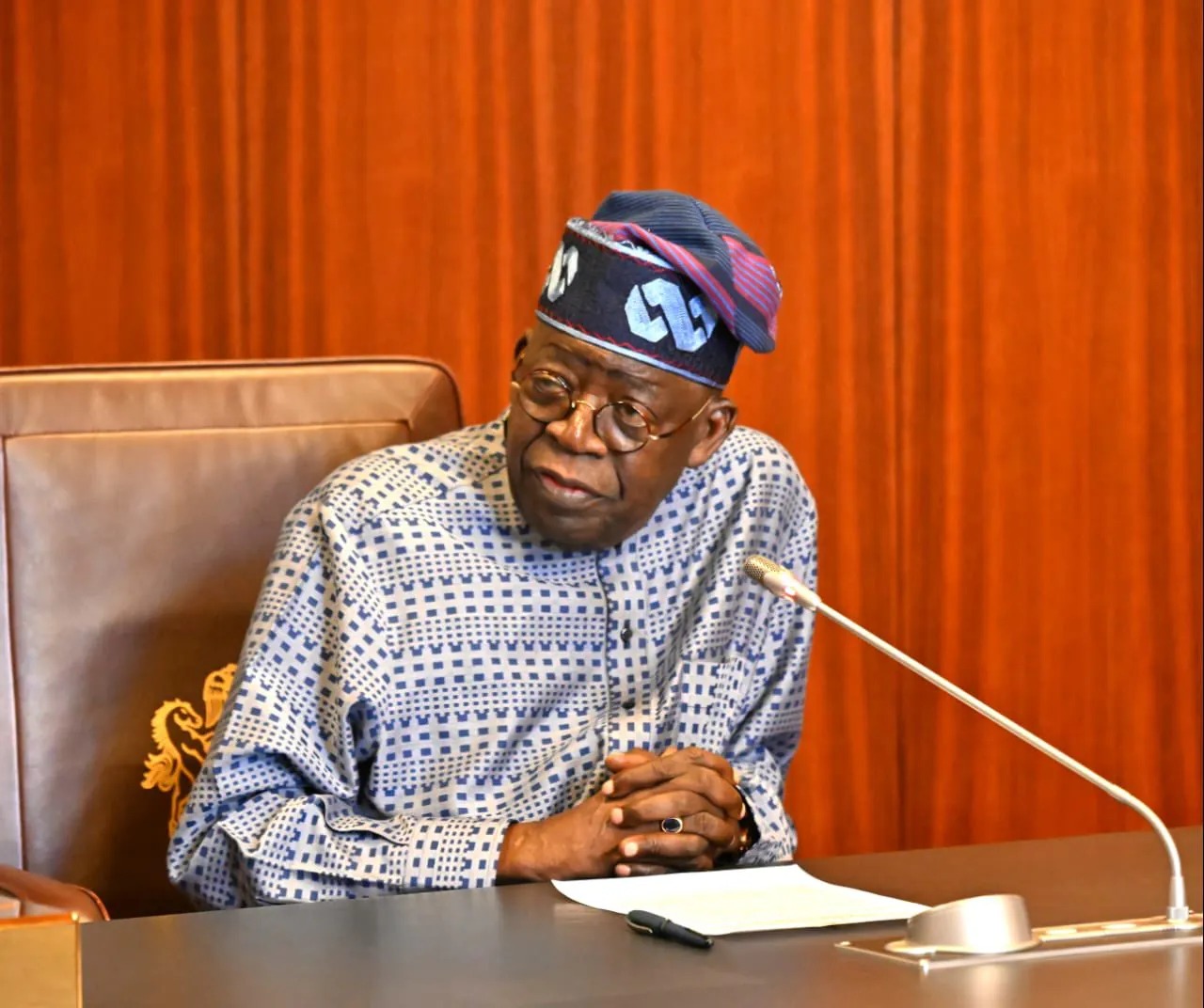
I praised the President’s eloquence and his acknowledgment of the pains Nigerians have endured in the last three and a half years of economic reforms.
However, I also raised a critical question: When will these macro-economic reforms translate into micro-economic relief in our homes, markets, and workshops?
Today, I wish to do a detailed follow-up on one single promise that sits at the centre of that question and determines whether prosperity can truly begin: electricity. Without power, there can be no prosperity. Without light, there can be no productivity.
THE PRESIDENT’S PROMISE AND THE PEOPLE’S REALITY
In his speech, President Tinubu painted a picture of a Nigeria where factories are returning, where small and medium enterprises are thriving, where our industrial estates are humming again, and where Nigeria is becoming a productive economy rather than just a consuming one.
This is a vision every patriotic Nigerian shares and prays for.
But let us be honest with ourselves. How can this vision be achieved in darkness?
I have traveled across Kano, Kaduna, Lagos, and Abuja in recent weeks, speaking to ordinary Nigerians. The story is the same:
A tailor in Kanti Kwari Market in Kano told me he spends N4,500 daily on diesel to power his generator, but his profit for the whole day is N3,000. He is working at a loss just to keep his customers.
A welder in Ladipo, Lagos, said he has to turn away 3 out of every 5 customers because he cannot afford to fuel his generator for all jobs. His apprentice of two years left because there was no steady work.
A cold-room owner in Onitsha told me she threw away fish worth N250,000 last month because DisCo took light for 3 days straight and her diesel finished at night.
A young lady who graduated from Bayero University Kano, with a degree in Computer Science, wanted to open a small cyber cafe and printing shop in Farm Centre. She did all the business plan. When she calculated diesel cost, she abandoned the idea. She is now riding okada.
Is this prosperity? Is this the reform reaching the people?
THE SOBERING NUMBERS
Let us look at the facts, not sentiments.
According to data from the Transmission Company of Nigeria (TCN) and the Nigerian Electricity Regulatory Commission (NERC), average daily generation in the third quarter of 2026 still hovers between 4,200MW and 4,800MW for over 210 million Nigerians. This is less than what the city of Johannesburg consumes alone.
South Africa, with about 60 million people, generates and distributes over 42,000MW. Egypt, with 104 million people, generates over 35,000MW. Even Kenya, with 55 million people, generates over 3,000MW but distributes it far more efficiently.
The National Bureau of Statistics (NBS) in its latest SME survey reports that over 43% of small businesses cite electricity as their single biggest cost driver and the number one reason for business failure within the first two years.
The Manufacturers Association of Nigeria (MAN) reports that its members spend over 40% of their production cost on alternative power – diesel and gas. This is why Nigerian goods cannot compete with imported goods from China and India.
We are not generating enough, and what we generate, we are not distributing efficiently.
KANO: A CASE STUDY IN INDUSTRIAL DARKNESS
Permit me to use my state, Kano, as a case study because I know it well and because it is the commercial nerve centre of Northern Nigeria.
Bompai Industrial Estate, Sharada Industrial Estate, and Challawa Industrial Estate were once the pride of Nigeria. They employed tens of thousands of our fathers. Textiles, tanning, plastics, groundnut oil, and packaging factories lined the streets.
Today, go to Bompai. Over 70% of the factories there now operate only 3 days a week, some only 2 days. Many run only at night when grid power is slightly more stable. Some have relocated to Ghana and Rwanda where power is more reliable.
At Kantin Kwari Market, the biggest textile market in West Africa, each shop has 2 generators – small one for light, big one for sewing. The noise is deafening. The air is polluted with smoke. The cost is transferred to the buyer, making our own local fabrics more expensive than imported ones.
This is not just an economic problem; it is a security problem.
An idle youth who cannot start a barbing salon or a phone charging shop because of power becomes a ready tool for crime and social unrest.
WHAT GOVERNMENT HAS DONE – ACKNOWLEDGING PROGRESS
This article is not meant to be a lamentation without acknowledging efforts. I am a concerned citizen, not a political opposition.
The Federal Government has made some efforts:
- The Presidential Power Initiative (Siemens Project) has improved some transmission lines.
- The metering initiative has moved from 40% to about 55% metering, reducing estimated billing fights.
- The new Electricity Act 2023 that allows states to generate power is a good law that will help in the long run.
- Some solar mini-grids have been commissioned in rural areas.
These are commendable and I acknowledge them. But the speed is too slow and the impact is not yet felt in homes and small shops. Nigerians are tired of megawatts on PowerPoint slides and in ministerial press conferences.
We want megawatts in our sockets and in our workshops.
THE ROADMAP: FROM DARKNESS TO LIGHT – WHAT SHOULD BE DONE
As a follow-up, and with utmost respect to the Presidency and the Honourable Minister of Power, I wish to propose a clear, time-bound roadmap that Nigerians can monitor:
- A CLEAR DEADLINE FOR 6,000MW: Mr. President, please give Nigerians a specific month and year when we will sustainably achieve 6,000MW of generation that actually reaches homes, not just generated on paper. Let it be March 2027 or June 2027. We need a date to hold on to.
- DAILY TRANSPARENCY BY DISCos: Mandate all 11 DisCos to publish daily, on their websites and at their offices, how many hours of power they supplied to each state and each major town yesterday. Let Nigerians see who is performing and who is not.
- INDUSTRIAL POWER AUDIT: Conduct an urgent audit of power supply to all industrial estates – Bompai in Kano, Ilupeju in Lagos, Osogbo, Aba, Onitsha, and Kaduna. Give them dedicated 20-hour supply as promised, metered, and paid for. If factories work, youth get jobs.
- DIESEL OFFSET FUND FOR SMEs: Until grid is stable, create a small diesel offset or solar credit for registered SMEs – barbers, welders, tailors, cold-room owners. Let reform include a cushion while we wait for light.
- MONTHLY PRESIDENTIAL POWER BRIEFING: Let the Minister of Power brief Nigerians monthly for 15 minutes on TV – not to make excuses, but to tell us: this month we added X MW, we completed Y substation, next month we will do Z. Nigerians will appreciate honesty more than propaganda.
CONCLUSION: LIGHT UP NIGERIA
Mr. President, in your speech you used the powerful analogy of a patient who needed painful surgery to survive. Nigerians accepted the pain of that surgery. We endured subsidy removal, forex floating, and high inflation. We did so believing the doctor knows best.
But a patient who has been on the operating table for three and a half years needs to see signs of healing. He needs to be told when he can stand up, when he can eat, when he can go home. He cannot remain on the table indefinitely while being told that the surgery is successful.
Prosperity cannot begin in darkness. Factories cannot return without power. SMEs cannot thrive on diesel. From Reforms to Reality must therefore mean From Darkness to Light.
When a tailor in Kanti Kwari can work without generator for 8 hours, when Bompai factories can work 5 days a week, when our children can read at night without inverter beeping, then Nigerians will truly clap and say prosperity has indeed begun.
I remain a supporter of Nigeria’s success and I pray for this administration to succeed. But success will be measured not by GDP growth in Abuja, but by whether light stays on in our homes.
May God bless the Federal Republic of Nigeria, and may God, literally and figuratively, light up Nigeria.
Alh. Abdulbaki Ibrahim
Kano, Nigeria