“Every time a politician says something stupid, you don’t have to reply to him, because it is nonsense to shoo every barking dog away!”
— Mehmet Murat İldan
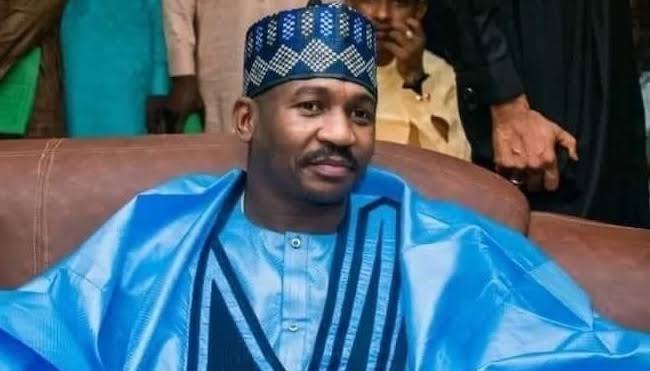
The wisdom in the observation by Mehmet Murat İldan is particularly relevant to the 2027 Sokoto State governorship election, in which Governor Ahmed Aliyu is seeking re-election with considerable political momentum. Manir Muhammad Dan’iya, the African Democratic Congress (ADC) governorship candidate and former deputy to Aminu Tambuwal, appears determined to draw Aliyu into a war of words, perhaps in an attempt to make up lost ground. Governor Aliyu who has continued to display amazing political skills has quietly made it clear that not every challenge deserves a response, nor can Dan’iya’s provocation compel him to engage him in an exchange of words. The wiser course, which the governor has rightly chosen, is to rise above Dan’iya’s political noise and redirect public attention to what truly matters: the records, policies and achievements which to him should form the basis of a serious electoral debate.
As Fela Anikulapo-Kuti would put it, “Trouble dey sleep, yanga go wake am.” Governor Aliyu has wisely refused to take the bait. Engaging Dan’iya in an endless exchange of political accusations would have given the opposition candidate the attention he seeks while distracting from the substantive issues that should define the campaign. Indeed, Dan’iya’s attempt to challenge the administration over its finances has turned out to be an own goal, as it has opened the door to a wider examination of the records of the Aminu Tambuwal- Manir Muhammad Dan’iya administration.
Dan’iya seems to have forgotten the fact that he was the deputy governor to Aminu Tambuwal, whose administration was a disaster in every respect, and must therefore be prepared to answer questions about its record. The 2027 election is an opportunity for the people of Sokoto State to examine the records of the contending candidates, assess their stewardship, their management of public resources, and determine which of them has delivered more results. Accountability must be central to that assessment. Claims about the finances must be tested against verifiable figures, audited statements of account, budgetary allocations and actual expenditure, rather than political insinuations.
Dan’iya, is certainly familiar with the workings of government and should know how to access public records for his scrutiny. Rather than making sweeping allegations, he should have identified specific discrepancies, ask informed questions and present evidence to support his claims if he has evidence of any wrongdoing. The information he seeks is not necessarily hidden from public view; much of it is contained in official financial records, including audited statements of account published by the Sokoto State Government. These documents are a legitimate starting point for examining revenue and expenditure profile of the government.
For a politician seeking to govern Sokoto State, the ability to interrogate such records critically and present evidence-based questions is essential. Dan’iya should identify the specific transactions or discrepancies he considers questionable and explain why they warrant scrutiny. His demand for information already available in public records, without first demonstrating that he has examined those records, raises questions about the depth of his preparation. It is difficult not to see this as a failure to do the necessary homework. Or is it that he is intellectually lazy?
Accountability, however, cannot be a one-way street. If Dan’iya is entitled to question the incumbent administration about its finances, the people of Sokoto State are equally entitled to examine what the Tambuwal-Dan’iya administration accomplished with the resources it had at its disposal. The argument cannot end with how much money a government received. It must also address what it did with that money. What improvements did it deliver in education, healthcare, infrastructure, agriculture, water supply and the welfare of ordinary citizens? Sadly, the Tambuwal-Dan’iya administration performed below expectations.
Governor Ahmed Aliyu, a professional accountant, strategically chose not to pronounce judgment on his predecessor solely on the basis of inherited liabilities and abandoned projects. Instead, his administration established the Justice Mu’azu Abdulkadir Pindiga Commission of Inquiry to investigate the Tambuwal administration. In February 2026, the commission’s chairman confirmed that the inquiry had uncovered alleged financial irregularities involving more than ₦117 billion, alongside concerns about procurement procedures, compliance with financial regulations and the exercise of public office. The government’s White Paper on the report is expected to state its formal position on the findings and recommendations.
The commission’s findings have become an important part of the debate about the management of public resources under the Tambuwal-Dan’iya administration. They also provide context for questions surrounding inherited liabilities, abandoned projects and the financial obligations the Aliyu administration had to address. Among these are the repayment of bank loans incurred for the reconstruction of the burnt Sokoto Central Market, a project that was never commenced, and the payment of ₦14 billion in inherited pension arrears. The government has also completed several abandoned projects, including water supply schemes and housing estates.
In education, the payment of outstanding fees required for the accreditation of courses in the state’s higher institutions addressed another inherited obligation. These interventions are relevant to the debate over fiscal management because they raise a fundamental question: how effectively did the previous administration convert public resources into completing projects that are of benefit to the people?
The commission’s report, together with the government’s White Paper and any relevant supporting records, will provide the basis for a more informed assessment of the issues raised. The Aminu Tambuwal camp is definitely anxious about the contents of the report. To force issues,he recently dragged the government to the Sokoto High Court asking the it to compel the government to avail him with a copy.
Many people believe that Aminu Tambuwal early entry into the presidential race- contesting for the presidency in both 2019 and 2023 elections was responsible for his abysmal failure as a governor. Not only did his presidential ambition distract him it also adversely affected his performance given the enormous cost of mounting a national campaign. The resources of the state with which he would have executed projects were allegedly diverted to politics.
Similarly, Tambuwal’s current political alignment ahead of the 2027 elections has prompted speculation about his longer-term political calculation. Such speculation may interest political observers, but it should not overshadow the more immediate and verifiable question of how his administration managed the state and what it delivered during its eight years in office.
There is an important distinction between demanding accountability as a democratic right and presenting the demand itself as evidence of wrongdoing by an incumbent administration. Asking questions about public revenue and expenditure is legitimate. But the questions must be specific, informed and supported by evidence. If Tambuwal and Dan’iya intend to use the demand for financial information as a substitute for a substantive examination of the records of both administrations, they risk missing the very issue voters need to consider.
Governor Aliyu’s record should be subjected to the same scrutiny. His administration has emphasised fiscal discipline, capital investment and the discharge of inherited financial obligations. Fiscal discipline matters because it influences how public resources are managed, whether liabilities remain under control and how much funding is available for development. The administration’s expenditure priorities should therefore be assessed against budgetary allocations, actual spending, completed projects and measurable benefits to the population.
The Aliyu administration has operated without borrowing from commercial banks while pursuing its development programme and meeting inherited obligations. Were Dan’iya serious he would have subjected the claim to analysis using the state’s audited financial statements and other relevant records. The governor’s challenge to political opponents to present their own scorecards is a reasonable invitation to Tambuwal-Dan’iya to present their records to the people for review.
Infrastructure is one of the most visible areas in which the Governor Aliyu administration has established a record of achievement, largely because its impact is easily seen and felt by the people. Since assuming office in May 2023, the government has prioritised road construction and rehabilitation, delivering more than 240 township and metropolitan roads, alongside interventions to improve connectivity between communities and stimulate economic activity. The rehabilitation of the Lugu Dam in Wurno further demonstrates the administration’s focus on infrastructure with long-term economic benefits. By strengthening irrigation capacity, such investments are expected to expand agricultural production, improve farmers’ access to water and enhance food security.
Beyond physical infrastructure, the administration has also invested in human development through its interventions in education and healthcare. These include classroom construction and rehabilitation, the provision of school furniture, the recruitment of healthcare workers and free medical services for vulnerable groups, particularly children and pregnant women. So far more than 160 primary healthcare facilities have been completely reconstructed and powered with solar power. The impact of these interventions would ultimately be assessed through improvements in learning outcomes, and in the overall well-being of the people.
Transparency is a legitimate demand in a democracy, and the people of Sokoto State have every right to know how their government raises, receives and spends public funds. Ultimately, the 2027 governorship election should be a battle of legacies, judged by verifiable achievements, responsible management of public resources, improvements in people’s lives and each candidate’s vision for addressing the state’s continuing challenges. The records of the eight-year Tambuwal-Dan’iya administration and Governor Ahmed Aliyu’s first term show that they are incomparable. Governor Aliyu has given a good and credible account of himself.
The issue is not about who makes the loudest political accusations, but which administration can substantiate its claims with evidence and demonstrate concretely how its policies have improved people’s lives. The people of Sokoto State deserve an election focused on their future. Guided by an honest assessment of the past and the present there is no doubt that Governor Ahmed Aliyu has the overwhelming support of the people for a second term.
Postscript: Governor Ahmed Aliyu should consider releasing the report of the Justice Mu’azu Abdulkadir Pindiga Commission of Inquiry into the administration of former Governor Aminu Tambuwal after the 2027 elections. This would deny Tambuwal the opportunity to dismiss its findings as politically motivated or an attempt to discredit him ahead of the polls.
By Emmanuel Ado