After the rain, comes the rainbow.This seems to be the lot of Nigeria’s football stakeholders who now have to wait with bated breath for FIFA to deliver their verdict after two hectic days of consultations with different stakeholders on the way forward for the country’s football .
The FIFA and CAF delegation who arrived the country on Sunday kick-started their engagement on Monday with the Secretariat staff of the NFF, before rubbing minds with other stakeholders and concluding their consultations on Tuesday before departing for Zurich .
The delegation’s flight departed Nigeria at about 10:00 p.m. after completing a series of meetings aimed at gathering firsthand information and assessing the situation following the mass resignation of the NFF President, Executive Committee members, and General Secretary.
A delegation from Nigeria had gone to Zurich in the wake of the mass resignation led by the NSC Chairman, Shehu Dikko, the NSC DG, Bukola Olopade, the NFF Acting General Secretary, Emmanuel Ikpeme and Director of Legal, NFF Okey Obi to brief FIFA on the development and find a way forway.
Obviously to see things for themselves and have a first hand experience of the whole saga led to the FIFA and CAF officials coming to Nigeria as part of efforts to find a lasting and acceptable solution to the leadership crisis and establish a clear roadmap to drive the reform process.
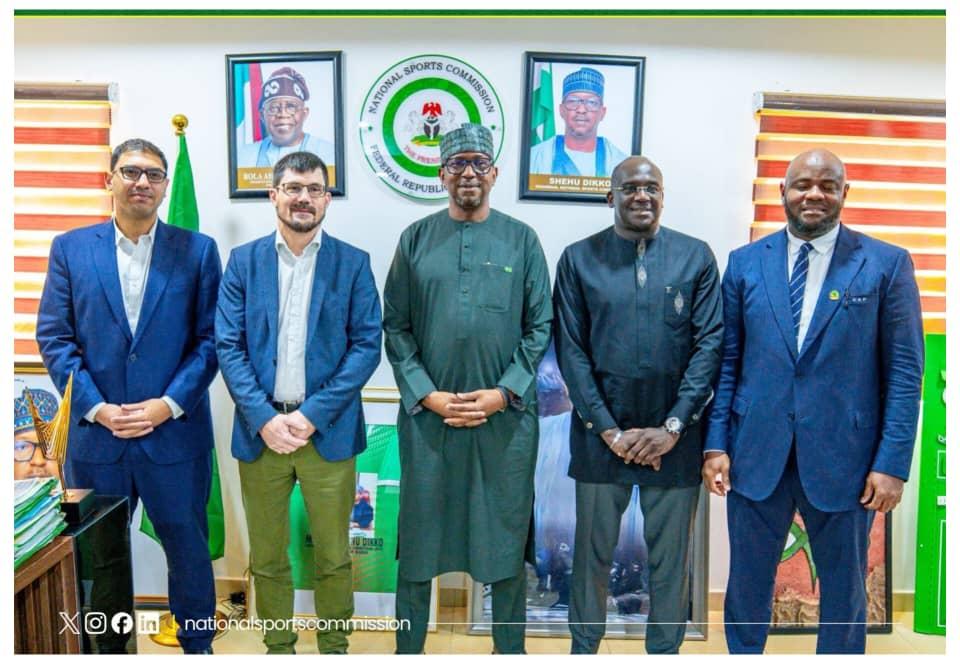
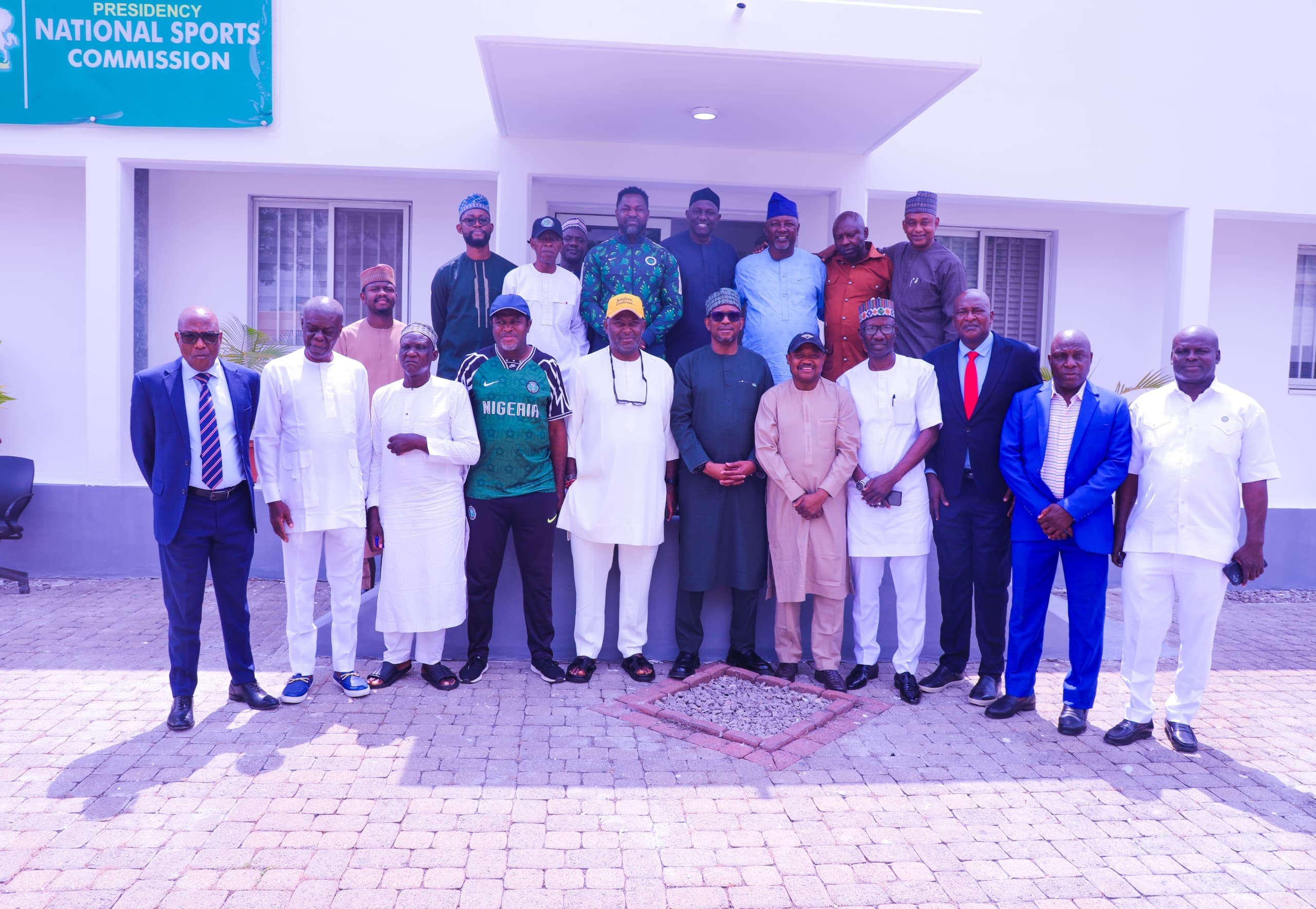
Upon arrival on Monday, the delegation first met with the Chairman of the National Sports Commission, Shehu Dikko, before proceeding to the NFF headquarters, where they held an extensive meeting with senior officials and staff of the federation.
The meeting with NFF staff lasted about three hours and provided the delegation with an opportunity to hear directly from members of the federation’s administrative structure about the circumstances surrounding the crisis and the operations of the NFF under the previous leadership.
According to information gathered by BSN Sports, several allegations bordering on alleged financial mismanagement, administrative shortcomings, and governance failures were raised during the consultations.
Some of the allegations were reportedly accompanied by documents and other materials submitted to the FIFA and CAF officials for verification.
The delegation is expected to study the submissions and information obtained from the various stakeholders before making recommendations on the way forward.
The findings will be particularly important as FIFA and CAF consider the most appropriate transitional arrangement for Nigerian football following the resignation of the NFF leadership.
Meanwhile, there is growing expectation among football stakeholders that FIFA could approve the establishment of a Normalisation Committee to oversee the affairs of the NFF during the transition.
While no official announcement has been made, stakeholders advocating a Normalisation Committee believe such an arrangement would provide an independent framework for implementing reforms, reviewing the federation’s statutes and electoral regulations, and preparing the ground for credible elections.
Sources close to the process told BSN Sports that the proposed names for the committee’s leadership have not yet been formally transmitted to FIFA and CAF. However, the list is expected to be submitted shortly for consideration,if FIFA gives its nod to it.
If the proposal receives FIFA approval, the Normalisation Committee could be given a defined mandate and timeline to stabilise the federation, address identified governance concerns, and organise a new electoral process.
The consultations also exposed differing positions among stakeholders on the preferred transitional arrangement.
While some State Football Association chairmen have reportedly supported the idea of a Caretaker Committee, other important stakeholders, including representatives of the Coaches Association, Players’ Union, league bodies and the Nigeria Referees Association, have expressed opposition to that option.
Those groups are understood to favour a FIFA-backed Normalisation Committee, arguing that the transition should be broad-based, independent and focused on restoring confidence in the administration of Nigerian football.
The debate over the appropriate transition mechanism is expected to be one of the key issues considered by FIFA and CAF following their fact-finding mission.
What Next?
With the delegation now back in Zurich, attention will shift to FIFA and CAF as they evaluate the reports, documents and submissions received during the consultations.
The immediate expectation among Nigerian football stakeholders is a decision on the transitional structure that will take charge of the NFF.
However, until FIFA formally announces its decision, the composition, mandate and timeframe of any Normalisation Committee remain subject to approval.
The outcome is expected to have far-reaching implications for the proposed reform of Nigerian football, including the review of the NFF electoral process, governance structures and preparations for fresh elections.
For now, Nigerian football awaits the verdict from Zurich.