Morocco have continued their remarkable rise in world football after climbing into the top five of the FIFA men’s world rankings, becoming the first African nation to achieve the feat since Nigeria’s historic ranking breakthrough in 1994.
The Atlas Lions’ latest achievement represents another milestone in the remarkable transformation of Moroccan football, following years of investment in player development, infrastructure and a clear national football strategy.
VDCInsights reports that the North Africans’ rise to fifth place in the global rankings has further cemented their status as the continent’s leading football nation and underlined their growing influence on the international stage.
Although FIFA’s official ranking updates are released periodically, live ranking calculations during major tournaments have reflected Morocco’s upward movement after their impressive performances.
The latest official FIFA ranking listed Morocco among the world’s highest-ranked teams, with the Atlas Lions occupying seventh position.
Morocco’s breakthrough into the global top five, as reflected in live ranking calculations, carries significant historical importance for African football.
Before Morocco’s rise, Nigeria held the record as the highest-ranked African men’s national team after reaching fifth position in the FIFA rankings in 1994.
The Atlas Lions have now matched that level of global recognition, demonstrating the progress made by African football over the past three decades.
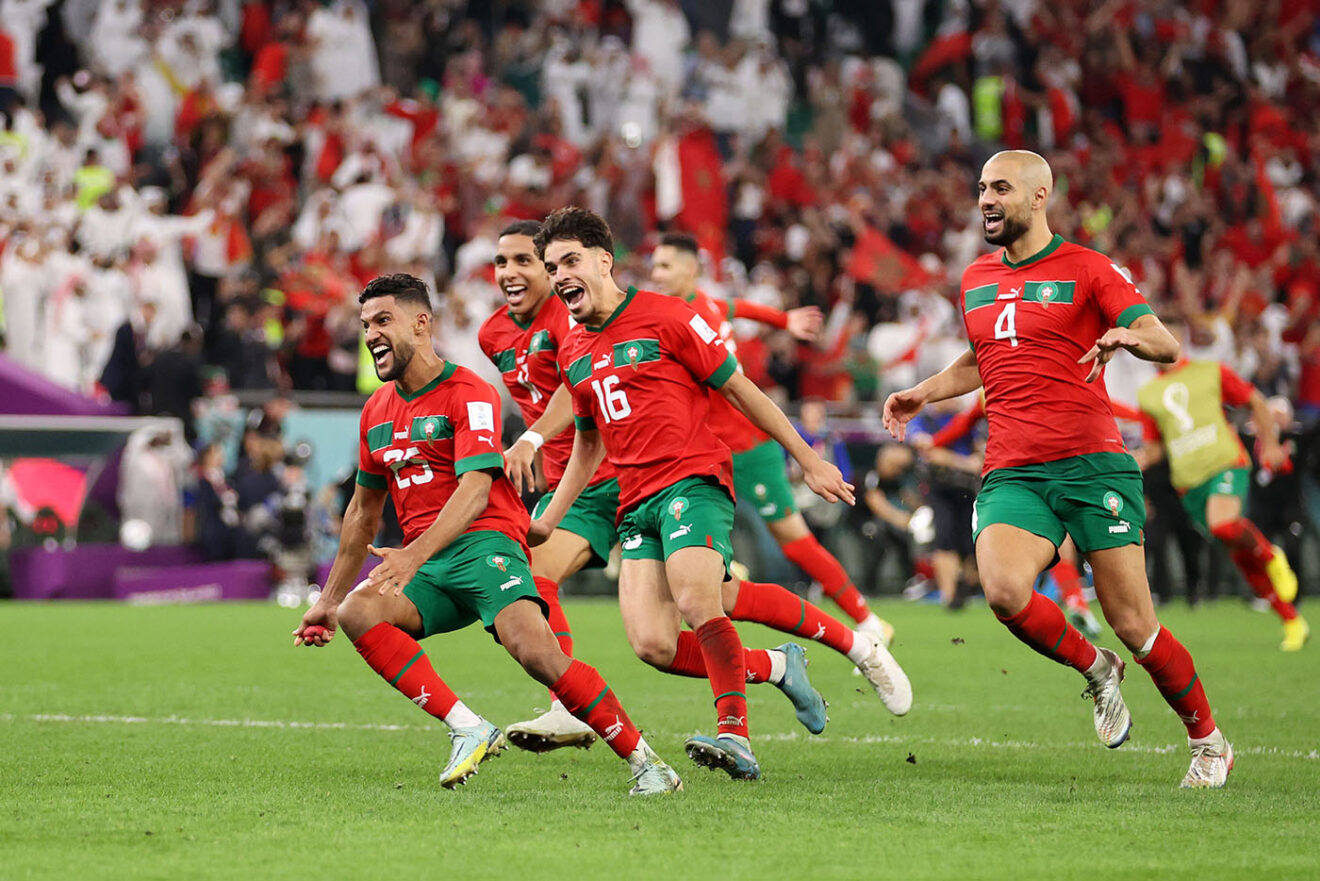
The achievement comes after Morocco’s consistent performances against some of the world’s strongest teams, particularly following their unforgettable run at the 2022 FIFA World Cup in Qatar.
Morocco’s emergence among football’s elite began gaining international attention during the 2022 World Cup, where they produced one of the greatest campaigns in African football history.
Under coach Walid Regragui, the Atlas Lions defeated major European opponents, including Spain and Portugal, before becoming the first African nation to reach the World Cup semi-finals.
Their historic campaign changed perceptions about African football and proved that teams from the continent could compete at the highest level of the global game.
The foundation of that success has continued to influence the national team, with Morocco maintaining a squad filled with players competing in some of Europe’s biggest leagues.
Morocco’s latest ranking surge has also been boosted by their performances at the ongoing 2026 FIFA World Cup.
The Atlas Lions have impressed with their tactical discipline and technical quality, beginning their campaign with a 1-1 draw against five-time champions Brazil before securing a narrow 1-0 victory over Scotland. FIFA.com
Against Scotland, Morocco showed their attacking quality and defensive organisation, with Ismael Saibari scoring after just 71 seconds to secure victory.
The result placed Morocco in a strong position in Group C as they continue their pursuit of knockout-stage qualification.
Their ability to compete against established football powers has strengthened their reputation as one of the most difficult teams to face in international football.
Morocco’s success has been driven by a talented generation of players who have established themselves at top European clubs.
Captain Achraf Hakimi remains one of the world’s leading full-backs, while players such as Brahim Diaz, Sofyan Amrabat and other emerging talents have added quality and depth to the squad.
The country’s football development system has also played an important role, with the Mohammed VI Football Academy producing players capable of competing at the highest level.
Many members of the current squad were developed through structured programmes aimed at creating a sustainable pipeline of talent for the national team.
Morocco’s rise reflects the broader growth of African football, with several nations making significant progress in recent years.
Senegal’s Africa Cup of Nations triumph, Nigeria’s strong international pedigree and the emergence of teams such as Egypt, Algeria and Ivory Coast have demonstrated the increasing competitiveness of African football.
However, Morocco’s World Cup achievement and sustained rise in the FIFA rankings have placed them at the forefront of this new era.
The Atlas Lions have shown that African teams can challenge the traditional football powers not only in isolated matches but also consistently over time.
While reaching the top five represents a landmark achievement, maintaining that position will be Morocco’s next challenge.
The team must continue producing strong performances against elite opponents while sustaining success in major competitions.
For Moroccan football supporters, however, the latest ranking milestone is already a source of immense pride.
From a nation once regarded as an outsider on the global stage, Morocco have transformed into a recognised football powerhouse, inspiring a new generation across Africa and proving that the continent can produce teams capable of competing among the very best in world football.