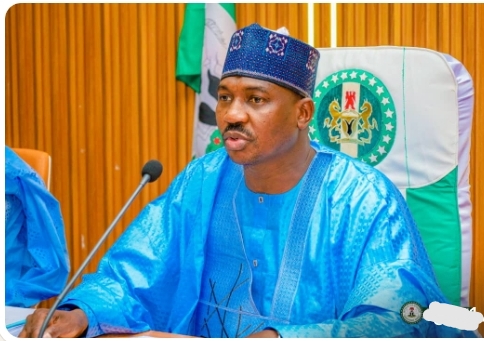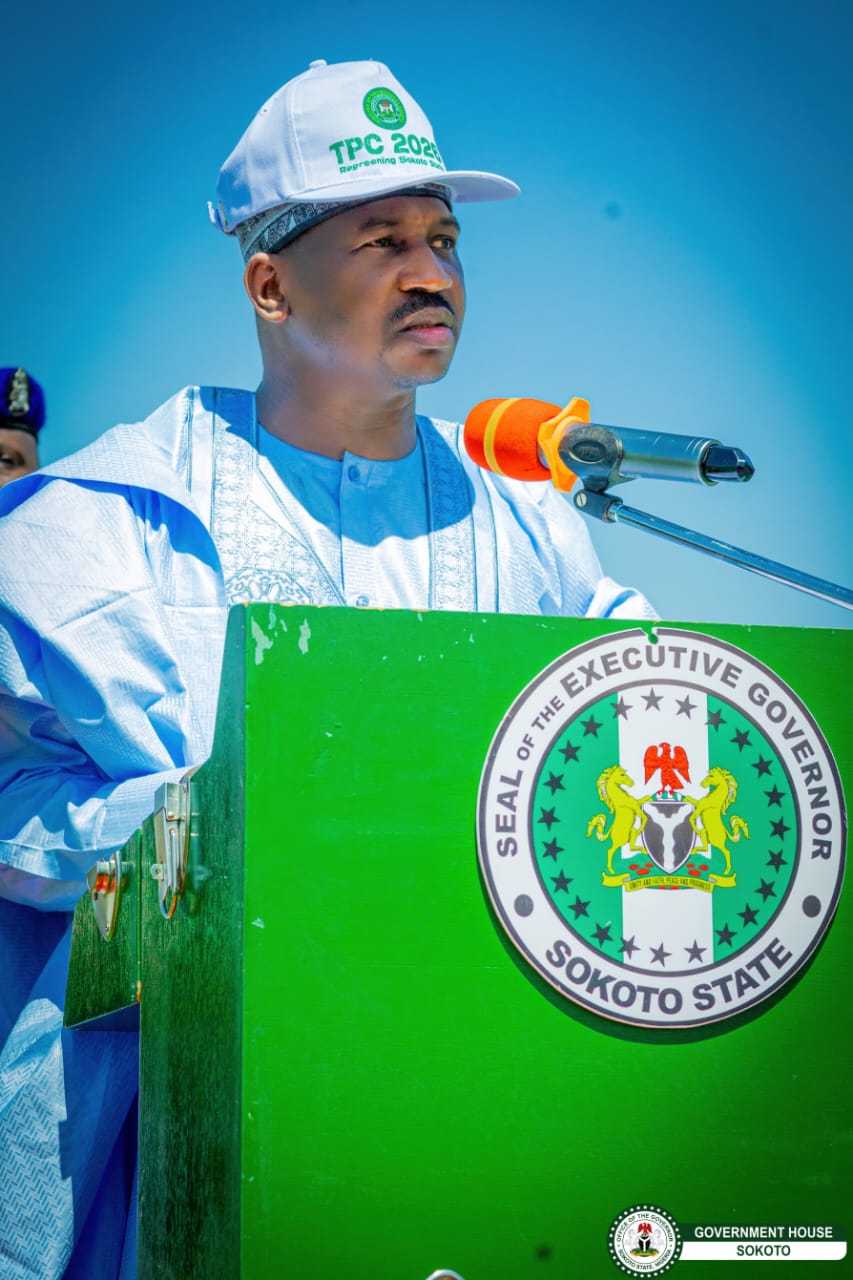
Governor Ahmed Aliyu of Sokoto State has steadily built a reputation for policy innovation, providing tangible subnational proof that data-driven governance yields direct improvements in human welfare. Among the various institutional reforms introduced by his administration, the public unveiling of the state-focused Multidimensional Poverty Index (MPI) survey results stands out as a watershed moment. This initiative represents the first independent, deeply localized poverty index produced by the Sokoto State Bureau of Statistics since its formal establishment in 2013. By commissioning an independent diagnostic of this scale, the administration has engineered a fundamental shift in how public policy is designed by sub national governments, moving decisively away from historical governance by assumption toward an era of strict data analytics.
For decades, subnational governments across Nigeria have relied almost exclusively on broad national aggregate data provided by the National Bureau of Statistics (NBS) for their annual planning, sectoral budgeting, and resource allocation. While the NBS provides an invaluable macroeconomic snapshot, its nationwide sampling methods often lack the granular, localized specificity required to execute targeted interventions at the grassroots level. The baseline 2022 NBS figures painted an undeniably stark picture of the region, indicating that 65 percent of Nigeria’s 133 million multidimensionally poor citizens resided in northern states. In that national assessment, Sokoto State was positioned at the critical end of the spectrum, with a 91 percent multidimensional poverty headcount ratio.
This macro-statistic meant that the vast majority of the state’s population was classified as deprived in multiple areas simultaneously. Their poverty was not merely a function of low monetary income, but a systemic lack of access to basic healthcare, quality primary education, decent housing, electricity, clean cooking fuel, portable drinking water, and basic sanitation. To wage a meaningful campaign against this multifaceted challenge, Governor Aliyu and his economic team recognized that generic, sweeping welfare packages would no longer suffice. They required a precise diagnostic tool to identify exactly who was affected by these overlapping deprivations, the specific geographic clusters where poverty thrived, the seasonal variations that worsened household vulnerability, and the precise administrative mechanisms required to deliver sustainable relief. This clear necessity formed the operational basis for the customized, home-grown MPI survey, executed in strategic partnership with Redwire Marketing Consulting.
The resulting report serves as a rigorous scientific compass for the state’s developmental trajectory. Unlike standard bureaucratic publications that offer little more than fluid statistics and colorful charts, the 2025 Sokoto MPI report delivers actionable insights into the internal mechanics of subnational poverty. Crucially, the survey expanded its reach to capture extensive household samples across all 23 local government areas and all 244 administrative wards of the state. This expansive framework is structurally vital in an environment where poverty is deeply interlinked with geography, culture, and localized micro-economies. By capturing how households experience multiple overlapping disadvantages at different intervals of the calendar year, the survey enables policymakers to see past misleading state-wide averages and understand human deprivation at the immediate community and household levels.
One of the most significant analytical breakthroughs of this report is its ability to clarify the vital economic distinction between structural and transient poverty within Sokoto. Structural poverty refers to chronic, long-term deprivation rooted in entrenched systemic deficits, such as a historical lack of public infrastructure, limited access to formal financial services, and intergenerational inequality. Transient poverty, by contrast, is cyclical and temporary, directly tied to seasonal variations in agricultural output, localized market disruptions, or sudden household health shocks.
The 2025 survey brought to light a significant demographic of households that possess tangible assets, such as arable land or livestock, yet experience acute, severe deprivation during specific months of the lean agricultural season due to highly erratic cash flows. This distinction drastically alters the state’s governance approach. Instead of deploying expensive, uniform intervention programs that treat all low-income citizens as a single demographic, the administration can now match the fiscal remedy to the specific nature of the deprivation. Households trapped in structural poverty are being met with long-term capital projects, including the construction of comprehensive healthcare centers, rural electrification, and primary school expansions. Conversely, those experiencing transient poverty are being supported through flexible agricultural input subsidies, micro-credit facilities, and time-bound cash transfers designed to cushion seasonal shocks.
Furthermore, the customized survey provides empirical validation for the complex, reciprocal relationship between regional security and economic vulnerability. In local government areas such as Tangaza and Binji, which have faced persistent challenges related to rural banditry and displacement, the MPI data establishes a direct mathematical correlation between conflict zones and severe deprivation metrics. The data demonstrates that insecurity is not merely a tragic byproduct of economic hardship, but an active driver of it—freezing local markets, preventing farmers from accessing their fields, and halting the delivery of educational and healthcare services.
By mapping these realities at the ward level, the index enables the government to coordinate its security strategies directly with economic stabilization efforts. Development and security are no longer treated as separate administrative silos; they are deployed as a synchronized response, ensuring that cleared communities are immediately flooded with agricultural support and infrastructural restoration to prevent a resurgence of vulnerability.
The localized data also sheds light on the statistical variation between past national indices and current subnational realities. While the historic 2022 national baseline tagged Sokoto’s overall poverty headcount at 91 percent, the state’s localized 2025 diagnostic reveals that the intensity of poverty among the poor—meaning the average share of simultaneous deprivations a poor person experiences—has shifted to approximately 41 percent. In development economics, this distinction is critical. It indicates that while the total number of people touched by some form of poverty remains high, the severity and depth of the hardships they experience at any one time have begun to ease. This positive shift is a direct reflection of the targeted social investments and infrastructure programs implemented by the Aliyu administration over the past three years, proving that while the elimination of poverty is a long-term journey, the reduction of its daily intensity is achievable through structured policy.
To ensure these empirical findings translate directly into public welfare, the insights from the MPI survey have been integrated into the administration’s 9-Point Smart Agenda. Core development sectors, including urban water supply, maternal healthcare, primary education, and rural road networks, are now allocated funding based on empirical coordinates rather than political expediency. For example, following data showing unexpected pockets of urban deprivation and employment crises within metropolitan areas, the administration systematically directed resources to address these hidden vulnerabilities, challenging the traditional assumption that subnational poverty is an exclusively rural issue.
This methodical alignment has positioned Sokoto as a model of governance excellence in northern Nigeria, drawing praise and collaboration from international development partners, including UNICEF, the UNDP, and the UNFPA. By establishing a public, highly transparent data hub where citizens, civil society, and international donors can track poverty metrics against actual budgetary spending, Governor Ahmed Aliyu has set a new benchmark for subnational accountability. The successful execution of the 2025 MPI survey demonstrates that the eradication of multidimensional deprivation cannot be achieved through rhetoric, but through an accurate economic map that turns intent into a measurable roadmap for societal liberation.
By Abubakar Dan Ali