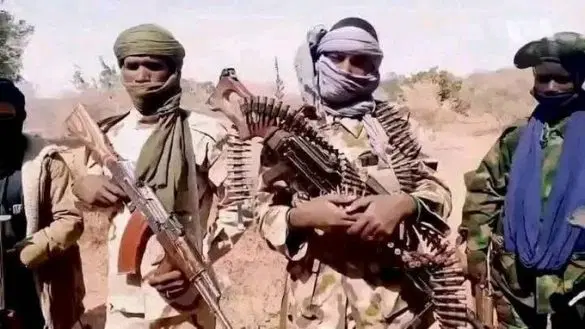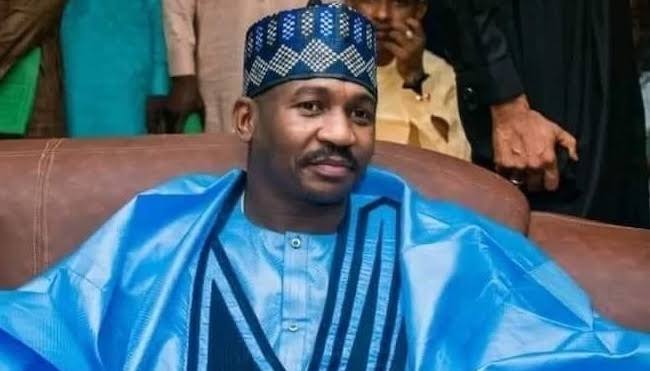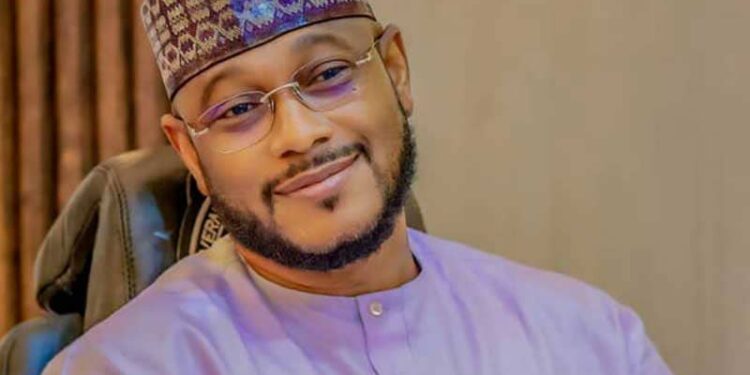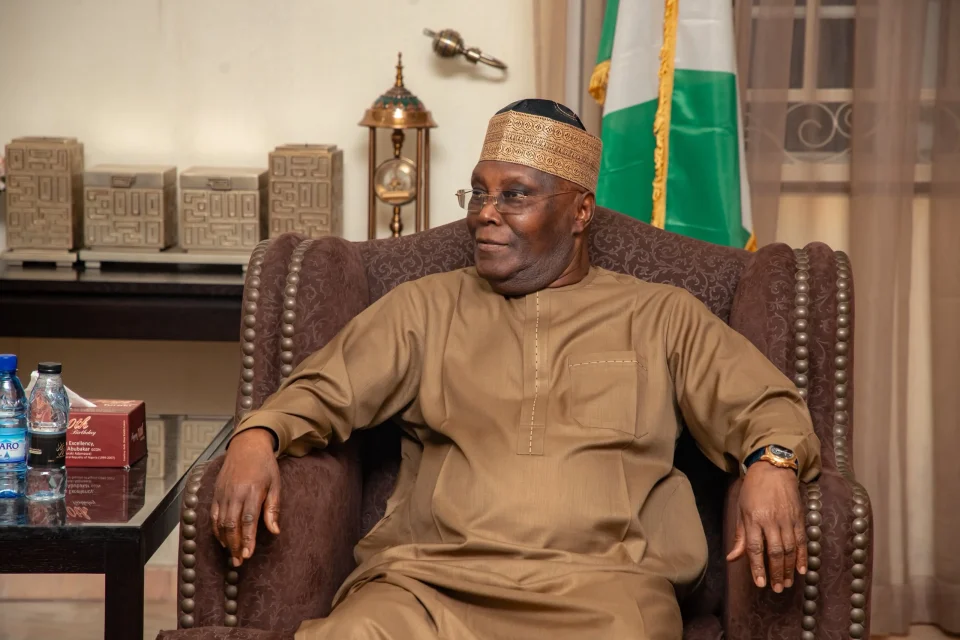
For decades, terrorism, insurgency, banditry and kidnapping have remained the darkest stains on Nigeria’s national conscience. Thousands of innocent citizens have been slaughtered, communities displaced, farmlands abandoned, schools shut down, businesses crippled, and billions of naira lost to a criminal enterprise that thrives on blood, fear and economic sabotage.
Yet, behind every terrorist carrying an assault rifle in a forest, there is often a financier in an air-conditioned office, a sponsor hiding behind corporate structures, money-transfer channels, commercial fronts, or clandestine networks.
The recent exposure by the United States Government of individuals and companies allegedly linked to the financing of ISIS operations, including ISIS-West Africa, has therefore opened a new chapter in Nigeria’s counter-terrorism campaign. The revelation has moved the conversation from speculation to identification. It has shifted the spotlight from the trigger-puller to the banker of violence, from the foot soldier to the architect of terror financing.
The United States Department of State identified Nigerian national Mukhtar Adamu Muhammad and linked three Nigerian Bureau De Change companies, Generation Currency Bureau De Change Limited, Manhattan Bureau De Change Limited, and Nine to Nine Exchange Bureau De Change Limited, to an international ISIS financing network. The sanctions were imposed under Executive Order 13224, one of America’s most potent legal instruments against global terrorism.
This disclosure is not an ordinary diplomatic statement. It is a strategic intelligence declaration. Nations such as the United States do not casually designate individuals and entities as terrorism financiers without extensive intelligence gathering, financial tracing, surveillance, international cooperation, and forensic investigations. Such declarations are usually supported by years of intelligence assessments involving multiple agencies and allied governments.
The inevitable question before Nigerians is simple: What next?
For years, Nigerians have listened to repeated assurances that the government knew those behind terrorism financing. Successive administrations often hinted at powerful sponsors operating from within the country’s political, economic and social structures. Yet very little appeared to happen beyond occasional arrests and media statements. While soldiers died on battlefields, villagers were massacred in their sleep, and schoolchildren were abducted in broad daylight, the financiers appeared untouchable.
The exposure by the United States has now handed Nigerian authorities a strategic opportunity and an enormous responsibility. This is the moment for action, not rhetoric. The Federal Government, intelligence services, anti-corruption agencies, financial regulators, and law enforcement institutions must immediately deepen investigations, expand the net, uncover additional collaborators, freeze suspicious assets, prosecute offenders, and dismantle every financial architecture sustaining terrorism.
Terrorism is not sustained by ideology alone. It survives through funding. Weapons are purchased with money. Informants are recruited with money. Camps are established with money. Logistics, transportation, communications and recruitment all depend on money. Destroy the financing structure, and the operational capacity of terrorists begins to collapse.
There is also a deeper concern. The names released may only represent a fraction of a larger ecosystem. Terrorism financing is rarely a one-man operation. It often involves facilitators, middlemen, exchange operators, transporters, informants, procurement agents, safe-house providers, corrupt officials, and international collaborators. Therefore, Nigerians expect the government to widen investigations and identify every hidden beneficiary of insecurity.
Beyond the officially named individuals and entities, there may be others who harbour terrorists, provide intelligence to them, buy stolen livestock, receive ransom proceeds, launder criminal funds, or profit from the suffering of citizens. These individuals constitute what security experts describe as the “terrorism support infrastructure.” Without them, insurgent groups would find survival difficult.
The government must therefore pursue a comprehensive counter-financing strategy. Asset forfeiture should become a major weapon. Properties, businesses, accounts and investments proven to have originated from terrorist proceeds should be confiscated in accordance with the law. Criminal wealth acquired through bloodshed must not become generational inheritance.
State governments have demonstrated aspects of this approach. The actions taken in parts of the country against criminal hideouts, ritual facilities, kidnapping infrastructure and properties linked to violent crimes show that governments possess both legal and executive instruments to dismantle criminal enterprises. The Federal Government must now demonstrate similar determination against terrorism financiers.
The international dimension of this development cannot be ignored. The United States, under President Donald Trump, has consistently projected a hard-line position against international terrorism and extremist financing. The American government’s collaboration with Nigeria, including the operation that reportedly eliminated senior ISIS figure Abu-Bilal al-Minuki, reflects an evolving security partnership aimed at degrading extremist networks operating in West Africa.
Nigeria should appreciate such intelligence cooperation. Terrorism has become a transnational threat requiring transnational responses. Intelligence sharing, financial monitoring, border surveillance, cyber investigations, and diplomatic cooperation are indispensable tools in modern counter-terrorism operations. No nation can defeat international terrorism in isolation.
However, intelligence supplied by foreign partners is only useful when converted into decisive domestic action. The Nigerian people do not merely want names. They want prosecutions. They want convictions. They want deterrence. They want justice for victims. They want assurance that no individual is too powerful to face the law.
The National Assembly must also play its oversight role by demanding periodic updates on investigations and prosecutions arising from these disclosures. Transparency will help restore public confidence in the government’s commitment to ending terrorism financing.
Equally significant is the political implication of the disclosure. The release has reignited conversations surrounding individuals and groups previously accused in public discourse of sponsoring insecurity. Many Nigerians have observed that the names released by the United States do not include numerous figures who have been the subject of public allegations over the years.
This development is likely to fuel calls for a broader review of assumptions and narratives surrounding national security cases. Some observers argue that the absence of certain high-profile names from international terrorism-financing disclosures should encourage authorities to ensure that prosecutions and detentions are always based on verifiable evidence, due process and the rule of law. In a constitutional democracy, allegations must be distinguished from proven facts, and justice must be guided by evidence rather than emotion or political pressure.
Ultimately, this revelation should mark the beginning, not the end, of a renewed war against the economic backbone of terrorism. The financiers of terror are often more dangerous than the gunmen themselves because they operate in the shadows while others execute violence on their behalf.
Nigeria now stands at a defining moment. The evidence trail has widened. The intelligence pathway has been illuminated. The international community has offered support. Citizens are demanding accountability.
The Federal Government must not sleep on this opportunity. It must pursue every lead, expose every accomplice, dismantle every network, seize every illicit asset, and deliver a decisive knockout blow against the merchants of death.
The blood of innocent Nigerians demands nothing less.
By Charles Edet Esq,