On February 13, 2020, less than 24 hours before the scheduled inauguration of a new governor in Bayelsa State, a five-man panel of the Supreme Court of Nigeria delivered a verdict that altered the state’s trajectory.
In a pronouncement many still call a “divine miracle,” Senator Douye Diri was declared the rightful winner of the governorship election conducted by the Independent National Electoral Commission on November 16, 2019. What followed was not the thunderclap of fanfare but something quieter, deeper, and more enduring: six years of a silent revolution.
Under Governor Diri’s stewardship, Bayelsa has been reshaped not by slogans or spectacle, but by deliberate, compassionate governance that blends visionary planning with almost paternal care for the people who call the “Glory of all Lands” their home.
From the moment he was inaugurated, Diri hit the ground running. He has equally demonstrated the rare quality of a leader who finishes what others begun and dared to dream bigger.
He did not discard inherited projects in a rush for new glory; instead, he completed them with quiet efficiency while initiating a cascade of new ones that now stitch the state together like threads of a single, vibrant fabric.
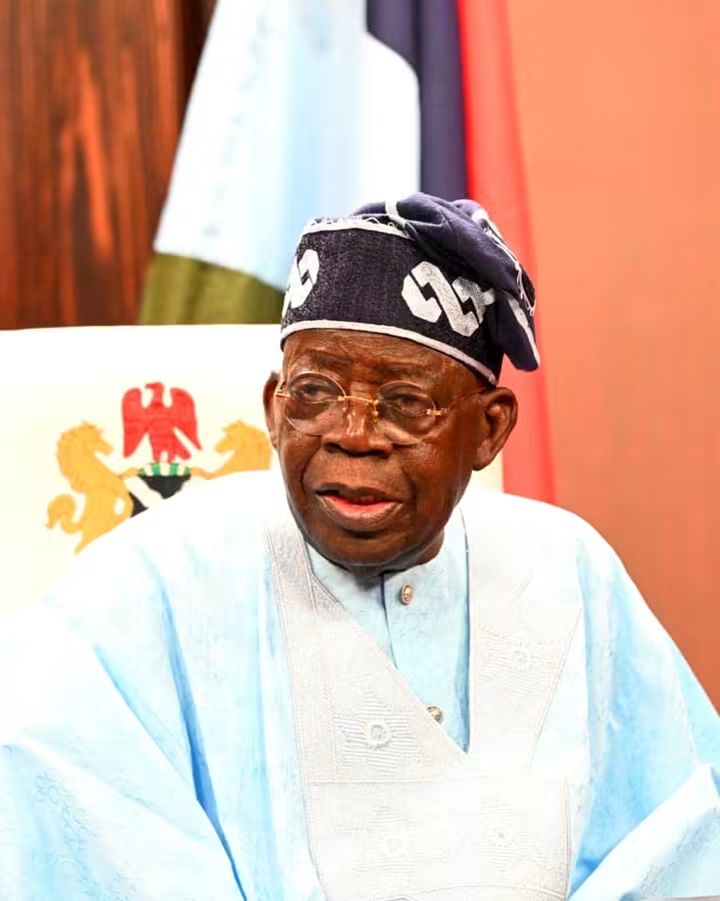
As President Bola Ahmed Tinubu visits Bayelsa on Friday, April 10, 2026, the timing feels providential — a moment to witness firsthand how one man’s steady hand has turned potential into progress across infrastructure, security, sports, civil service welfare, youth empowerment, power and energy, agriculture, and, most profoundly, the unity of a people long tested by division and circumstance.
Nowhere is this revolution more visible than in the transformation of Bayelsa’s physical landscape. Roads that once existed only in dreams now stretch like lifelines across riverine communities.
The 22.2-kilometre Yenagoa-Oporoma-Ukubie Road, the majestic Angiama-Oporoma Bridge across the River Nun, and the Angiama-Otuan and Angiama-Eniwari-Fonibiri corridors have opened the heart of the state to its hinterlands.
Further west, the 42-kilometre Sagbama-Ekeremor Road, complete with five new bridges, and the Ekeremor-Agge Road (first phase reaching Toru-Ndoro and Peretorugbene) have ended decades of isolation.
In the east, the 21-kilometre Nembe-Brass Road (first phase) and the reconstructed Nembe Unity Bridge stand as symbols of reconnection.
Within Yenagoa itself, the Glory Drive Phases II and III, the dualised New Yenagoa City Roads 1 through 6, the Igbogene-AIT/Elebele Outer Ring Road, and the Isaac Boro Expressway’s completion among other eye-popping projects have turned the capital into a city that breathes modernity while honouring its roots.
These are not mere ribbons of asphalt. Each kilometre carries farmers to markets, students to schools, and traders to opportunity. Bridges like that in Imiringi, Elebele, and the Onuebum-Otuoke road have replaced peril with passage.
About 200 new concrete roads now criss-cross Yenagoa and rural communities across all eight local government areas, while the Ox-Bow Lake-Agbura and Polaku-Sabagreia projects link riverine hearts to the mainland. These interventions speak of a leader who understands that development must touch every ward, every creek.
The governor’s administration has also beautified the Etegwe-Edepie Roundabou and worked assiduously to deliver the Akaba-Ogu-Okodi and Toru-Orua-Bolou-Orua-Akeddei-Toru-Ebeni roads — each one a quiet declaration that no community shall be left behind.
Yet infrastructure for Diri has always been about more than concrete and steel; it is the foundation for human flourishing.
The iconic nine-storey Secretariat Complex rises as a beacon of efficient governance, while the Ernest Ikoli Media Complex, Finance House, Labour House, and BHIS Administrative Complex provide the institutional backbone for a state on the move. Judges’ Quarters have been remodelled, a new High Court Complex named after Justice Ungbunku stands completed at Onopa, and civil servants now enjoy a dedicated canteen at the Secretariat.
Community pavilions — from Peretorugbene to Kaiama, Ofoni to Odi, Sampou to Ekeremor — have become gathering places where the people’s voice finds resonance.
This same compassion flows through the governor’s approach to the civil service — the lifeblood of public service. Salaries are paid promptly, pensions disbursed without delay, and between N200 million and N400 million released monthly to clear outstanding gratuities and death benefits. Promotions are conducted as due, with incremental benefits implemented faithfully.
Teachers who waited years for their long-overdue advancements finally received justice. Over a thousand civil servants have been allocated plots for housing schemes, while a transport scheme eases their daily commute.
Training and retraining programmes, including mandatory intensive driving courses for lower-grade officers, have uplifted morale and capacity.
In Diri’s Bayelsa, the civil servant is not a faceless bureaucrat but a partner in the collective dream.
Nowhere does the governor’s vision meet compassion more tenderly than in agriculture and food security. Bayelsa, blessed with fertile soil and abundant water, had long yearned for self-reliance.
Diri answered with action: support for cassava, rice, and plantain cultivation; the establishment of rice farms at Otuasega, Amassoma, and Imiringi Road; and the installation of rice mills at Niger Delta University and Federal University, Otuoke to process “Made-in-Bayelsa” rice. In partnership with the Central Bank of Nigeria, land and seedlings reached 3,500 farmers across all eight local governments.
The cassava starch processing factory at Ebedebiri was completed, farm inputs distributed, and over 400 Bayelsans trained at the CSS Integrated Farms in Nasarawa State and in soilless farming in Ogun State. These efforts are not statistics; they are meals on tables, incomes in pockets, and dignity restored to the farmer who once watched potential rot in the fields.
Energy and power have received their own quiet revolution through Operation Light-up Bayelsa. Solar streetlights now illuminate roads and communities that once vanished into darkness at dusk, extending safety, commerce, and study hours deep into the night. The message is clear: progress must be sustainable, and light — literal and metaphorical — must reach every corner. All these are reinforced by the state’s independent power plant project with an installed 60-megawatt gas turbine to be inaugurated by President Tinubu during his visit.
Empowerment programmes have turned skills into livelihoods. Over 10,000 young Bayelsans have been trained in various skills and vocations. Another 366 received starter packs through the state’s SDG office. Most remarkably, 420 small business owners— four from each of the 105 wards — were empowered monthly with N400,000 each, a direct injection of hope that ripples through families and markets. These are not handouts but hand-ups, evidence of a governor who sees potential in every son and daughter.
Security, once a lingering shadow, has been tackled with strategic compassion. Flashpoints were identified and neutralised through infrastructure — shanties around the Etegwe-Edepie Roundabout gave way to beauty and order. The state government equipped security agencies with over 80 patrol vehicles, motorbikes, and communication gadgets.
As a priority, the governor has adopted technology to secure lives and property through the installation of closed circuit television (CCTV) cameras across the state capital just as it has established the Bayelsa Community Safety Corps by law, harmonising its activities with Operation Doo-Akpo, the Vigilante, and Volunteers into a single, effective force.
The result? Bayelsa today ranks as perhaps Nigeria’s safest state — a testament to proactive leadership that protects without oppression.
Sports, too, has become a unifying force. The construction of a 30,000-seat international stadium signals ambition, but the real victories lie in the achievements of Bayelsa’s athletes. Bayelsa United and Bayelsa Queens made history by winning the 2021 AITEO Cup — the first time any state claimed both titles.
Blessing Oborududu’s Olympic silver in Tokyo, Bayelsa Queens’ triumphs in the Nigerian league, WAFU Zone B, and African Champions League, Timma Godbless’s junior record and African gold, and the global successes of Bishop Dimeari Grammar School and St. Jude’s Girls College in basketball have filled the state with pride.
The grassroots-based Prosperity Cup and the maiden Bayelsa State Sports Festival have ignited passion from the creeks to the capital. In sports, Diri has shown that glory is collective.
Health and education, woven into the fabric of empowerment, have received equal attention. Referral hospitals at Kaiama, Oporoma, and Ekeremor stand completed, and upgrades to primary health centres.
In education, all 71 programmes at the Niger Delta University received accreditation; new science and technical colleges at Ayamasa, Sampou, Swali, and Ofoni offer free tuition, feeding, and uniforms. Six new schools within Yenagoa, ICT centres, Microsoft partnerships training 12,000 teachers, and the teaching of the Ijaw language in schools preserve culture while preparing minds.
Above all, Governor Diri has fostered a sense of oneness and peaceful coexistence. His administration’s deliberate spread of projects across senatorial districts and local governments has healed old fault lines.
In a region once prone to tension, Bayelsa under Diri breathes a spirit of shared destiny. The governor’s quiet demeanour masks a fierce love for his people; his vision is never abstract but always rooted in their daily realities.
As President Tinubu arrives, he will see more than projects. He will witness a state reborn through silent, impactful revolution — a testament to what visionary administration fused with compassion can achieve.
Senator Douye Diri has not merely governed Bayelsa; he has nurtured it, united it, and set it on a path where every road leads home, every light shines brighter, and every citizen feels seen.
Six years and counting, the miracle of 2020 continues to unfold — not with noise, but with results that speak for themselves. The “Glory of all Lands” is rising, and its governor walking beside it, steady, compassionate, and unyielding in purpose.
Alabrah is Chief Press Secretary to the Governor of Bayelsa State