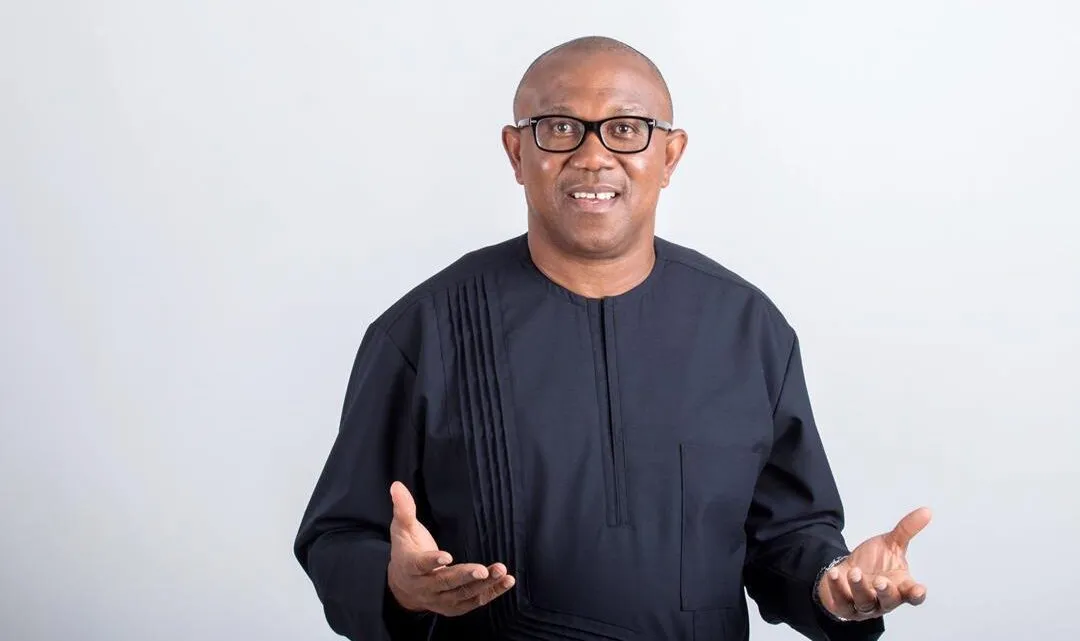
In the rough-and-tumble arena of Nigerian politics, actions often speak louder than words. Since President Bola Tinubu assumed office in 2023, the All Progressives Congress (APC) and its network of agents, media operatives, and political acolytes have maintained an almost obsessive focus on Mr Peter Obi, the former Governor of Anambra State and 2023 Labour Party presidential candidate.
This is not mere political rivalry. It is a calculated, unrestrained campaign of character assassination, misinformation, and subtle intimidation that reveals one undeniable truth -that Obi remains the single most feared political figure heading into the 2027 presidential election. The intensity of the attacks on him is itself the strongest evidence that the ruling party knows what millions of Nigerians already believe, and that is, that Obi actually won the 2023 election, and they are terrified he could repeat the feat, this time with even greater national momentum.
From the moment INEC declared Tinubu the winner amid widespread allegations of irregularities, technological failures, and disputed results, Peter Obi has been subjected to a level of scrutiny and vilification rarely seen against any other opposition figure. APC chieftains, Tinubu’s media allies, and even some state governors have taken turns launching verbal broadsides against him.
They call him “divisive,” “tribal,” “analogue,” and accuse him of everything from lacking national spread to fomenting unrest. Social media armies aligned with the ruling party flood timelines with coordinated attacks the moment Obi criticises fuel subsidy removal, naira floating, rising insecurity, or the escalating cost of living. This is not normal opposition politics. It is a siege.
Why this singular focus on one man, you may ask? Because Peter Obi represents something the APC establishment deeply dreads. He represents a credible, disciplined alternative who connects directly with Nigeria’s youthful, increasingly frustrated population. In 2023, Obi’s campaign ignited a movement called the Obidient movement, which transcended traditional ethnic and religious boundaries in ways few anticipated.
His message of frugality, competence, security, and productive economy resonated powerfully in urban centres, among the diaspora, and particularly among young voters who saw in him a break from the recycled elite politics that had failed Nigeria for decades. Official figures of the election showed him sweeping large parts of the South-East, South-South, and making deep inroads into the North and South-West even when his party had no ward councillor.

Many independent observers, civil society groups, and international monitors noted significant anomalies in the result collation process, especially the failure of the Bimodal Voter Accreditation System (BVAS) in key areas and the controversial “server” issues that raised questions about the integrity of the entire exercise.
Beyond Obidients, many Nigerians maintain, with passionate conviction, that the will of the people was subverted in 2023. The court processes that followed, while exhausting every legal avenue, left many Nigerians unconvinced. Technicalities, locus standi issues, and what some describe as a conservative judicial approach to electoral disputes meant that the substantive allegations of widespread irregularities were never fully ventilated to the satisfaction of millions who voted.
Peter Obi’s calm, data-driven presentation of evidence during the petition process only strengthened the belief among Nigerians that he had, in fact, crossed the threshold required to win. The APC knows this. Their unrelenting attacks on Obi’s person, rather than engaging robustly with his policy alternatives, betray a deep-seated fear that the suppressed truth of 2023 could resurface powerfully in 2027.
Now, fast-forward to today. As Nigeria grapples with unprecedented economic hardship, with inflation hovering at record levels, fuel prices skyrocketing, naira depreciation, and widespread insecurity, Peter Obi has remained the most consistent and articulate voice of opposition. He critiques policies not with empty rhetoric but with comparative data from his time as governor, where Anambra recorded impressive achievements in education, health, and security with minimal waste.
In response, instead of defending their record or offering better ideas, APC agents resort to ad hominem assaults. They mock his “small” stature in politics, question his loyalty to Nigeria, and even attempt to paint his supporters as anarchists. Recent efforts to destabilise the Labour Party through internal wrangling and court cases are widely seen by most Nigerians as APC-orchestrated manoeuvres to deny Obi a viable platform. The message is, however, clear: APC is scared of allowing him a clean stage from which to launch another presidential bid.
This pattern of targeting is the ultimate compliment. In politics, you do not expend such energy, resources, and coordination on a has-been or a marginal figure. You focus relentlessly on the candidate who poses an existential threat to your continued hold on power. Bola Tinubu’s victory in 2023, secured under controversial circumstances, handed the APC the reins of government at a time when public trust in the system was already fragile. Three years of governance marked by failed policies and chastising outcomes have only heightened anxiety within the ruling circles. With 2027 approaching, the last thing they want is a rematch against the man whose 2023 performance nearly upended the traditional two-party dominance.
Obi’s appeal lies in his personal brand of politics, which is modest lifestyle, proven track record in private enterprise and public service, and an unwavering emphasis on production over consumption. He speaks to the aspirations of a generation tired of elite capture in Nigeria. His continued popularity in polls conducted by independent groups, particularly among voters under 40, sends shivers through APC ranks. They understand that if the economic situation does not dramatically improve. the electorate’s memory of 2023 could translate into a decisive rejection of the status quo. Hence their strategy, which is focused on discrediting the messenger so the message dies. Attack Obi’s character, his past, his associates, and his every statement in the hope that enough mud will stick to erode his growing national stature. Sadly, such attacks win more supporters for him because Nigerians have seen through the dark glass.
This is reason most Nigerians argue that if Obi was not a potent threat capable of winning in 2027, the APC would ignore him and focus on consolidating their base or tackling more immediate internal succession battles. Instead, every minor development around Obi, even drinking water, triggers a disproportionate response from Tinubu’s men. This overreaction is diagnostic. It reveals the ruling party’s calculation that Obi, unhindered, could once again galvanize a national coalition of disaffected voters, youth, professionals, and even disenchanted elements within the North and South-West who feel the current economic pain most acutely.
The fact is that the fear of Obi is not irrational. From APC’s standpoint, 2023 exposed the fragility of the party as Obi demonstrated that a candidate running on ideas, integrity, and people-centered governance could challenge the entrenched money-and-structure politics that has defined APC’s governance of Nigeria since 2015. That he came close enough, and in the eyes of most Nigerians, actually won, despite limited resources, party machinery disadvantages, and alleged institutional resistance, proves the potency of the Obi brand. Allowing him another shot in 2027, especially with lessons learned from the last cycle and potentially broader alliances, is an unacceptable risk to those who benefited from the 2023 outcome.
Nigerians know that the unrestrained attacks on Peter Obi by agents of the Tinubu administration are not signs of strength but manifestations of insecurity. They confirm that in the minds of the ruling elite, Obi is not just another politician but an alternative they cannot afford to face again on a level playing field. The obsession with diminishing him is the clearest justification that the 2023 election left unfinished business. Most Nigerians believe the people’s mandate was interrupted, not defeated. And as 2027 draws nearer, APC’s behaviour suggests that they fear history could repeat itself, this time with greater force and clarity.
And for the millions who stood with Obi in 2023 and continue to do so, the sustained assault from the APC camp does not seem discouraging. It is re-energising them and pumping their adrenalin. It reaffirms their conviction that they backed the right candidate in 2023, and that he remains the most formidable force for 2027. The more they attack him, the more they reveal their fear. And fear, in politics, is often the precursor to failure and change.
By Asokata Eze Anya