…When Administrative Decisions Undermine the Integrity of the Beautiful Game
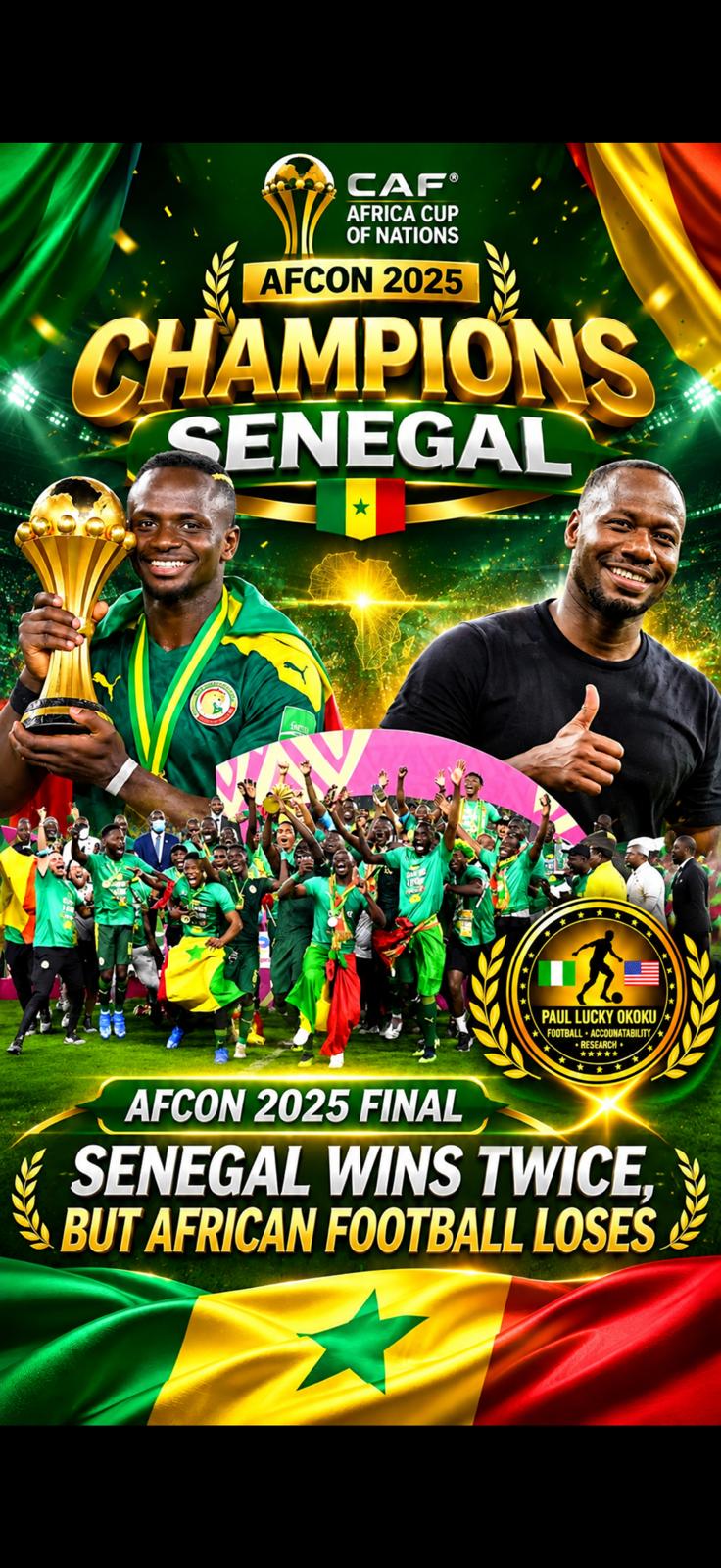
Senegal won on the football field on 𝐉𝐚𝐧𝐮𝐚𝐫𝐲 𝟏𝟖, 𝟐𝟎𝟐𝟔, and prevailed before the FIFA Court of Arbitration for Sport (CAS) on 𝐍𝐨𝐯𝐞𝐦𝐛𝐞𝐫 𝟐𝟒, 𝟐𝟎𝟐𝟔.
However, when Africa’s most prestigious football competition requires 𝟑𝟏𝟎 𝐝𝐚𝐲𝐬 — more than ten months — to establish its rightful champion, the biggest casualty is the credibility of African football itself.
While Senegalese supporters celebrate the restoration of their championship, African football administrators should be asking themselves some uncomfortable questions.
How did we get here? Was this international embarrassment avoidable? And what lessons has the Confederation of African Football (CAF) learned?
𝐅𝐑𝐎𝐌 𝐑𝐀𝐁𝐀𝐓 𝐓𝐎 𝐋𝐀𝐔𝐒𝐀𝐍𝐍𝐄
On January 18, 2026, Senegal defeated host nation Morocco 1–0 after extra time in the 2025 Africa Cup of Nations final in Rabat.
The encounter descended into controversy when Congolese referee Jean-Jacques Ndala awarded Morocco a late penalty following a VAR review.
Senegalese players temporarily walked off the pitch in protest before returning approximately 14 minutes later. Morocco’s Brahim Díaz subsequently missed the penalty, and Pape Gueye scored Senegal’s winning goal in extra time.
The referee completed the match. Senegal received the trophy.
However, on March 17, CAF’s Appeal Board overturned the sporting result, awarding Morocco a 3–0 victory based on Articles 82 and 84 of the competition regulations.
Remarkably, this reversed an earlier decision by CAF’s own Disciplinary Board.
Senegal subsequently sought justice at CAS.
On November 24, 2026, a three-member arbitration panel unanimously upheld Senegal’s appeal, reinstating the original result.
CAF officially acknowledged the ruling and committed itself to its implementation.
𝐇𝐀𝐒 𝐀𝐅𝐑𝐈𝐂𝐀𝐍 𝐅𝐎𝐎𝐓𝐁𝐀𝐋𝐋 𝐁𝐄𝐂𝐎𝐌𝐄 𝐀 𝐋𝐀𝐔𝐆𝐇𝐈𝐍𝐆𝐒𝐓𝐎𝐂𝐊?
African football possesses extraordinary talent, passionate supporters, world-class players and enormous commercial potential. Yet administrative controversies repeatedly threaten to overshadow these achievements.
What impression does Africa create when its continental champion is determined on the pitch, replaced in a boardroom and subsequently restored through arbitration in Switzerland?
Imagine explaining this sequence of events to an international audience unfamiliar with African football administration.
Such institutional inconsistency risks making African football a laughingstock internationally, not because our players lack ability, but because our administrators struggle to deliver credible, consistent governance.
Africa deserves better.
The continent cannot demand greater international respect while tolerating administrative decisions that undermine confidence in its flagship competition.
𝐓𝐇𝐄 𝐀𝐔𝐓𝐇𝐎𝐑𝐈𝐓𝐘 𝐎𝐅 𝐓𝐇𝐄 𝐑𝐄𝐅𝐄𝐑𝐄𝐄
One of the fundamental principles of football is established under Law 5 of the International Football Association Board’s (IFAB) Laws of the Game: referees possess decisive authority over factual matters arising during play.
CAS determined that the decision to resume or terminate the final belonged to the referee.
Both teams returned, accepted the continuation of play and completed the encounter.
The arbitration panel concluded that the relevant forfeiture provisions did not apply under those circumstances.
This does not mean that every completed football match is immune from subsequent administrative intervention. Match manipulation, player ineligibility and other established regulatory violations may justify different outcomes.
Nevertheless, such intervention must rest upon compelling evidence and properly applicable regulations.
Football cannot afford arbitrary interpretations that create uncertainty over whether a result will survive the final whistle.
𝐒𝐄𝐍𝐄𝐆𝐀𝐋 𝐌𝐔𝐒𝐓 𝐀𝐋𝐒𝐎 𝐀𝐂𝐂𝐄𝐏𝐓 𝐑𝐄𝐒𝐏𝐎𝐍𝐒𝐈𝐁𝐈𝐋𝐈𝐓𝐘
Restoring Senegal’s championship does not justify its players walking off the pitch.
Such conduct undermines sporting discipline, disrespects match officials and establishes an undesirable example for younger footballers.
Senegal’s federation, players and coaching personnel faced separate disciplinary sanctions.
There is, however, a meaningful distinction between punishing misconduct and retrospectively confiscating a legitimately established sporting result.
Morocco also had every right to pursue remedies under the regulations. Its federation has indicated that it intends to challenge the CAS decision further.
Neither country should be condemned merely for exercising its legal rights.
The greater institutional responsibility rests with CAF, whose regulations and conflicting judicial decisions created the circumstances for prolonged litigation.
𝐖𝐇𝐎 𝐖𝐈𝐋𝐋 𝐇𝐎𝐋𝐃 𝐂𝐀𝐅 𝐀𝐂𝐂𝐎𝐔𝐍𝐓𝐀𝐁𝐋𝐄?
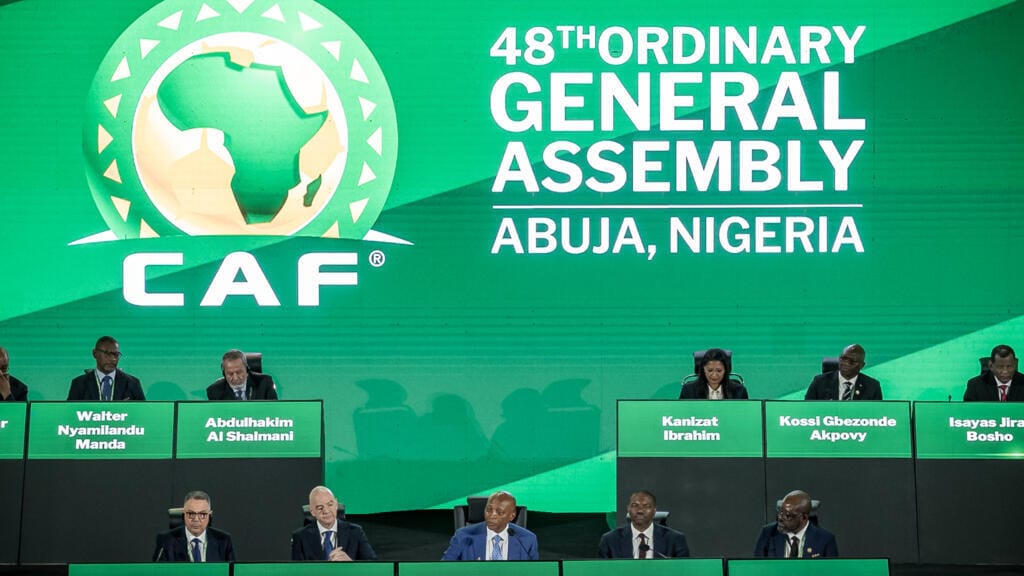
Under the leadership of CAF President Patrice Motsepe, African football needs more than assurances that the CAS ruling will be respected.
CAF must undertake a comprehensive review of its competition regulations, reconcile them with the Laws of the Game, strengthen its judicial processes and establish clearer protocols governing interrupted matches.
There should also be greater transparency regarding the reasoning behind consequential disciplinary and appellate decisions.
Institutional accountability is not an attack on African football. It is an essential requirement for its development.
As a former Nigerian international footballer, I understand the emotional intensity of international competition. Players invest years of preparation, personal sacrifice and national pride in pursuing championships.
Their achievements deserve protection through competent, impartial administration.
𝐌𝐘 𝐅𝐈𝐍𝐀𝐋 𝐖𝐇𝐈𝐒𝐓𝐋𝐄
Senegal’s victory should be celebrated, Morocco’s disappointment respected and the misconduct professionally addressed.
But CAF must confront the reputational damage this controversy has inflicted upon African football.
The world should remember the Africa Cup of Nations for its exceptional football, extraordinary athletes and passionate supporters, not for administrative confusion and prolonged legal battles over the identity of its champion.
Africa must stop providing its critics with ammunition through avoidable institutional failures.
Senegal has recovered its championship.
Whether CAF can recover its credibility remains an entirely different question.
Senegal won twice.
African football should never have been made to lose.
𝐏𝐚𝐮𝐥 𝐋𝐮𝐜𝐤𝐲 𝐎𝐤𝐨𝐤𝐮
FIFA Legend | Former Nigeria Flying Eagles Vice-Captain | Former Super Eagles International | AFCON Silver Medalist | Football Historian | Football Analyst | Investigative Football Writer | Journalist-at-Large | Founder & CEO, Greater Tomorrow Children’s Fund (GTCF)
𝐏𝐥𝐞𝐚𝐬𝐞 𝐟𝐞𝐞𝐥 𝐟𝐫𝐞𝐞 𝐭𝐨 𝐬𝐡𝐚𝐫𝐞 𝐭𝐡𝐢𝐬 𝐚𝐫𝐭𝐢𝐜𝐥𝐞 𝐬𝐨 𝐭𝐡𝐚𝐭 𝐰𝐞 𝐜𝐚𝐧 𝐚𝐥𝐥 𝐥𝐞𝐚𝐫𝐧, 𝐚𝐬𝐤 𝐭𝐡𝐞 𝐫𝐢𝐠𝐡𝐭 𝐪𝐮𝐞𝐬𝐭𝐢𝐨𝐧𝐬 𝐚𝐧𝐝 𝐡𝐞𝐥𝐩 𝐩𝐫𝐨𝐭𝐞𝐜𝐭 𝐭𝐡𝐞 𝐟𝐮𝐭𝐮𝐫𝐞 𝐨𝐟 𝐍𝐢𝐠𝐞𝐫𝐢𝐚𝐧 𝐟𝐨𝐨𝐭𝐛𝐚𝐥𝐥.
𝐀𝐔𝐓𝐇𝐎𝐑’𝐒 𝐍𝐎𝐓𝐄
This article advocates institutional accountability, sporting integrity and administrative reform without prejudice against Senegal, Morocco or their respective supporters.
𝐑𝐄𝐒𝐄𝐀𝐑𝐂𝐇 𝐓𝐑𝐀𝐍𝐒𝐏𝐀𝐑𝐄𝐍𝐂𝐘
This feature draws upon the official CAS media release of November 24, 2026 (Case 2026/A/12295), CAF’s official statement of November 24, 2026, Reuters, Agence France-Presse (AFP), and IFAB’s Laws of the Game, particularly Law 5.
Factual reporting is distinguished from the author’s independent editorial analysis.
Follow my page for more independent football analysis, historical perspectives, investigative features and discussions on institutional accountability
By 𝐏𝐚𝐮𝐥 𝐋𝐮𝐜𝐤𝐲 𝐎𝐤𝐨𝐤𝐮