
…Presidency Questions Strange Payments, Inability to Manage Controversies Over Fiscal Releases
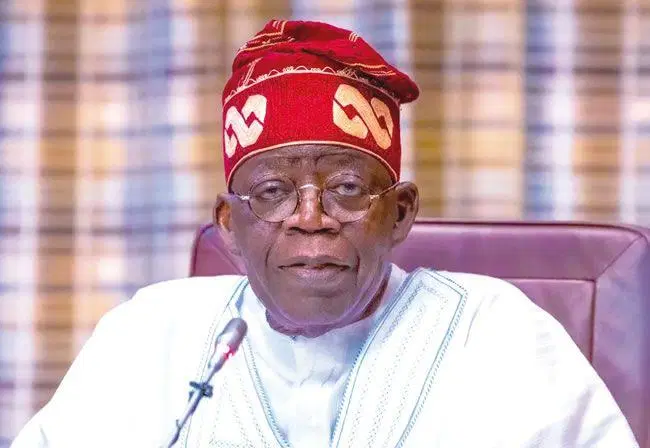
President Bola Tinubu’s decision to move former Minister of State for Finance, Doris Uzoka-Anite, to the Ministry of Budget and Economic Planning was far from the routine cabinet reshuffle many Nigerians assumed.
While the redeployment appeared on paper as a lateral transfer within government, senior figures within the Presidency say the move was in fact a calculated downgrade in Abuja’s power hierarchy, effectively removing her from the sensitive nerve centre of Nigeria’s fiscal operations.
A top Presidency source told KTH Daily that the President’s patience with Uzoka-Anite had been wearing thin for months before the final decision was taken.
“The President had very high expectations of her when he expanded her responsibilities,” the source said. “But the results did not match those expectations.”
According to the insider, Tinubu had in November shifted substantial fiscal responsibilities from the main Finance Minister, Wale Edun, to Uzoka-Anite, including to chair the powerful Federation Account Allocation Committee (FAAC), a role that placed her at the heart of monthly revenue sharing among the three tiers of government.
But the expanded authority soon generated concerns within government circles, KTH Daily was told.
One of the major complaints against her, the source said, was the composition of her inner advisory team.
“She surrounded herself with the wrong aides. The kind of financial and technical expertise required in that office simply was not around her,” the Presidency source disclosed.
Even more troubling, according to the official, were a number of payments and financial approvals that began to raise eyebrows within the administration.
“There were transactions that did not make sense,” the source said. “Some of them appeared to carry possible implications and raised serious questions about their national value.”
The development, insiders say, created reputational concerns inside government.
“Abuja is a small place,” the source explained. “Information travels quickly. When things like that start circulating, it becomes a reputation risk—not just for the government but for the country’s image.”
According to the source, the President was particularly upset when reports of the questionable payments eventually reached his desk.
“It became difficult to justify certain expenditures when the country was facing serious fiscal pressures,” the official added.
The Presidency source insisted that the decision to move Uzoka-Anite had nothing to do with political lobbying or pressure from any political figure, including her home-state governor.
“There was absolutely no role played by her governor or any external influence,” the source stressed. “The decision was purely based on performance concerns and the need to protect the credibility of the government’s fiscal management.”
The move also came amid growing scrutiny of Nigeria’s fiscal management under the current administration.
Nigeria’s 2025 budget was approved at an unprecedented ₦54.99 trillion, with a deficit of ₦13.08 trillion expected to be financed through borrowing.
However, by the first ten months of the year, government borrowing had already climbed to about ₦17.36 trillion—far above the prorated borrowing target.
Additional financing arrangements included a $2.35 billion Eurobond issuance and several foreign loan approvals, pushing estimated total borrowing for the year towards the ₦20–23 trillion range.
Despite the massive inflow of borrowed funds and revenues from agencies such as the Federal Inland Revenue Service and the Nigeria Customs Service, several ministries reported extremely low or zero capital releases for projects.
Data presented during budget oversight discussions revealed that key sectors, including power, solid minerals development, justice and defence, recorded little or no capital disbursement from their allocations.
The Ministry of Transportation reportedly received just ₦2.5 billion out of a ₦256 billion capital budget, while the Ministry of Health headquarters received only about ₦36 million from a ₦218 billion allocation.
The Interior Ministry also reportedly recorded zero capital releases over two budget cycles.
These discrepancies triggered intense scrutiny within the fiscal system and placed pressure on officials responsible for financial disbursements and oversight.
According to sources familiar with developments inside the administration, Uzoka-Anite’s inability to effectively manage the growing controversies surrounding fiscal releases and documentation protocols contributed significantly to the President’s decision.
“It was her responsibility to manage those issues and provide clarity,” one government insider said. “But the explanations were not convincing enough.”
For Tinubu, who has repeatedly emphasised fiscal discipline and economic reform since taking office, the situation reportedly became untenable.
The eventual solution, insiders say, was to quietly move Uzoka-Anite out of the Finance structure entirely.
Within Abuja’s power calculus, the shift from the Finance Ministry, one of the most influential positions in government, to Budget and Economic Planning represents a significant step down.
As our source bluntly put it: “What looked like a redeployment was actually a well-aimed kick.”