…Enhance Regulatory Clarity
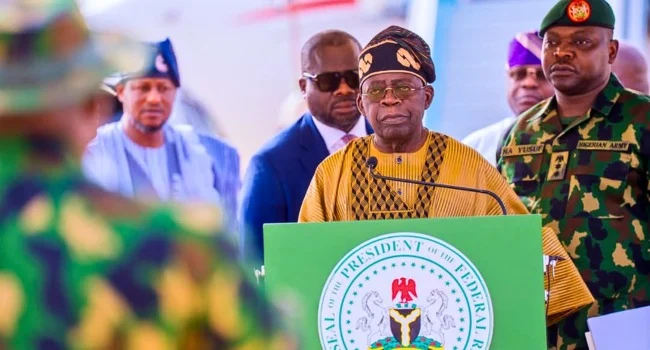
President Bola Ahmed Tinubu, has signed an Executive Order aimed at realigning oil and gas revenue flows with constitutional requirements.
The Order seeks to strengthen fiscal transparency, clarify regulatory mandates, and enhance revenues accruing to the Federation from the oil and gas sector.
The Executive Order reinforces the provisions of the 1999 Constitution of the Federal Republic of Nigeria, which vest ownership of mineral resources in the Federation and require that all revenues derived from those resources be paid into the Federation Account for appropriation in accordance with established constitutional and statutory rules.
In line with these principles, the Order addresses certain fiscal and structural arrangements introduced under the Petroleum Industry Act (PIA) 2021 that have resulted in off-budget allocations and deductions from Federation revenues.
In a statement from the Ministry of Finance signed by Amadi Uloma Nneka, Assistant Director, Information and Public Relations,highlights
specifically, the Executive Order to include:
– Suspends the collection of management fees and frontier exploration fees by the Nigerian National Petroleum Company Limited (NNPCL);
– Directs that taxes, royalties, and profit oil under Production Sharing Contracts be remitted directly by contractors to the appropriate fiscal authorities;
– Suspends the payment of gas flare penalties into the Midstream Gas Infrastructure Fund;
– Clarifies the delineation of responsibilities between the Nigerian Upstream Petroleum Regulatory Commission (NUPRC) and the Nigerian Midstream and Downstream Petroleum Regulatory Authority (NMDPRA), providing greater regulatory certainty for operators and investors; and
– Establishes an inter-agency implementation committee, chaired by the Honourable Minister of Finance and Coordinating Minister of the Economy, to ensure coordinated and seamless execution.
The statement said the Order has become both necessary and urgent considering the sustained decline in oil and gas revenue inflows into the Federation Account, despite improvements in production levels and favourable market conditions.
It added that “This shortfall has constrained the government’s capacity to meet budgetary obligations and to finance critical public investments in education, healthcare, and infrastructure.”
The Executive Order noted “These challenges are unfolding at a time when Nigeria’s rapidly growing and youthful population is generating increased demand for jobs, quality education, accessible healthcare, and infrastructure that supports inclusive economic opportunity.
At the same time, global energy markets are becoming more competitive and capital increasingly selective. In such an environment, Nigeria cannot afford inefficiencies in the management of its most strategic economic asset.
“The fundamental purpose of the nation’s oil and gas sector, including the national oil company, is to convert hydrocarbon resources into sustainable revenues, investment, and economic activity that benefit the broader economy,” stressing “Achieving this objective requires revenue flows that are transparent, constitutionally compliant, and fully accounted for.“
This Executive Order takes immediate effect and serves as an interim corrective measure pending legislative amendments to entrench these reforms in statute. Collectively, these measures represent another significant step toward strengthening fiscal discipline, safeguarding revenue integrity, and ensuring that Nigeria’s natural resources deliver tangible value to citizens, investors, and the economy.