Long before the world called him the greatest marathoner of all time, Eliud Kipchoge was just a quiet skinny kid in rural Kenya, running to school because… well, buses were a luxury and legs were free. He didn’t know he was “training.” He thought he was just being late.
While other kids dreamed of becoming doctors or pilots, young Eliud was unknowingly preparing for a lifelong argument with something invisible but very stubborn: human limits.
Limits said,
“Slow down.”
Eliud said,
“…Nah.”
As a teenager, Kipchoge meets coach Patrick Sang, a former Olympic runner who looks at this quiet kid and thinks:
“Hmm. This one doesn’t talk much… but his legs seem to have opinions.”
Fast-forward to 2003, World Championships in Paris.
The 5000 meters final is stacked with royalty:
Hicham El Guerrouj – the king
Kenenisa Bekele – the prince
Kipchoge – the polite guest who wasn’t supposed to touch the throne
The gun goes off.
Everyone watches the legends.
Kipchoge just runs… calmly… like he’s late for something.
Final lap.
Boom.
The teenager wins GOLD.
Somewhere, running history gasps:
“Wait—WHO was that?”
Kipchoge doesn’t celebrate wildly. He smiles gently, like he’s sorry for the inconvenience.
Then comes the Marathon (aka: 42.195 km of Regret)
When Kipchoge decided to become a marathon runner, people thought he was brave. Or crazy. Or both.
Marathons are long. Painful. Emotionally dramatic. Around kilometer 35, your legs send a resignation letter and your brain starts negotiating with God.
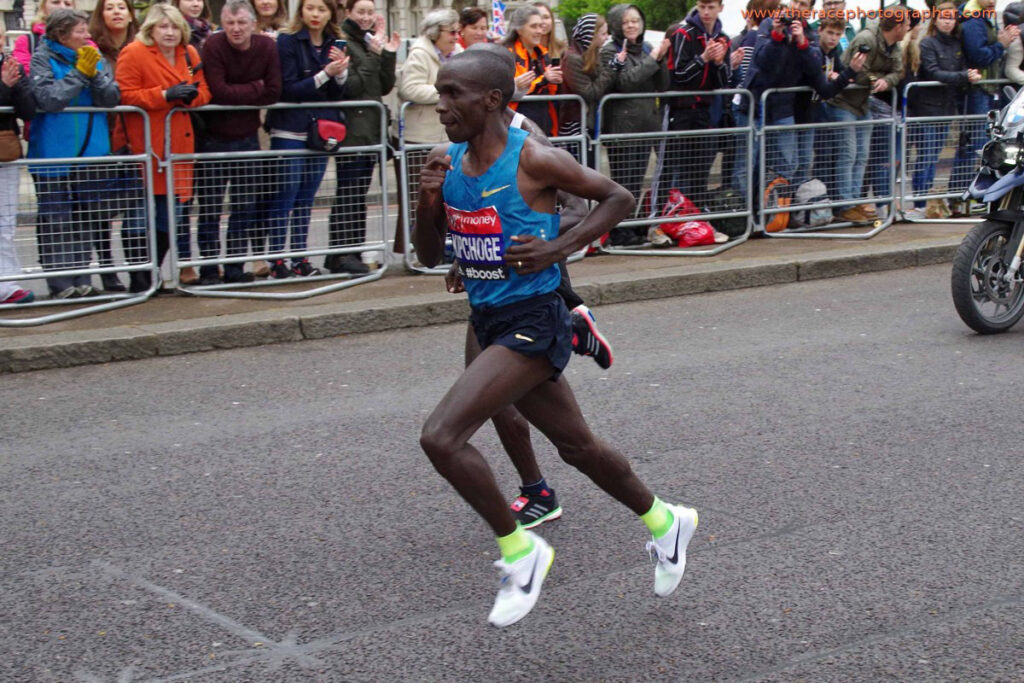
But Kipchoge? He runs marathons like he’s late for tea.
He doesn’t grimace.
He doesn’t panic.
He looks politely inconvenienced—like, “Excuse me, pain, I’m busy winning.”
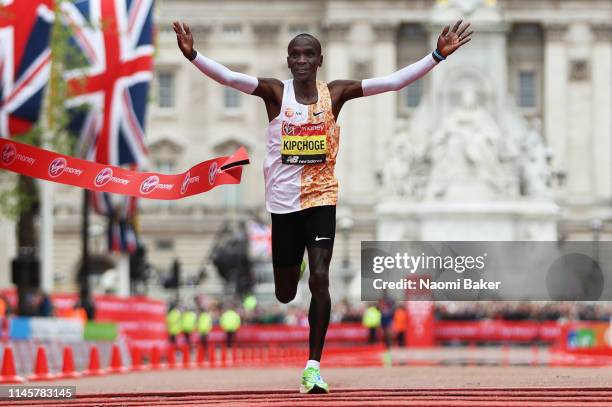
Kipchoge has won 16 official marathons out of 21 and a record of 11 victories in World Marathon Majors (four London, five Berlin, one Tokyo, one Chicago)
The Sub-2-Hour Madness
Then came 2019, Vienna. Scientists. Pacemakers. Laser lines. Fancy shoes. Global suspense.
Experts said:
“No human can run a marathon in under two hours.”
Kipchoge heard:
“Hold my water bottle.”
At the start line, he smiled. Not a nervous smile. A knows-the-ending smile.
When he crossed the finish line in 1:59:40, the world exploded. Scientists cried. Runners screamed. Limits quietly packed their bags.
It wasn’t an official world record—but it was officially legendary.
Some people break records.
Kipchoge broke belief systems.
Olympic Gold, Twice (Because Once Wasn’t Enough)
Rio 2016: Gold.
Tokyo 2020: Gold again.
At this point, medals were basically accessories.
But here’s the funny part—despite being faster than almost every human who ever lived, Kipchoge lives simply. He washes his own clothes. He smiles like your calm neighbor. He speaks softly.
This is a man who can outrun time… and still waits patiently.
The Real Secret?
No magic. No ego. No drama.
Just discipline, humility, and a dangerously positive mindset.
His famous words:
“No human is limited.”
Which sounds motivational… until you realize he proved it with his legs.
The Legend Lives On
Eliud Kipchoge didn’t just teach us how to run faster.
He taught us that limits are often just excuses wearing fancy language.
And somewhere out there, he’s probably jogging right now—
not chasing medals,
not chasing fame,
just casually reminding the world:
“You thought that was impossible?
Cute.”