In Sokoto State, few developments have so sharply reinforced public criticism of former Governor Aminu Waziri Tambuwal’s administration as his failure to complete the Buhari Dan Shehu Jumu’at Mosque in Tambuwal, his ancestral hometown. A project of such spiritual and communal importance ought never to have been left abandoned, yet it lingered unfinished for years under his watch.
For many observers, the mosque’s prolonged abandonment — until the timely intervention of Governor Ahmed Aliyu and Senator Aliyu Magatakarda Wamakko — merely echoes a familiar pattern that defined his years in office. It did not stand as an isolated misstep rather, it fits squarely within a broader narrative of roads, housing, water, school, and health projects left abandoned. In that sense, the abandoned mosque became more than a failure; it became a symbol of a governing style critics say resembled an official policy of never completing projects.
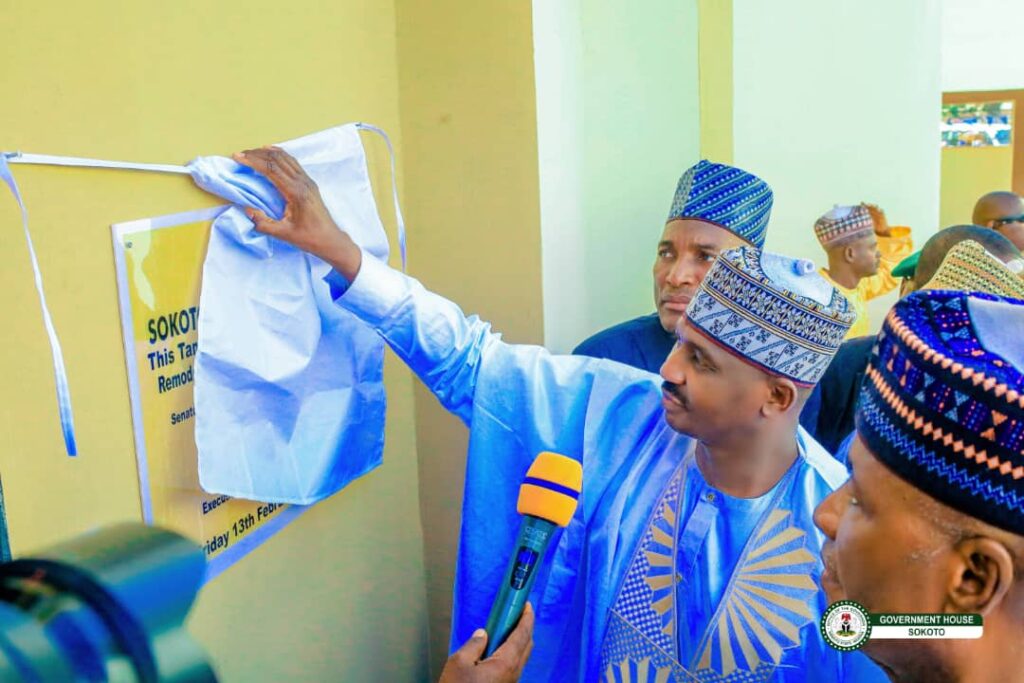
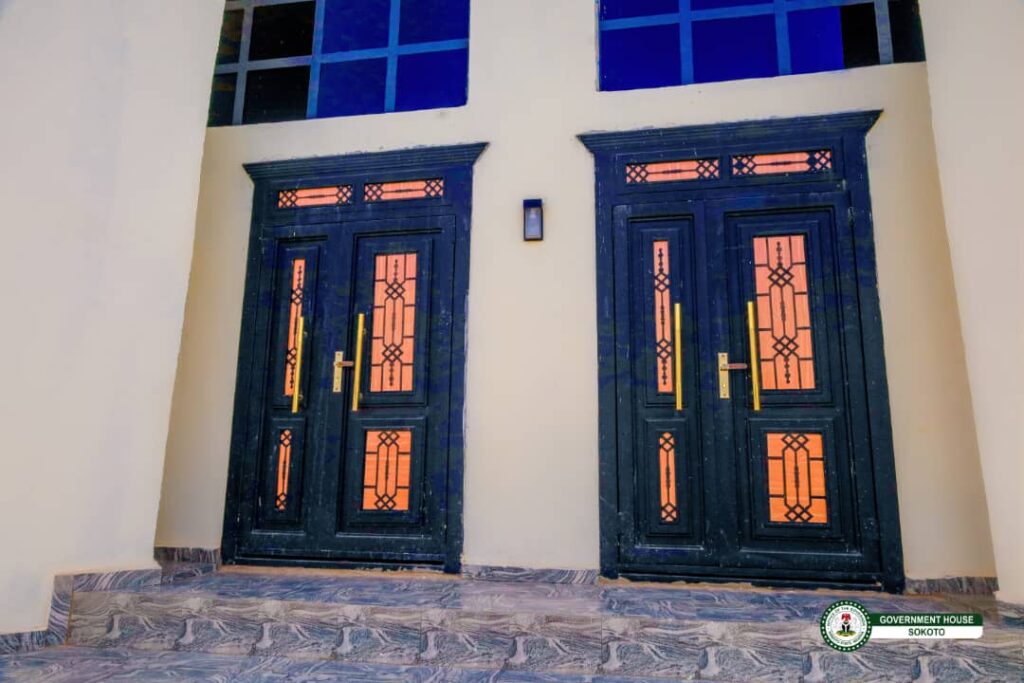
The reconstruction of the mosque was not an initiative of the current government; it was originally conceived by the Tambuwal administration. Yet it stood abandoned for years, despite its immense spiritual and communal significance. It ultimately took the intervention of Governor Ahmed Aliyu and the renowned philanthropist, Senator Aliyu Magatakarda Wamakko, to bring the project to completion.
What deepened the disappointment is the simple but painful fact that if Aminu Tambuwal knew he was not prepared to reconstruct a befitting new place of worship for the people, he ought not to have sanctioned the demolition of the old one in the first place. By pulling down the existing structure without ensuring the swift delivery of a replacement, his administration left the community deprived of a place of worship, teaching, and communal ceremonies such as weddings. In Sokoto State — rightly revered as the Seat of the Caliphate — a mosque is a spiritual anchor and a communal institution where people gather to worship as dictated by the Holy Qur’an.
That such a project could languish under his watch elevated the matter beyond routine administrative failure. For his critics, the abandoned mosque has since become emblematic of what they describe as eight years of misgovernance — years characterized by abandoned projects scattered across the state, unpaid pensions running into billions of naira, contractors unpaid, and communities that waited endlessly for promised infrastructure. In this narrative, the mosque is not merely a structure once left unfinished; it stands as a metaphor for a tenure critics argue was defined more by the accumulation of unfinished promises.
The commissioning of the Buhari Dan Shehu Jumu’at Mosque in Tambuwal by Governor Ahmed Aliyu has reopened an uncomfortable yet unavoidable conversation about the legacy of Aminu Tambuwal. What should have been a routine project — a mosque serving the spiritual and communal needs of his ancestral hometown — instead became a lingering reminder of his several unfulfilled promises. With the mosque finally completed and opened to worshippers, the public and political observers alike are forced to confront a broader question: how will history remember Tambuwal’s years in office? Will his tenure be recalled for the initiatives he began but never finished? In Sokoto State, where faith and governance intertwine closely, this question carries particular weight and touches directly on leadership.
Leadership is measured by results — by projects completed, institutions strengthened, and legacies that endure beyond tenure. It is measured in the roads constructed, in functional hospitals, in schools that have the capacity to continue shaping young minds, and in systems that outlive the personalities who built them. Unfortunately, against this backdrop, Aminu Tambuwal — despite the enormous “promise” he carried into office as a former Speaker of the House of Representatives — fell far short of expectations as Governor of Sokoto State.
Governance, at its core, is about continuity. Every administration inherits obligations alongside assets. Projects begun under a predecessor are not to be discarded. Likewise, projects initiated by an administration are binding commitments to the people. When either is abandoned, the damage is monumental.
With Aminu Tambuwal’s national profile, and legislative experience, many had expected a tenure defined by administrative depth, fiscal discipline, and transformative delivery. Instead, critics argue that his years in office were marked by underwhelming execution, stalled initiatives, and a record that struggled to match the weight of the promise that preceded him. By virtually every index of governance — continuity, completion of projects, fiscal prudence, and institutional strengthening — his performance has remained the subject of scrutiny. The question is: what happened?
Rather than serving purely as an asset, many critics argue that Tambuwal’s prior tenure as Speaker of the House of Representatives became a political distraction once he assumed office as governor. Presidential politics in Nigeria is notoriously money-guzzling — a vast, resource-intensive enterprise that demands relentless travel, nationwide consultations, media visibility, coalition-building, and the maintenance of a sprawling political structures.
From the earliest days of his tenure, Tambuwal set his sights beyond Sokoto State, mounting an energetic campaign ahead of the 2019 presidential elections and later pursuing a second attempt in 2023 before stepping down for Atiku Abubakar. He broke politically from his predecessor and former ally, Wamakko, whose experience many believe would have provided him steady guidance that would have helped him succeed. Among his critics, a persistent belief took root: that the twin presidential bids consumed not just his enormous political energy, but also the financial resources of Sokoto State. Whether entirely fair or not, the perception endures that while attention and resources were directed toward national ambition, governance at home suffered — leaving too little to show for eight critical years in office.
While serving as Speaker, Tambuwal operated in a legislative capacity — shaping debates and influencing national policy. He was not directly responsible for constructing hospital wards, roads, or classroom blocks. However, governance at the executive level is entirely different. As governor, he bore the direct responsibility of implementing budgets to improve the lives of the people. Each completed road means traders moving goods easily, farmers transporting produce to markets on time, and commuters traveling in safety. Each functional health facility means mothers accessing prenatal care, children receiving vaccinations, and emergency cases treated without traveling long distances. The same applies to classrooms — every new block constructed reduces overcrowding, improves learning conditions, and gives teachers and students a fighting chance at quality education. Executive office demands visible, concrete delivery. It is in these everyday outcomes — roads, hospitals, and schools — that leadership is ultimately judged.
Could Aminu Tambuwal have performed better had he first passed through the crucible of grassroots governance before ascending to the governorship? It is a question worth asking. In Nigeria, politicians often leap over critical stages of apprenticeship. The recruitment process into high executive office most times never prioritizes tested administrative grounding. Yet governance is mastered and refined in practice — in managing councils, balancing lean budgets, supervising small-scale projects, resolving community disputes, and understanding the granular realities of service delivery, before presiding over an entire state’s machinery.
By contrast, the incumbent governor, Ahmed Aliyu, followed a more traditional and arguably steadier trajectory. He cut his teeth in local government administration, where proximity to the grassroots offered him unfiltered exposure to the everyday challenges of citizens. He later served as a commissioner and then as deputy governor, accumulating layers of executive experience before assuming the top office. That gradual ascent — from local governance certainly provided the administrative seasoning that the state is benefiting from. Many observers argue that this trajectory helps explain the decisiveness and project-focused delivery now being witnessed.
The failure by Tambuwal to complete the Buhari Dan Shehu Jumu’at Mosque is what football fans would call an own goal. Sokoto State is not just another Nigerian state. It is the historical Seat of the Caliphate. Religion is woven deeply into the social and political fabric of the people’s daily lives. Mosques are not simply buildings for prayer; they are a way of life. Neglecting a house of worship carries optics that are difficult to defend.
Governor Ahmed Aliyu has made mosque construction and renovation a prominent component of his administration’s 9-Point Development Agenda, particularly under the promotion of Islamic affairs. Several Jumu’at mosques across local government areas have been remodeled. Several roads have been completed, and primary healthcare centers have been renovated. Mass transit buses have been procured for all 23 local government areas.
Today, the magnificent Buhari Dan Shehu Jumu’at Mosque stands completed as a restored center of worship — owing to the decisive intervention of Senator Aliyu Magatakarda Wamakko, who chose to step in and do what Aminu Tambuwal failed to do.
Most significantly, the Tambuwal community now has a brand-new mosque just before the commencement of Ramadan — a time when congregational prayers and communal solidarity take on heightened meaning. Worshippers can now gather in a befitting house of Allah. The timing underscores the depth of what has been restored: a sacred place of worship returned to the people at the most spiritually significant period of the year.
In politics, perception matters greatly. Public memory is often shaped by such failures. The narrative now circulating in Sokoto State is disarmingly straightforward: Aminu Tambuwal demolished; Ahmed Aliyu and Aliyu Wamakko rebuilt. It is a stark contrast that requires no elaborate briefing for the people to understand.
It is also being stretched further; one administration is associated with abandoned projects, and the succeeding leadership is associated with completion and restoration. This narrative has taken hold and is embedded in the public consciousness. It is being repeated in markets, mosques, and political gatherings in ways that it will be difficult for Aminu Tambuwal to reverse.
For Tambuwal, who harbors the ambition of returning to the Senate and perhaps the presidency, the completion of this mosque certainly carries significant political consequences,because in Sokoto State — the historical Seat of the Caliphate — faith and governance intertwine deeply. The memory of abandoned projects, reinforced by the neglected mosque in his own hometown, is a narrative that his numerous opponents will not hesitate to exploit.
By Emmanuel Ado