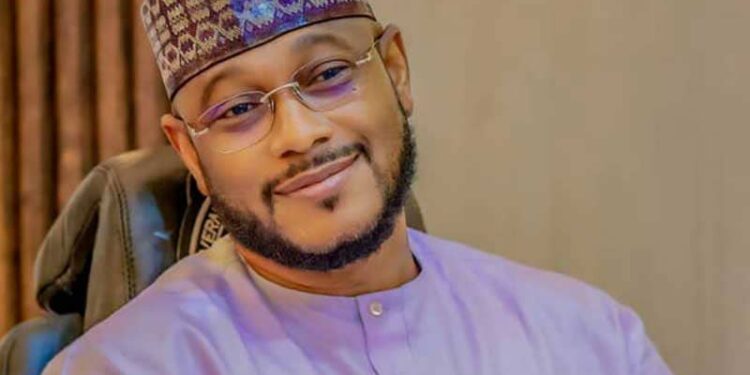
There was a time, not very long ago, when the educational crisis in Zamfara State became impossible to conceal. The problem was no longer limited to the familiar concerns about the poor performance of its students in national examinations, inadequate classrooms, shortages of teachers and the lack of instructional materials. The true depth of the crisis went beyond these visible signs. It got to the point where thousands of students in public schools could not even sit for the examinations that would determine their progression to the next stage of their education—tertiary institutions.
In 2023, just before Governor Dauda Lawal assumed office, the situation reached an alarming point: Zamfara State was unable to present candidates for the West African Senior School Certificate Examination (WASSCE) because examination fees had not been paid. The Lawal administration subsequently disclosed that it inherited about ₦1.4 billion in WAEC debts covering 2018 to 2022, alongside liabilities owed to the National Examinations Council (NECO). The problem went beyond the fact that the students were unable to sit for the examination that year,because tragically the results from previous years had been withheld due to the failure of the last administration to meet its financial obligations to the examination bodies, leaving the students unable to use the certificates they had already acquired.
For Zamfara State which was already struggling with the reputation of being educationally disadvantaged, the situation was a serious setback that came at a time when it needed to be seen to be addressing its educational challenges, rather the failure to present candidates for WASSCE reinforced the perception —that its educational system was on a free fall.
It was against this background that Governor Dauda Lawal assumed office in May 2023 and declared a state of emergency in the education sector. Given the condition of the system he inherited, the significance of that declaration is clear. He was not simply responding to the dilapidated classrooms, the inadequate teachers and other visible deficiencies. He was confronting headlong an education system that had collapsed. The challenge, therefore, was not to fix what had broken down,but to entirely rebuild the system and restore its capacity to provide children with education that would enable them compete in a world that is increasingly knowledge based.
The first stage of the Governor Lawal’s Rescue Mission was about restoring basic functionality to the education system. First, was getting the students to be able to write their examination, the withheld results released, and the institutional machinery of education put back on a more solid footing. It wasted no time clearing the debts owed WAEC and NECO obligations to the huge relief of the students and their parents.
But that was only the beginning, because a functional education system cannot simply be defined by whether the students were registered for examinations or not. In previous years, students were registered, yet the results were nothing to write home about because they were not learning. The teachers were not adequately equipped to teach in schools that were lucky to have them,and many schools lacked the environment required for effective learning. The real challenge, therefore, was to restore the schools to conditions under which the students could actually learn and that meet an acceptable standard for learning.
This is where the declaration of emergency in the education sector of the Governor Lawal’s administration is important.
Strategically, the administration’s approach extends beyond the government-owned schools to the private basic education sector, which is the foundation of the education system. It is a bottom-up approach rooted in the recognition that improving educational standards cannot be achieved by concentrating exclusively on public schools while leaving hundreds of private schools outside a credible system of supervision and quality control.
The decision to conduct a comprehensive quality and compliance assessments across private basic schools is therefore significant. More than 500 private schools were mapped for evaluation, with the exercise focusing on four areas that directly affect children’s educational experience: public safety, academic quality assurance, child protection and legal licensing.
In the initial phase, 242 schools underwent physical and academic assessment. Of these, 123 were rated as satisfactory, while 119 were classified as either fair or poor. The other schools, as well as new schools entering the sector, are expected to be covered in subsequent phases. This is important because quality assurance has to be continuous.
The value of the exercise lies in what the inspectors are looking for beyond the physical appearance of the schools. A school can have impressive buildings and still fail to provide quality education. For Governor Lawal, the condition of the classroom matters, but so does what happens inside it: are the teachers effectively impacting knowledge, are the pupils learning accordingly- the only guarantee for the expected outcomes.
Are teachers properly qualified? Are they adequately prepared to teach? Is the approved curriculum being followed? Are classrooms suitable for learning? Do pupils have access to clean water and sanitary facilities? Are academic records properly maintained? Does the school have basic arrangements for responding to emergencies?
The emphasis on teacher qualifications is particularly important. At the basic education level, the teachers establish the foundations upon which a child’s subsequent education depends—literacy, numeracy, communication, reasoning, discipline and social development.
For Governor Lawal, the state’s educational challenge is too important to focus on government-owned institutions alone. This explains the significance of his administration’s decision to tackle the crisis simultaneously at several points across the education system. There is the question of access; there is the condition of schools; there is teacher capacity; there is examination administration; and there is the quality of institutions operating within the private sector. Taken together, these interventions reflect an understanding that fixing education requires attention to the entire system, not just one part of it.
At the centre of this broader intervention, however, are the state-owned schools, where the scale of the challenge are most visible and where government has the greatest direct responsibility to act. The administration has responded with concrete interventions, including the rehabilitation and renovation of existing schools, construction and renovation of classrooms, provision of furniture and other learning facilities, and the recruitment and deployment of teachers. It has also undertaken the rehabilitation of schools for effective teaching and learning, while expanding the infrastructure to accommodate more students and improve access. These interventions are important because they address the practical realities of the situation. The objective is not simply to put government schools back in use, but to restore them as functional institutions capable of delivering meaningful learning.
Governor Lawal inherited an education sector with serious weaknesses, but his response so far has gone beyond addressing the immediate crisis. The more ambitious task is to build an educational system in which the failures that produced the crisis are less likely to recur, where schools are properly supervised, teachers are equipped to teach, students have the necessary conditions necessary to learn, and quality becomes an institutional expectation.
The starting point is significant. Zamfara State under Governor Dauda Lawal has moved from confronting a situation in which public-school students are excluded from national examinations to undertaking a wider effort to restore functionality, improve learning environments and establish stronger standards across the education sector. These reforms matter because they will help achieve the intended learning outcomes. The work is not complete, but the direction of the reforms is clear. For a state that once struggled with some of the most basic requirements of a functional educational system, the Rescue Mission is on track produce children that are receiving an education that gives them a genuine opportunity to build better lives. As doctorate degree holder,Governor Dauda Lawal sees himself in them and is clearly determined to help them succeed
By Ishaq Abdul Maihula