,,,Special Report/Analysis
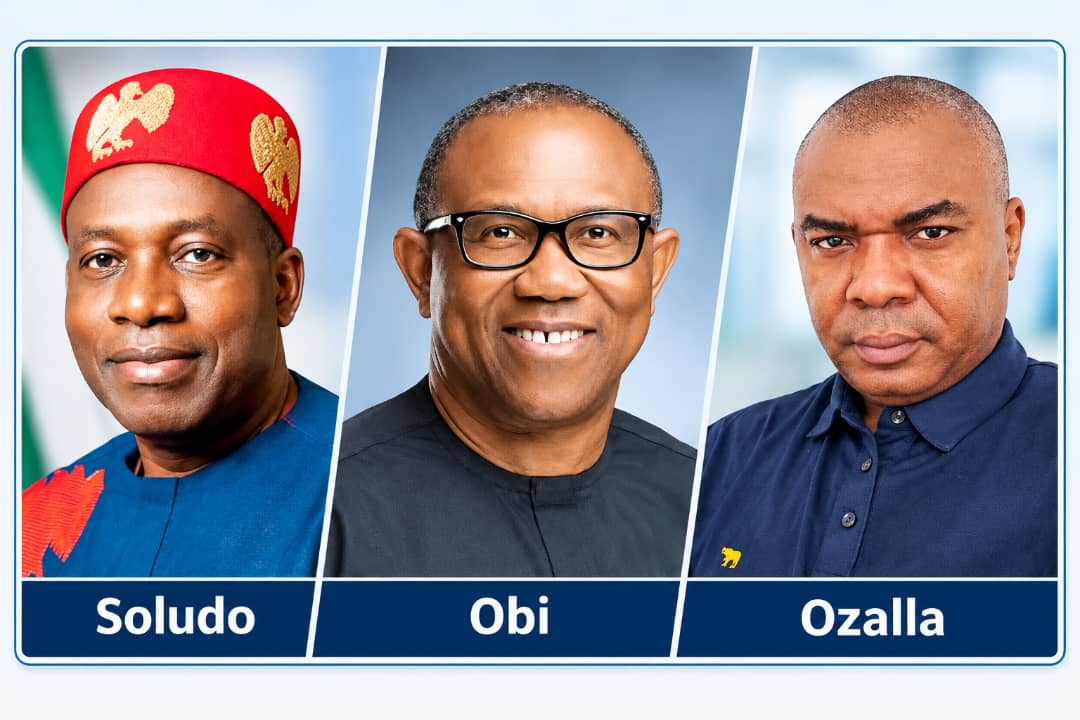
The figures being presented in the controversy over loans associated with former Anambra State Governor Peter Obi, who is now the presidential candidate of the National Democratic Congress (NDC), need to be separated into what was approved or contracted, what was actually drawn down, what was utilised, what was repaid and what remained outstanding.
With an accounting background and more than a decade of experience in the banking sector, particularly in development banking, I understand that an approved loan facility is not necessarily the same as money actually received by a borrower. This distinction is important in examining the figures released by the Anambra State Government.
In a statement issued by Commissioner for Information and Value Reformation, Law Mefor, the state government listed eight external financing facilities associated with projects undertaken during the Obi administration. The facilities had a combined contracted value of $123,771,179.30, or about $123.77 million. The government said the outstanding balance as of June 30, 2026 was $92,353,182, equivalent to about N127.37 billion at the exchange rate used in its statement.
The facilities cover projects in malaria control, agriculture, healthcare, education, community development, erosion management and agricultural value-chain development. They include the Malaria Control Booster Project, Third National Fadama Development Project, Health System Development Project II, Malaria Control Booster Project Additional Financing, State Education Programme Investment Project, Community and Social Development Project, Nigeria Erosion and Watershed Management Project and Value Chain Development Project.
The contracted value, however, does not establish how much money was actually received during Obi’s tenure or how much had been repaid before he left office on March 17, 2014.
A loan facility represents the amount made available under an agreement. Disbursement may take place in stages and can depend on project implementation, procurement, documentation and other conditions.
For example, if a $50 million facility is approved but only $30 million is released during an administration, the drawdown during that administration is $30 million, not $50 million. The full $50 million remains the contracted facility, but the two figures cannot be treated as the same.
This distinction became important during Mefor’s appearance on Arise News on September 18, 2026. Asked how much of the facilities was actually drawn down during Obi’s tenure, Mefor said he did not have the precise figures and that the figures needed to be reconciled with the Debt Management Office (DMO).
During the interview, presenter Rufai Oseni referred to a DMO figure indicating that about $30 million had been drawn from one of the larger facilities during Obi’s administration. Mefor said he had not independently verified the figure and would seek confirmation from the DMO.
That leaves an important question: how much of the $123.77 million contracted value was actually disbursed during Obi’s tenure?
The answer should come from the loan agreements, DMO records, disbursement schedules and relevant financial records. Each facility should be examined separately, showing the contracted amount, actual drawdown, date of disbursement, project for which the money was released, repayments and outstanding balance.
The Federal Government guarantees attached to the facilities also need to be properly understood. Mefor said eight of the facilities were federally guaranteed but stressed that the guarantees did not turn them into grants or remove Anambra’s repayment obligation. The state’s position is that Anambra remains responsible for servicing the liabilities.
That obligation is separate from the question of which administration drew down the money.
If an administration contracted a $50 million facility and drew $30 million before leaving office, while a succeeding administration drew the remaining $20 million, the facility would still be recorded as a $50 million facility. But it would not be correct to say that the first administration received the entire $50 million.
The same principle applies to the $92.35 million reported as outstanding as of June 30, 2026. That figure represents the balance reported at that date, not necessarily the amount left by Obi when he left office in March 2014.
Between March 2014 and June 2026, Anambra had the administrations of Willie Obiano and Chukwuma Soludo. Loan repayments, additional disbursements and other financial adjustments could have occurred during those periods. Mefor has also said deductions from Anambra’s Federation Account Allocation Committee (FAAC) revenue are still being made to service loans associated with the Obi administration.
For that reason, the repayment history has to be traced through the individual facilities. The records should show when repayment commenced, how much was repaid during each administration and what balance remained when one administration handed over to another.
There is also a numerical point that needs to be put in context. The difference between the $123.77 million contracted value and the $92.35 million outstanding balance is approximately $31.42 million, or about 25.39 per cent of the original contracted value.
That $31.42 million should not be described as the amount repaid by any particular administration. It is simply the difference between the aggregate contracted amount and the balance reported as outstanding in June 2026. The actual repayment figure requires the disbursement and repayment records, together with applicable charges, exchange-rate effects and other adjustments on the individual facilities.
There is also a separate question concerning utilisation.
The existence of a loan facility or an outstanding debt does not by itself establish that the money was misused. If misuse is alleged, the relevant evidence would have to come from project records, financial statements, payment documents, audit findings and other records showing how the funds were applied.
The controversy has therefore raised different questions which should not be mixed together: how much was contracted, how much was actually drawn, how much was repaid and how much remains outstanding. The question of how the money was used requires separate evidence.
The Finance Commissioner, given responsibility for the state’s financial records and debt-servicing position, should be able to provide or obtain the necessary reconciliation. The Information Commissioner and Value Reformation, before using the loan figures to make the government’s case publicly, should also have had access to the reconciled drawdown figures.
The public deserves to know how much was contracted, how much was actually drawn, when the money was released, what projects received it, how much was repaid under each administration and what balance remained at each handover.
If these facts are not properly established before accusations are made, the attempt to expose another person can end up exposing the weaknesses in the case being presented. Remember, there is a saying that the higher a monkey climbs the flagpole, the more it exposes its backside.
By Chukwudi George Ozalla
newscount.com.ng