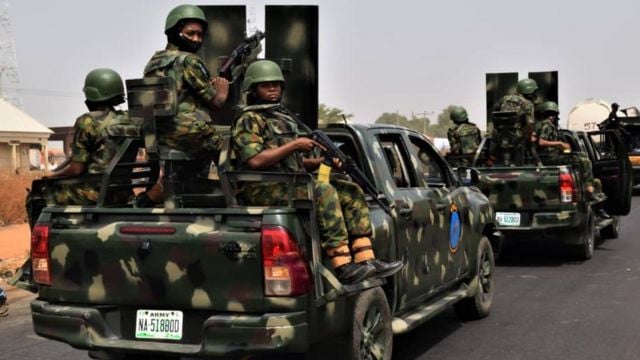
Nigeria’s war against terror suffers from two dangerous enemies.
One is the terrorist in the bush.
The other is propaganda in the city.
The first kills with bullets.
The second kills with deception.
When reports recently emerged that ISIS Deputy Commander Abu-Bilal al-Minuki had been eliminated in a joint Nigerian-American military operation in the Lake Chad Basin, many Nigerians celebrated cautiously, not because they doubted the danger of the man, but because they had heard the same story before.
The same al-Minuki had reportedly been declared dead by Nigerian authorities years earlier.
That contradiction has now produced one of the most troubling questions in Nigeria’s counterterrorism history:
Was al-Minuki killed twice and dead once?
The question is bigger than one terrorist commander.
It is about credibility.
It is about truth.
It is about the dangerous culture of propaganda-grounded insecurity management in Nigeria.
For years, Nigerians have repeatedly been fed triumphant headlines:
“Terror kingpin eliminated.”
“Insurgents neutralized.”
“Terror enclave destroyed.”
“Insurgency technically defeated.”
Yet villages continue to burn.
Military formations continue to come under attack.
Farmers continue to be slaughtered.
Citizens continue to flee ancestral communities.
Entire regions continue to live under fear.
This is the tragedy of insecurity managed more for media consumption than national resolution.
What transformed the al-Minuki contradiction from a local embarrassment into an international credibility crisis was not merely the operation itself, but who announced it.
When Donald Trump publicly celebrated the elimination of Abu-Bilal al-Minuki in a recent counterterrorism operation, the announcement unintentionally reopened a dangerous national wound.
The world immediately began comparing records, dates, operational details, and previous military announcements.
And suddenly the contradiction became impossible to hide.
The Nigerian military had earlier announced the elimination of al-Minuki in February 2024, identifying him as a major ISIS-linked commander operating around the Lake Chad axis.
Now, another announcement surfaced in 2026.
Same name.
Same terror hierarchy.
Same operational significance.
Killed twice.
Dead once.
What should ordinarily have strengthened confidence in Nigeria’s counterterrorism efforts instead exposed a deeper crisis within official security communications.
Because terrorism is not fought only on battlefields.
It is also fought in the realm of public trust.
And credibility is the oxygen of counterterrorism.
Once citizens stop believing official security information, the state begins losing psychological control of the conflict narrative.
That is the real danger now confronting Nigeria.
The disturbing part is that al-Minuki was not an innocent man unfairly targeted by global powers, as some sympathizers subtly attempt to suggest.
He was reportedly one of the most senior ISIS-linked operatives active within the West African terror network.
Security reports linked him to operational coordination, recruitment activities, logistics, weapons movement, territorial attacks, and strategic expansion of ISIS influence within the Lake Chad region.
The blood of innocent Nigerians was on his hands.
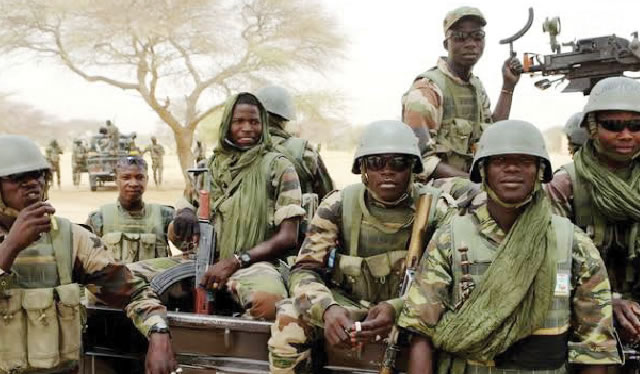
Since the emergence of Boko Haram and ISWAP, Nigeria has witnessed one of the bloodiest insurgencies in Africa’s modern history.
Thousands have died.
Millions have been displaced.
Communities have been erased.
Women have been abducted.
Children have become orphans.
Churches and mosques alike have been bombed.
Schools have repeatedly come under attack.
Entire generations across Northern Nigeria have grown up under the psychology of fear.
ISWAP itself evolved into one of the deadliest terror franchises globally after splintering from Boko Haram and aligning with ISIS ideology and operational doctrine.
Its attacks have included:
mass killings of farmers,
ambushes on military formations,
attacks on humanitarian workers,
destruction of villages,
taxation of rural populations,
abductions,
executions,
and coordinated assaults across Nigeria, Niger, Chad, and Cameroon.
This was the machinery al-Minuki reportedly helped coordinate.
Which is why recent attempts by controversial cleric Ahmad Gumi to redirect moral outrage toward Donald Trump rather than toward terrorism itself raise difficult ethical questions.
The issue is not whether America acts from strategic interests. Nations always do.
The real issue is this:
Whose hands truly carry the blood of innocent Nigerians?
The soldier defending vulnerable communities?
Or the terrorist commander coordinating attacks from fortified enclaves?
If moral arguments must be made, then moral honesty demands that attention first be directed toward the thousands murdered across Northern Nigeria by terrorists and violent extremists.
The blood on the soil of Southern Kaduna, Plateau, Benue, Borno, Yobe, Adamawa, and other vulnerable regions cannot be politically edited away.
And this is where the second symbolic blow against Nigeria’s insecurity narrative emerged.
The international circulation of Pastor Ezekiel Dachomo’s emotionally disturbing graveside footage reopened global attention on the human cost of insecurity in Nigeria.
The imagery was powerful not because it settled every political argument surrounding insecurity, but because it exposed the painful reality behind the statistics.
Mass graves speak a language numbers cannot fully communicate.
They reveal pain beyond political press statements.
Regardless of competing political interpretations, one uncomfortable truth remains undeniable:
Thousands of Nigerians — Christians and Muslims alike — have died under the shadow of terrorism, banditry, sectarian violence, and state weakness.
That reality cannot be erased through lobbying contracts, international public relations campaigns, media management, or carefully scripted diplomatic messaging.
The dead remain evidence.
This is why the al-Minuki contradiction matters beyond one military operation.
It exposes a deeper national disease: the recycling of victories for propaganda value while insecurity persists structurally.
Modern terrorism survives not only through weapons but through narratives.
Governments attempt to project victory.
Terrorists attempt to project invincibility.
But when governments exaggerate battlefield success, they unintentionally strengthen terrorist propaganda.
Every recycled victory weakens public confidence.
Every contradictory announcement deepens citizen skepticism.
Every inflated battlefield success creates distrust.
And distrust itself becomes a national security threat.
Because once citizens begin doubting official truth, conspiracy theories flourish, fear spreads faster, and extremist narratives gain psychological advantage.
That is where Nigeria dangerously stands today.
The country is now battling:
terrorism,
institutional distrust,
intelligence failures,
political image management,
and information manipulation simultaneously.
This is the insincerity of insecurity.
A situation where optics increasingly compete with operational reality.
A situation where the management of perception appears almost as important as the defeat of terror itself.
But insecurity cannot be permanently defeated through propaganda.
No nation wins a war against terror by recycling headlines while citizens bury their dead daily.
The killing of al-Minuki may indeed represent a major operational success.
But one successful operation cannot substitute for strategic honesty.
Nigeria must now answer difficult questions:
Why does terror recruitment continue?
Why are military gains repeatedly reversed?
Why do vulnerable communities remain exposed?
Why do intelligence failures persist?
Why does insecurity remain economically and politically profitable to some interests?
And why does the nation repeatedly appear more committed to controlling narratives than confronting structural causes?
Until these questions are answered sincerely, insecurity will continue to oscillate between battlefield reality and propaganda performance.
And Nigerians will continue to witness the strange national theatre where terrorists are repeatedly declared dead — yet terror itself never truly dies.
Because terrorism is dangerous.
But propaganda-grounded counterterrorism is even more dangerous.
For while bullets kill bodies, false victories kill truth.
And when truth dies, nations begin losing wars long before they lose territory.
By Citizen Bolaji O. Akinyemi