Nigerian politicians are very notorious for making promises that, from the outset, they had no intention of ever keeping, so it is not merely that those promises “evaporate” after elections—they were never meant to be kept in the first place. Against this troubling backdrop, the acts of sustained generosity by Senator Aliyu Magatakarda Wamakko, a former governor of Sokoto State and current senator representing Sokoto North, stands out, not as an “electoral” gesture but as enduring statement of his character.
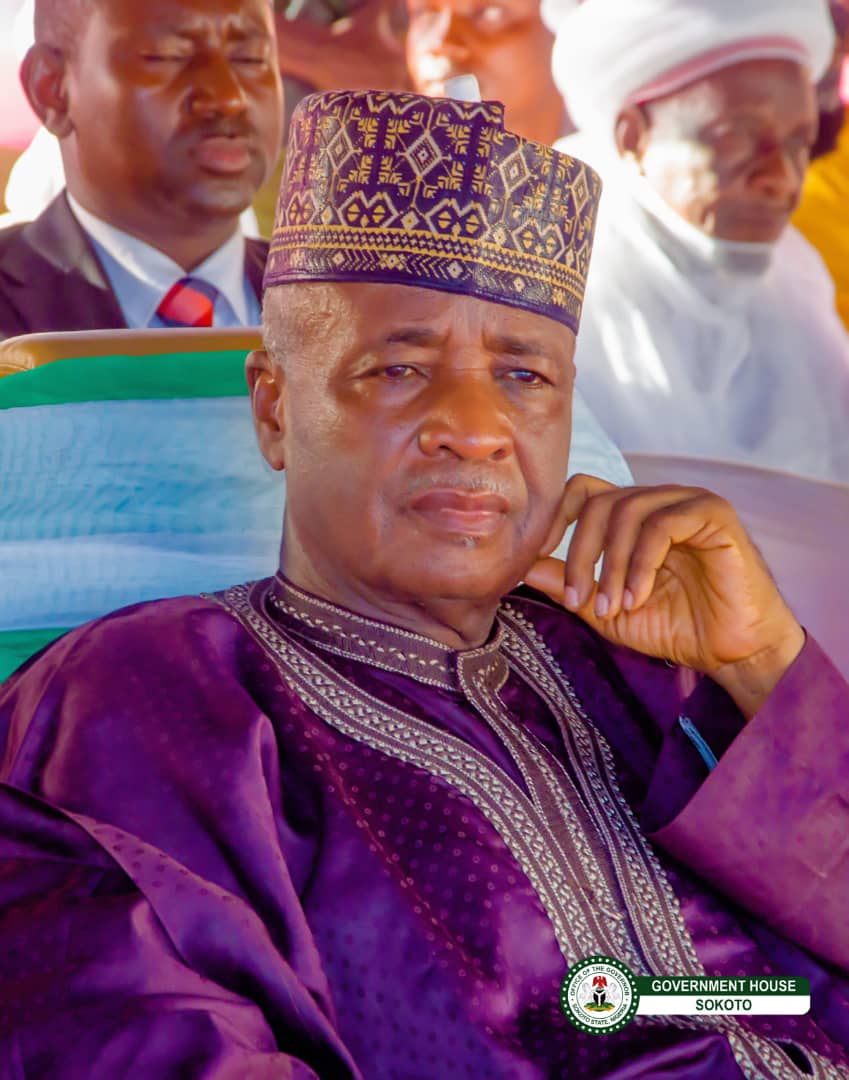
Over the years, his philanthropy has evolved into a defining feature of his life, setting him apart in an environment where consistency is in short supply. His name, especially his pet name “Alu” has become synonymous with giving—not as a seasonal benefactor whose generosity conveniently aligns with election cycles, but as someone whose giving points to a deeper, more abiding commitment to a better, and more compassionate society.
What further distinguishes Wamakko is not just that he gives—it is that he gives for virtually every cause and that he responds to needs as they arise within the communities, shaping his interventions around what people actually ask for rather than imposing predetermined solutions. In doing so, he has cultivated a reputation as a benefactor whose philanthropy resonates with the ordinary people.
Last week, Wamakko’s philanthropic train rolled into Gwadabawa in Sokoto East Senatorial District, an area currently represented by Senator Ibrahim Lamido, who recently announced his resignation from the All Progressives Congress (APC) through a post on X (formerly Twitter). He cited “persistent insecurity” and the “welfare of his constituents” as his reasons. To the uninitiated, such claims might sound like the grievances of a principled politician taking a stand. However, to observers familiar with the senator’s underwhelming trajectory in the Red Chamber—and his repeated but unsuccessful attempts to factionalize the party—his resignation is the final throw of the dice by a political adventurer who ran out of options and wisely chose to bail out.
It is important to emphasize that Wamakko’s philanthropic outreach to the district is neither new nor a calculated attempt to reclaim any lost political ground from Lamido, who, politically speaking is an orphan. Sections of the media that have tried to frame Wamakko’s efforts as an “overt confrontation or rivalry” miss the broader context. What is being witnessed is consistent with Wamakko’s long-standing pattern of engagement—doing what he has always done over the years. A more careful review of the 2023 election results would make this clear and dispel any notion of a reactive political strategy.
It is also a well documented fact that Senator Ibrahim, who now claims to be the champion of the “problems” the “good people of Sokoto East,” could not secure a majority in his own polling unit, ward, or even his local government area during the 2023 elections. His victory owed less to personal political strength and more to the formidable machinery of the APC, driven by Senator Aliyu Magatakarda Wamakko and reinforced by the strategic direction of Governor Ahmed Aliyu.
Furthermore, without the backing of Alhaji Isa Sadiq Achida, the former APC State Chairman who introduced him to the towering “Iroko” of Sokoto politics, Senator Wamakko, Lamido would neither have clinched the party’s ticket nor secured election. More troubling is his record as an absentee representative. By most accounts, he remains a political outsider with tenuous roots among the people he represents.
The scale of Wamakko’s intervention—reflect his enduring view of the entire Sokoto State as his constituency as a former governor and as the State Leader. The distribution of 200 motorcycles, 400 sewing machines, and over 4,000 assorted food items stands out as a transformative effort. For many of the beneficiaries, a motorcycle is more than just a vehicle; it is a pathway to economic activity through commercial transportation or means of movement. The sewing machines would enable the women to acquire practical skills and pursue self-reliance, while the food items have provided immediate relief to households struggling under the current economic pressures.
While there is definitely no inherent political undertone in Aliyu Wamakko’s outreach to Sokoto East, it would be naïve to assume that such a far-reaching intervention would not translate into political capital for him and political consequences for Senator Lamido. The unprecedented scale of giving witnessed in Gwadabawa, will naturally generate goodwill, reinforce public trust, and deepen emotional connection between him and the people. In a political environment where representation is often measured by tangible impact, these gestures would solidify political loyalty.
Wamakko, does not need to be overtly political to reap political dividends. By consistently being accessible, responsive, and investing in the everyday struggles of the people, he continues to strengthen a bond that transcends party lines or electoral cycles. For beneficiaries, the immediate relief and empowerment derived from such interventions cannot be easily forgotten; and would inform future political choices. It’s a reservoir of goodwill that can be drawn upon when it matters most.And when the time comes, whether in shaping party dynamics or influencing electoral outcomes, that accumulated goodwill will translate into significant political capital.
The distribution ceremony in Gwadabawa further underscores the organized nature of his outreach. By involving party officials, traditional rulers, youth leaders, and other stakeholders, Wamakko ensures that his interventions are not only effective but also inclusive. This collaborative approach strengthens party structures while simultaneously addressing grassroots needs—a dual objective that many politicians aspire to but only a few achieve with such consistency.
Beyond Gwadabawa, education in particular, has remained one of the central pillars of Wamakko’s outreach. In a region where access to quality education can determine the trajectory of entire families, he has consistently stepped in to support students pursuing academic advancement. His recent visit to Sokoto State students studying in Pakistan is emblematic of this enduring commitment. It was more than a routine engagement; it reaffirmed his belief that human capital development remains one of the most effective tools for upward mobility and development.
By investing in young minds abroad, he is, in effect, nurturing a future cadre of professionals who will one day return to contribute meaningfully to the growth and development of the state. In furtherance of his commitment to education, he established the North-West University, in Sokoto, underscoring his belief that education remains the bedrock of development. It’s important to stress that despite the heights he has attained in life, Wamakko has not forgotten his roots as a trained teacher; a background that continues to shape his priorities and interventions.
Wamakko’s philanthropy also addresses immediate needs. His philanthropy is not confined to long-term investments alone. It also addresses immediate, pressing needs with a responsiveness that has become almost instinctive. Across Sokoto State, families facing food insecurity have found relief through his steady distribution of foodstuffs. His Gawon Nama residence is the a the last port of call for those uncertain of where their next meal will come from- the constant stream of the needy reflects this fact. These interventions are not one-off gestures but part of a sustained pattern responding to harsh economic realities. In a context of insecurity, inflation, and unemployment, such acts can mean the difference between despair and survival.
Perhaps even more striking is Wamakko’s willingness to intervene in situations that many others would overlook. He has also paid fines for indigent inmates for over a decade, securing their release through the Aliyu Magatakarda Wamakko Free Legal Services Foundation. This initiative, targeting those jailed for minor offenses or inability to pay fines, has freed hundreds. Beyond paying fines, he often provides support for reintegration, restoring dignity and offering a second chance.
Similarly, his payment of dowries for young men seeking to marry reflects an understanding of the economic realities. In many Northern communities, marriage is both a personal milestone and a societal expectation. By stepping in to ease this burden, Wamakko is not just helping the individuals; he is reinforcing social cohesion.
The construction of mosques, including the recently completed Tambuwal Jummah Mosque, which former governor Aminu Tambuwal couldn’t build reflects his responsiveness to community requests. This is project that serves both spiritual and social functions. In building them, he contributes to the preservation of cultural and religious identity while also fostering a sense of unity among residents.
Critics may argue that philanthropy cannot replace systemic governance reforms. They are not entirely wrong. Sustainable development requires institutions and long-term planning. However, where state capacity is limited, individual acts of generosity can fill critical gaps. Wamakko’s efforts complement governance by addressing immediate challenges while broader solutions are pursued.
Wamakko’s consistency sets him apart. While many politicians retreat after elections, Wamakko has maintained a steady presence in people’s lives through education, healthcare, economic empowerment, or social support. Across sectors, his actions reflect long-term commitment rather than short-term strategy.
There is also an element of personal philosophy at play. Giving, in Wamakko’s case, appears to be less about obligation and more about his nature. It is something he does not because he has to, but because it aligns with his philosophy. This distinction matters. When philanthropy is rooted in genuine conviction, it tends to be more sustainable and impactful.
The ripple effects of his generosity are already visible. Empowered individuals have been known to contribute to local economies, support their families, and inspire others within their communities. Over time, these incremental changes will accumulate into broader societal transformation. It is a reminder that development is not always driven by grand, sweeping initiatives; sometimes, it is the aggregation of countless small acts of support that makes the difference.
As Nigeria continues to grapple with complex socio-economic challenges, the example set by Senator Aliyu Wamakko offers valuable lessons. It highlights the importance of staying connected to the grassroots, of listening to communities, and of translating resources into meaningful impact.
Ultimately, Aliyu Magatakarda Wamakko’s story is about what becomes possible when a leaders is guided by a genuine commitment to service. His philanthropy shows that sustained giving can be a powerful force for change.
And by all indications, Wamakko has no intention of stopping.
By Emmanuel Ado