“Power without purpose is the shortest road to failure-”Anonymous
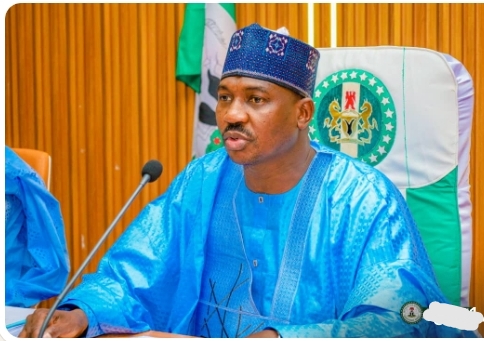
Whenever Governor Ahmed Aliyu of Sokoto State speaks about leadership, people pay attention, not because the political office that he occupies has automatically conferred wisdom on him, but because, unlike many who rise to power without adequate preparation and struggle once entrusted with authority, he has demonstrated an amazing clarity of purpose and a dedicated commitment to public service. He speaks of leadership as service and as sacrifice. He has consistently reflected this belief through his selflessness, integrity, and wholehearted commitment to improving the lives of ordinary people—the true measures of leadership.
In governing Sokoto State, the late Sir Ahmadu Bello, Premier of the Northern Region and Sardauna of Sokoto, and Senator Aliyu Wamakko are, no doubt, Governor Aliyu’s guiding light, a moral compass in the difficult and often treacherous task of governance.
Governor Ahmed Aliyu’s preoccupation with the question of leadership stems from the unfortunate situation in which the North finds itself and from his modest but thoughtful reflections on the way forward. His concern is rooted in a sincere desire to confront the prevailing challenges and to offer a vision of leadership anchored in dedicated service.
It is against this backdrop that Governor Aliyu’s consistent invocation of Sir Ahmadu Bello’s legacy is significant. In commemorating the remembrance of the late Premier of the Northern Region, assassinated on 15 January 1966, Governor Aliyu did more than pay the usual homage to the man who single handedly built the Northern Region into what it became before sadly becoming a shadow of itself. His challenge to contemporary leaders, particularly those from the North, is to emulate the sterling leadership qualities of the late Sarduna that was responsible for the development of the region – from education to banking.
Governor Aliyu description of the Sardauna as a leader defined by simplicity, discipline, integrity, honesty, dedication, commitment, and, above all, the fear of God is true. The Sardauna, for instance, was widely known for his discipline and deep respect for institutions—qualities that are regrettably lacking in many states today. In several cases, deputy governors have been reduced to mere “foto,” decorative figures with little influence, while State Houses of Assembly are treated as “irritants” to be endured rather than as essential partners in governance. The same dismissive attitude is often extended to the political parties that brought them to power. While many leaders speak eloquently about values they fail to embody, it is heartening that Governor Aliyu has internalized the very qualities of the late Sardauna that he is urging his fellow leaders to emulate.
Perhaps most instructive is Governor Aliyu’s emphasis on the Sardauna’s detribalized and selfless approach to leadership. Sir Ahmadu Bello made immense sacrifices in building a united and forward-looking North, he deliberately carried people along irrespective of tribe, religion, or geographical location. This inclusiveness was not accidental; it was a carefully thought-out political philosophy anchored in the belief of a shared destiny and collective progress. In contemporary Nigeria, where identity politics too often overshadows the national interest, this lesson is crucial. Governor Aliyu’s administration is once again setting an example through its abolition of the non-indigene policy. By paying West African Examinations Council and National Examinations Council fees for all students, regardless of their state of origin, the administration has translated inclusive ideals of Nationhood into concrete policy action.
Governor Aliyu’s assertion that today’s leaders have so much to learn from the late Sardauna is not an exercise in nostalgia; it is a pointed critique of the present realities. The North is today confronted with profound challenges—ranging from insecurity and widespread poverty to educational deficits, youth unemployment, and declining agricultural productivity. These problems can only be addressed through action and not rhetoric, a tendency that has come to characterize many northern forums. The present challenges demand purposeful action and leaders that are prepared to adapt, and implement economic, and social reforms capable of delivering tangible results.
Sir Ahmadu Bello’s legacy offers concrete and instructive examples of purposeful leadership. As powerful leader of the Northern People’s Congress (NPC), he built a political platform that, despite its imperfections, deliberately prioritized regional cohesion, institutional strength, and economic development. His role in securing Nigeria’s independence in 1960 was defined by negotiation, restraint, and strategic compromise rather than confrontation. Even more significant were his tireless efforts to foster unity among the North’s diverse ethnic and religious communities, efforts that prevented the region from fracturing under the weight of its own complexity. Today, by contrast, the North appears diminished in virtually every sphere of life—a troubling shadow of its former promise.
It is a tragedy that the Sardauna’s investment in education—arguably one of his most enduring legacies—is now in a state of deep crisis. The statistics, from primary school enrollment figures to the number of out-of-school children, are alarming. This stands in stark contrast to the Sardauna’s era, when Western education was viewed with suspicion in parts of the North, yet he courageously championed its adoption without abandoning its cultural and religious values.
The establishment of Ahmadu Bello University, Zaria, remains a monumental investment in human capital and a testament to his foresight. In this regard, Governor Aliyu’s administration is clearly drawing from that legacy, having continuously allocated more than 25 percent of the state’s budget to education since 2023—well above the UNESCO benchmark. This commitment reinforces a fundamental truth about leadership and the fact that development is impossible without education.
Economically, the Sardauna also understood the vital importance of economic self-reliance. Through institutions such as the Bank of the North and the Northern Nigeria Development Corporation (NNDC), he laid a financial and industrial foundation that empowered the region. Agriculture was treated not as a subsistence activity, but as a key engine of growth. Farmers were supported, markets were expanded, and productivity was actively encouraged.
These policies leveraged the North’s comparative advantage, which transformed it. Following in the footsteps of the Sardauna, Governor Aliyu has similarly prioritized agriculture, by making substantial investments – modernizing farming practices, supporting farmers with inputs, and strengthening agricultural value chains—demonstrating a clear understanding that the state’s economic development must be rooted in its land and its people.
Governor Aliyu’s call for leaders to embrace a tested and effective model of leadership is both pragmatic and timely. As the saying goes, one does not need to reinvent the wheel. The North’s vast agricultural potential remains largely untapped, even as food insecurity intensifies and rural poverty deepens. Reviving agriculture, however, is about far more than simply increasing output; it is about restoring dignity to rural communities, creating meaningful employment opportunities for restless youth, and stabilizing the broader economy.
Governor Aliyu must count himself fortunate to possess a profound sense of introspection, a quality that explains the impact of his leadership. This capacity for self-reflection is often what separates leaders who leave indelible marks on the sands of time from those whose tenure is quickly forgotten. It is why figures like the late Sardauna continue to be revered decades after their passing, while others have passed through public office as mere footnotes. The difference lies not in the length of time spent in power, but in the conviction, vision, and depth of commitment to a cause greater than oneself—qualities that define leadership.
Leadership without conviction inevitably produces tragic results, just as authority without vision leads to stagnation. This has been the persistent tragedy of Nigeria’s political experience: too many leaders assume office unprepared for the office they sought, or simply lack what is often described as “fire in the belly”—the drive to make a real difference in the lives of the people. Ask the residents of Mabera Community, who endured decades of devastating flooding, and they will tell you that Governor Aliyu embodies the spirit of the late Sardauna—a leader who not only recognizes problems but takes decisive action to solve them.
The remembrance of Sir Ahmadu Bello, sixty years after his assassination, serves not only to honor his memory but also as a sobering reminder of the heavy price Nigeria paid for the loss of principled civilian leadership. The events of 15 January 1966 did more than claim lives; they abruptly ended Nigeria’s First Republic, ushered in prolonged military rule, and left ripple effects that continue to weaken institutions and disrupt the political system to this day. To remember the late Sardauna, therefore, is more than an act of commemoration—it is an invitation to reflect on the possibilities that were lost, what could have been, and the enduring lessons his vision offers the nation.
Ultimately, the fundamental leadership question confronting Nigeria today is whether the current leaders are prepared to make the necessary sacrifices? Governor Aliyu’s consistent reference to the late Sardauna signals a deep awareness that true leadership is, at its core, about the people.
In a country long hungry for clear direction, the conversation sparked by Governor Aliyu is one that deserves to be sustained and deepened. The challenge he presents to his peers is both simple and profound: to emulate the exemplary leadership qualities of the late Premier of the Northern Region, Sir Ahmadu Bello—the Sardauna of Sokoto—in order to foster meaningful, inclusive, and sustainable development across the region. By investing in education, revitalizing agriculture, promoting inclusivity, and modeling principled leadership, he demonstrates that governance rooted in service can yield tangible results. Only by doing so can leaders hope to leave a lasting legacy and be remembered by future generations.

By Emmanuel Ado