In a period when Nigeria continues to navigate the storms of insecurity and economic challenges, the question of trust between the government and the governed is no doubt a burning issue that will remain on the front burner of discourse.
Across the country, citizens struggle with disillusionment due to unmet political promises that, in the first place, had no plans of being kept — mere rituals to win elections. Against this backdrop, Governor Ahmed Aliyu of Sokoto State has presented an emerging governance model that consciously places public trust at the heart of governance. His approach has shown that when people trust their leader, development follows naturally.
There is no doubt that former Governor Aminu Tambuwal completely destroyed the trust of the people of the state in the capacity of government to deliver services.
When Governor Aliyu assumed office, Sokoto State was grappling with fatigue. The citizens had lost confidence in the ability of government to protect them or deliver essential services that mattered to them — water scarcity, bad roads, unemployment, etc. Ahmed Aliyu came to power not as a populist promising miracles, but as a methodical and compassionate leader out to restore credibility to governance; otherwise, there would have been anarchy — the idea of government itself. His approach, while still evolving, has been deliberate, consistent, and rooted in engagement with the people — through meeting more than their basic needs.
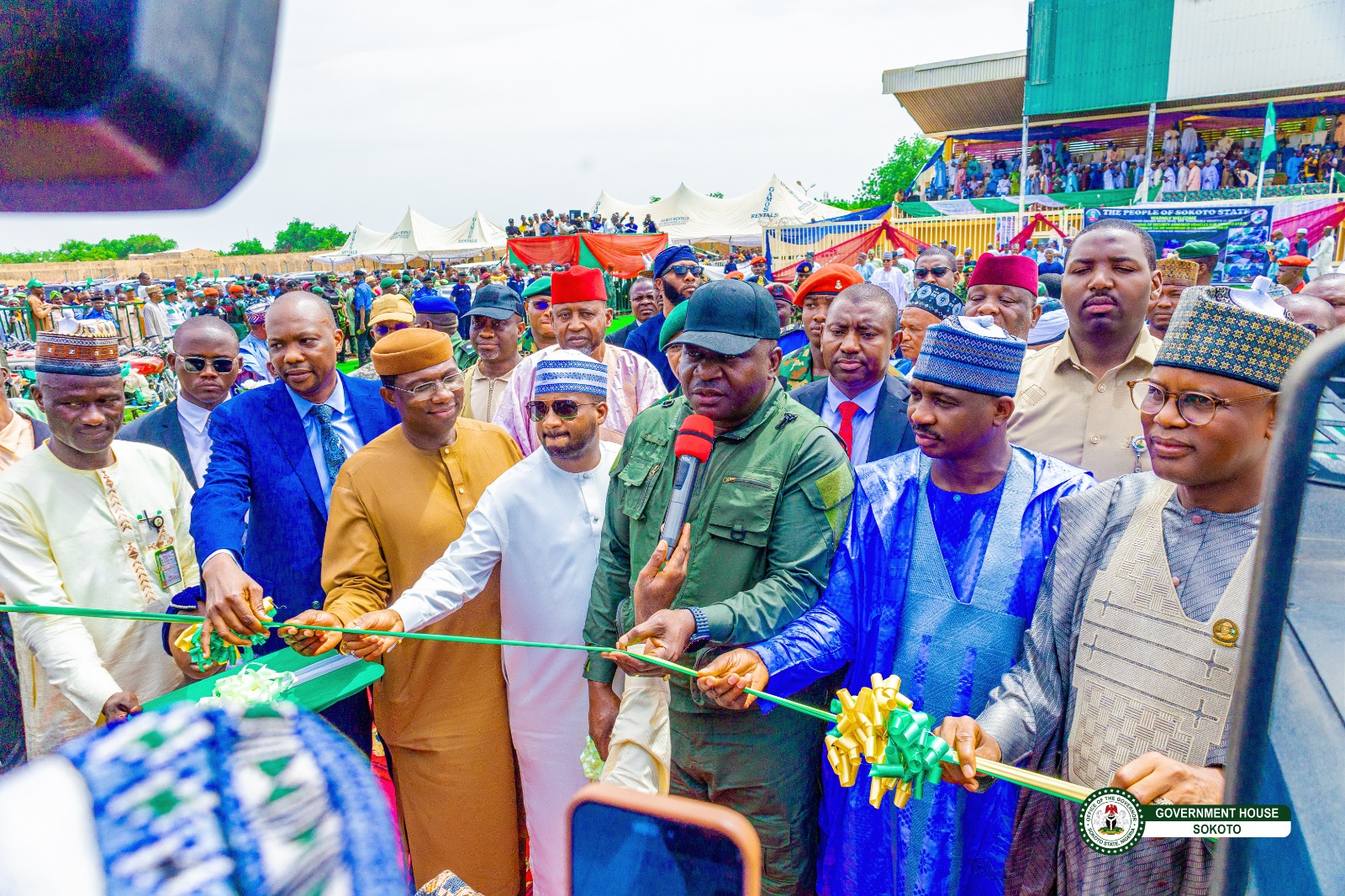
Security is the first line of responsibility of any government; even then, some have failed to meet their responsibilities to their people. Thus, it’s worth celebrating Governor Aliyu for making it a critical priority in his Nine-Point Smart Agenda, which identifies citizen protection and peacebuilding as foundational pillars. From the outset, his administration moved to strengthen collaboration between security agencies and communities by creating and equipping the Sokoto State Community Guard Corps. This initiative brought security closer to the people, allowing for local intelligence gathering — an early warning mechanism — and improved coordination with the conventional forces. Patrol vehicles, motorcycles, and surveillance tools have continuously been donated to the federal government security agencies so as to enhance their response capabilities.
But what distinguishes the Governor Aliyu model is its human dimension. He recognises that force alone cannot end insecurity; that a durable solution must also address the grievances and vulnerabilities that sustain conflict. The administration has shown its willingness to embrace negotiation and rehabilitation programmes for repentant bandits who demonstrate genuine willingness to surrender. By balancing firmness with compassion, Sokoto State is demonstrating that it is willing to engage while also providing logistical support for the security forces.
This two-pronged approach to tackling security challenges — combining humanitarian support with intensified security operations — has begun to yield tangible results. Reports of violent incidents in previously volatile communities have drastically reduced. Farmers are gradually returning to their farms, markets are reopening, and people are regaining the confidence to travel freely. The success is not just reflected in the statistics but in the renewed optimism of ordinary Sokoto citizens who now feel safer and more protected. In addition, the government recently donated hundreds of millions to victims of terrorist attacks, providing immediate relief and helping affected families rebuild their livelihoods.
In Sokoto State, governance cannot be understood outside the context of faith. As one of the most deeply religious states in Nigeria, religion shapes social values, guides personal conduct, and influences community cohesion. Ahmed Aliyu has not shied away from this fact. Instead, he has harnessed it as a vehicle for peace, moral rejuvenation, and social development.
Under his leadership, the government has revitalised Islamic education through the construction and renovation of Islamiyyah schools across the state. For the governor, moral instruction is not a luxury; it is a foundation for responsible citizenship. The administration has also introduced a structured welfare system for religious leaders, providing monthly stipends for imams, their deputies, and mu’azzins, along with grants for mosque maintenance. The renovation and commissioning of Jumu’at mosques across the local government areas go beyond improved physical infrastructure, as water boreholes at the mosques equally serve the people, just as the solar power lights improve the security of the various communities where they are located and also the state’s respect for spiritual life.
Religious institutions have also become partners in social welfare. During Ramadan, the state created feeding centres, distributed food and cash to vulnerable citizens, and provided support to scholars and community leaders. These acts go beyond piety; they represent a philosophy of governance with compassion at its heart. By embedding welfare within the religious rhythm of the people, Governor Aliyu has blurred the line between the spiritual and the civic, showing that both can work together for the stability of society.
Another defining feature of the Ahmed Aliyu governance model is its inclusivity — ensuring that every citizen, regardless of age, gender, or location, feels a stake in governance. In many other states, attention stops at the urban centres, leaving rural communities and youths behind. Sokoto State, under Aliyu, has reversed that. Through comprehensive youth and women empowerment programmes, the administration has trained thousands in trades such as tailoring, soap-making, and food processing, while introducing digital and technical training schemes for the youth. Beneficiaries receive subsidised equipment, motorcycles, tricycles, sewing machines, and start-up kits to help them transition from dependence to productivity.
The Sokoto State Government, as a matter of deliberate policy, patronizes local artisans, particularly those engaged in leather works. Their finely crafted products are often purchased and presented as official gifts to visiting dignitaries and guests of the state. This initiative not only promotes the rich cultural heritage of Sokoto’s renowned leather industry but also provides sustainable economic empowerment for the artisans.
Thousands of young people have also been trained in digital skills and online communication, including responsible social media use and content creation aimed at promoting civic responsibility. By engaging youths as both beneficiaries and narrators of development, the administration is rebranding governance as something relatable — a partner in progress and not a distant entity.
Governor Aliyu’s insistence on equitable distribution of projects across the 23 local government areas reinforces this inclusiveness. Whether in education, infrastructure, or healthcare, no community is deemed too remote to receive attention. The state’s 2024 audited financial report reflects the deliberate spread of resources and that no single area has monopolized government presence. Complementing this is the inauguration of the Sokoto State Economic Advisory Council, a platform for seasoned professionals and community representatives to offer policy guidance. This participatory ethos underscores one clear message: governance is everyone’s business.
The thread running through all these policies is basically tied to trust, which Governor Aliyu has earned and not demanded. In the Ahmed Aliyu model, trust is built through accountability, inclusion, and service delivery. It is visible in the government’s responsiveness to community concerns — the Mabera community, for example, where the governor has addressed the issue of flooding that made life difficult for the residents. It’s also the willingness to admit challenges and the effort to deliver results equitably.
By integrating moral leadership with practical governance, Governor Aliyu has emphasized the idea that leadership is a moral covenant and not a political transaction. His public appeals for peace, his humility in interacting with traditional and religious figures, and his measured tone in public communication have helped restore the moral authority of government in the eyes of the people.
Of course, challenges remain. The broader Nigerian landscape continues to exert pressure on state systems: economic hardship, inflation, communal tensions, and the fluid dynamics of insecurity in neighbouring states are all tests to Sokoto’s resilience. Sustaining the gains achieved demands more hard work and resource management. The test of a credible government lies not only in the number of projects executed but in how sustainably they are maintained. Roads must be serviced; teachers must be continuously retrained, etc.
The governor’s challenge, therefore, is to institutionalise this trust-building approach so that it outlives his tenure. Institutions, not individuals, must become the custodians of transparency and inclusivity.
Still, what Sokoto State is demonstrating under Ahmed Aliyu is that public trust can itself be a form of policy that fuels peace and productivity. In a nation where cynicism toward leadership has become almost cultural, the quiet progress in Sokoto State offers a refreshing counter-narrative. The state’s recent moves — from restructuring community security to strengthening fiscal discipline and fostering interfaith harmony — indicate that the governor understands what development is.
Ahmed Aliyu’s approach is purposeful. It rests on the conviction that people who trust their government will defend it, cooperate with it, and help sustain it. In Sokoto State today, public trust is not a byproduct of governance — it is the policy itself. If this momentum endures, Sokoto State may well become a model for other Nigerian states seeking to reconcile faith with pluralism, peace with justice, and governance with genuine compassion.
By Usman Garba Abubakar