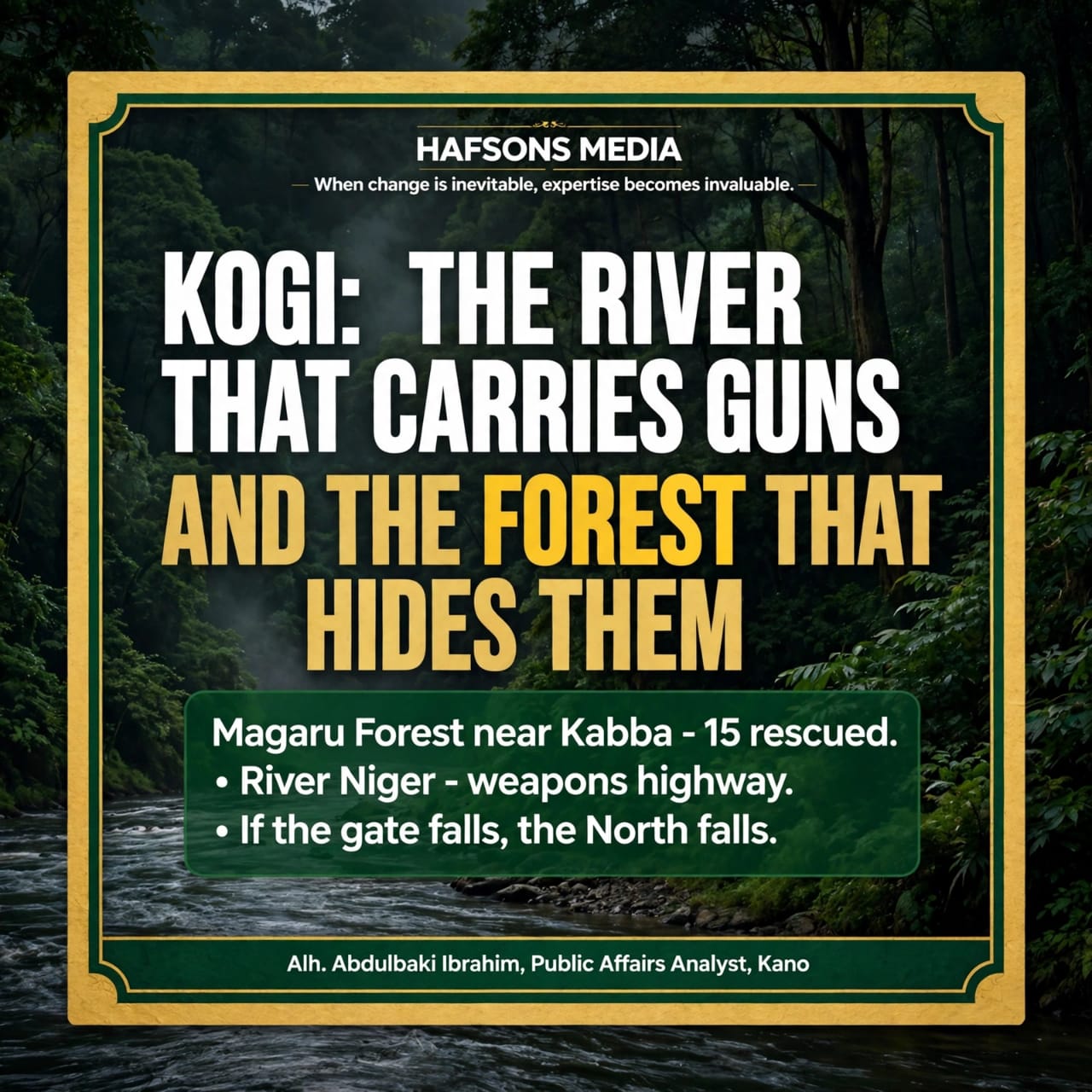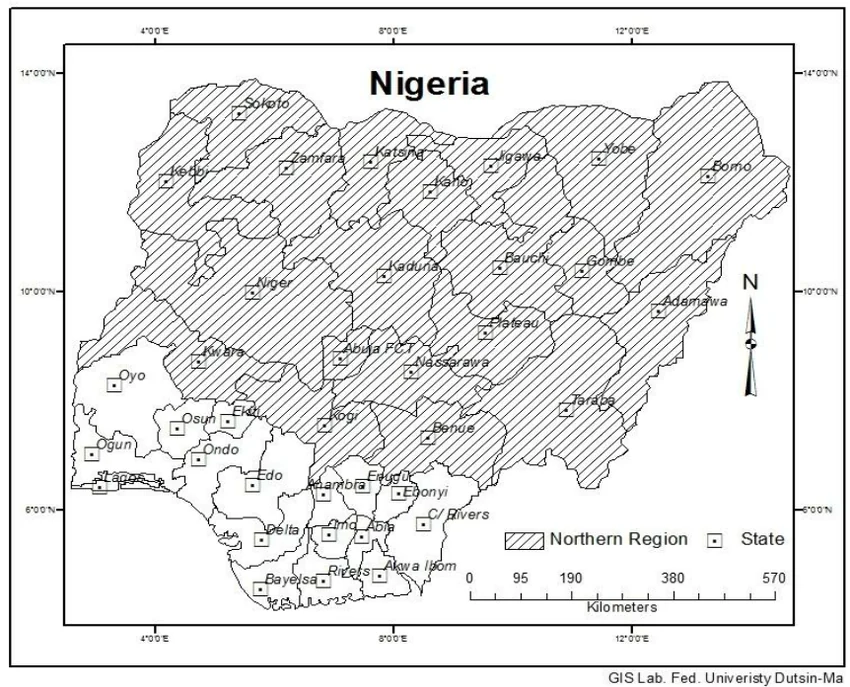
Everyone calls Kogi the Confluence State. Where River Niger meets River Benue in Lokoja. But today, Kogi is not just confluence. Kogi is a route. Kogi is a gate.
And the gate is under attack — from the river and from the forest.
- The river — the highway without checkpoints
There is a river in Kogi that does not sleep.
At night, when the road is quiet and the checkpoint men are dozing, the river wakes up. A small boat moves without light. No number. No name. No question asked.
Inside a bag that looks like fish, there is a gun.
That is how it started in Atsawa, Lokoja. A man was arrested, moving weapons from Muye Jetty in Niger State to Budon Jetty, through River Niger.
But Atsawa is not the story. Atsawa is only one bus-stop on a long journey.
The real story is a lifeline:
Baro — Muye — Lokoja — Onitsha River Port
From Baro in the North West, down through Kogi, down to Onitsha in the South East. One river. One road without roadblocks. One lifeline for the propagation of insecurity in that whole sub-region.
Think about it.
On the road, there is a checkpoint. On the river, there is no checkpoint.
A boat moves at night, no light, no registration, no search.
Who controls the jetties? Who searches the boats? Who knows what is inside a bag that looks like fish, but is a gun?
If we do not patrol the river from Baro to Onitsha, we are only patrolling half of Nigeria.
The river route is not a Kogi problem alone. From Niger to Kogi to Lokoja, then to the South. If a boat can pass Lokoja without search, it can pass anywhere.
- The forest that hides them
And then, there is Magaru.
Fifteen people were rescued from Magaru Forest near Kabba. Fifteen human beings, kept like goods in a warehouse.
Magaru is not just a forest. Magaru is a warehouse for kidnapped people. People are kept there, families pay, some return, some do not return.
The Kabba, Lokoja, Okene axis is one long forest that joins Kogi to Kwara and to Niger. Criminals move from state to state inside the forest, while security waits on the road.
The forest does not know state boundaries. Our security still knows them.
This is the second half of Kogi. The river brings the guns. The forest hides the men who use the guns. River and forest work together. Our response must also work together, or we will keep chasing shadows.
If we clear the river and leave the forest, the men will return. If we clear the forest and leave the river, the guns will return. We must do both at the same time.
- Who benefits?
Let us be honest with ourselves.
The rogues do not work alone.
Somebody provides the boat. Somebody provides the fuel. Somebody warns them when patrol is coming. Somebody buys the gun. Somebody sells it.
This is the question that must open up a clear interrogation with the concerned authorities.
Who benefits from an open river? Who benefits from a thick forest? Who benefits when Kogi is insecure?
Until we interrogate the support system, arresting one trafficker in Atsawa will not stop the lifeline. Tomorrow, another boat will move. Tomorrow, another bag that looks like fish will carry another gun.
- The politics of fear
In Kogi, there is a word that office holders fear more than insecurity itself. That word is ‘destruction.’
Because whoever holds government holds the river contracts, the forest contracts, the road contracts. To lose office is to lose everything.
So they fear ‘destruction’ more than they fear the gun in the river and the kidnapper in the forest. Insecurity can be managed with a press statement. Losing office cannot.
That fear is why reports are delayed, why patrols are postponed, why the river is left open and the forest is left thick. And that fear is part of the problem.
- The people who see everything
But the people see.
The fisherman in Baro sees the boat at night. The fisherman in Lokoja sees it too. The farmer in Kabba sees movement in Magaru. The market woman hears about forced levies.
They give information. They have always given information. But it is not followed up seriously. Like in Nasarawa / Benue corridor. Like in Akala Forest in Obi.
The people of Kogi are not blind. They are not heard.
If we listen to a fisherman in Lokoja, we will know more than a briefing in Abuja. If we listen to a hunter in Kabba, we will know Magaru better than any drone.
The people are not blind. It is the system that is deaf.
- What must change
The truth is simple, if we have the courage to do it:
Patrol the full river, Baro to Onitsha, not only Lokoja. Every jetty must register. Every boat, every load, every night movement must be known.
Enter the forest with local guides. The hunters in Kabba know Magaru better than any drone.
Do a joint operation — Kogi, Niger, Kwara, Anambra. Criminals do not respect state boundaries. Security must not respect them either.
Interrogate the support system. Not just the carrier, but the sponsor, the supplier, the protector.
Protect the gate. If Kogi river is secured, Niger, Kwara, FCT and the South East are also secured. If Kogi falls, the North falls, and the South East will feel it. If Kogi falls, Abuja will feel it first.
Kogi is not a small state. Kogi is the gate. If the gate falls, the North falls. If the gate stands, the North stands.
By Abdulbaki Ibrahim,
Public Affairs Analyst, Kano