Nigeria loses critical development resources running into billions of dollars to illicit Financial Flows every year.
Studies show that over 60% of global illicit Financial Flows,IFFs come from commercial and tax-related activities, not just corruption.
While corruption accounts for 15 percent of IFFs, criminal activity is responsible for 20 percent and commercial activity accounts for 65 percent.
These were the revelations at a one-day Stakeholders Engagement On Illicit Financial Flows organised by Segun Awosanya and Co in collaboration with the Nigeria Revenue Service in Abuja on Tuesday.
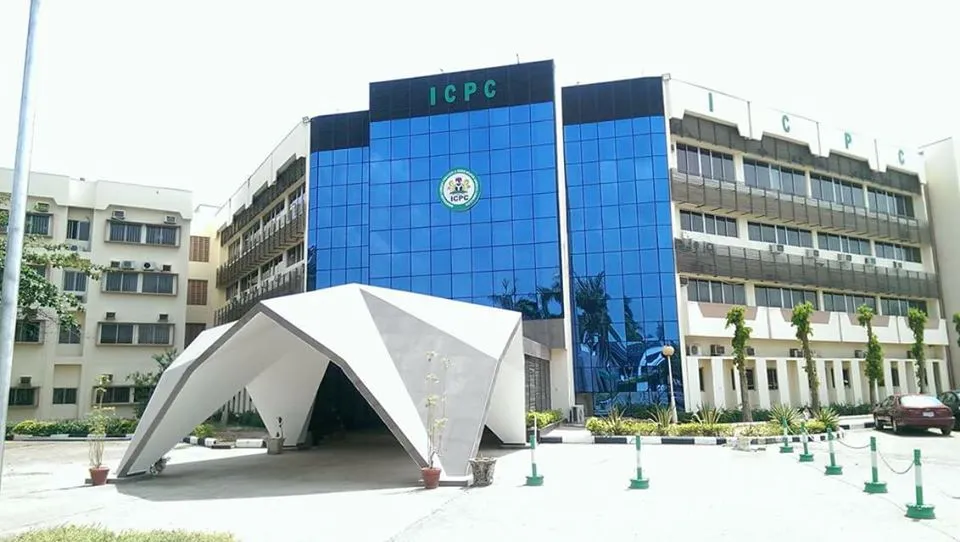
Former Director of Investigation, Independent Corrupt Practices Cand Other Related Offences Commission In Nigeria, ICPC, Adedayo Kayode highlighted that developing countries lose hundreds of billions of dollars annually to IFFs, with Africa alone estimated to lose more than it receives in foreign aid each year.
In two papers at the event ’Understanding IFFs -Global Trends and Nigeria Context’ and IFFs-Risks and Compliance Startegy Kayode looked at the global trends, the Nigerian context, the impacts of IFFs and efforts at mitigating it .
Kayode highlighted underdevelopment, poverty, poor public infrastructure, unemployment and insecurity as the impacts of IFFs because money that should benefit a country is illegally hidden, disguised or moved out of the country. .
He identified those who perpetuate IFFs as business people, including multinational companies, Politically Exposed Persons in public employment, criminal groups primarily motivated by the proceeds of crime, and those using crime to fund social or political agenda including terrorism.
The former ICPC Director pointed out reasons why Nigeria was particularly vulnerable to include heavy dependence on oil revenues, large informal sector, weak data integration, gaps in enforcement and prosecution and complex international financial structures beyond local oversight.
The commercial activities through which perpetrators perpetuate IFFs include trade misinvoicing, profit shifting by multinational companies, aggressive tax avoidance using tax havens and drug trafficking.
Others identified by Kayode include: Human trafficking, arms trade, cybercrime and fraud, terrorism financing, bribery and kickbacks, embezzlement of public funds and abuse of office by public officials.
He identified the economic implications for Nigeria to include reduced government revenue, Increased borrowing and debt, Underfunded education, health, and infrastructure
While its impact on Governance is that it weakens public trust,fuels inequality, encourages corruption and impunity, and developmentally it slows poverty reduction, limits job creation, and undermines national planning.
Kayode however pointed out that recent policy actions by government such as collaboration with global bodies (FATF, OECD, UN), beneficial ownership register,transfer pricing regulations, and Nigeria Tax Act 2025 have boosted the fight against IFFs.
He concluded by arguing that tackling IFFs requires: Strong laws, Data sharing, International cooperation, Political will and enforcement and public support as everyone is required to fight the menace.
Meanwhile, the Head of Anti Money Laundering and Counter Tracing Financing,Nigeria Revenue Service, Idris Muhammed Abdullahi in his opening address and policy remarks stated that “A nation does not necessarily become poor because it lacks wealth; but sometimes, becomes poor because it cannot adequately protect the wealth it already possesses.”
Abdullahi noted “Nigeria is endowed with enormous natural resources, a vibrant entrepreneurial population, considerable human capital and an economy with tremendous potential”
He however stated that alongside these opportunities, ‘we continue to confront the persistent challenges of revenue leakages, trade misinvoicing, tax evasion, aggressive profit shifting, beneficial ownership concealment, corruption, illicit asset transfers and the movement of criminal proceeds across national borders.”
Abdullahi said these are not merely financial irregularities, but economic injuries inflicted on the collective aspirations of our people.
The NRS Head of Anti Money Laundering posited “Every naira that is unlawfully diverted from the public treasury, every taxable profit artificially relocated beyond our jurisdiction, every barrel of crude oil or mineral exported without appropriate declaration, and every commercial transaction manipulated to conceal the true value of wealth represents resources that could otherwise finance roads, hospitals, schools, electricity, security and opportunities for millions of Nigerians.”
Abdullahi argued that illicit financial flows are not confined to the activities of one agency, one industry or one category of economic actors, pointing out that they exploit institutional weaknesses, regulatory gaps, information asymmetries and the absence of effective coordination across the entire economic system.