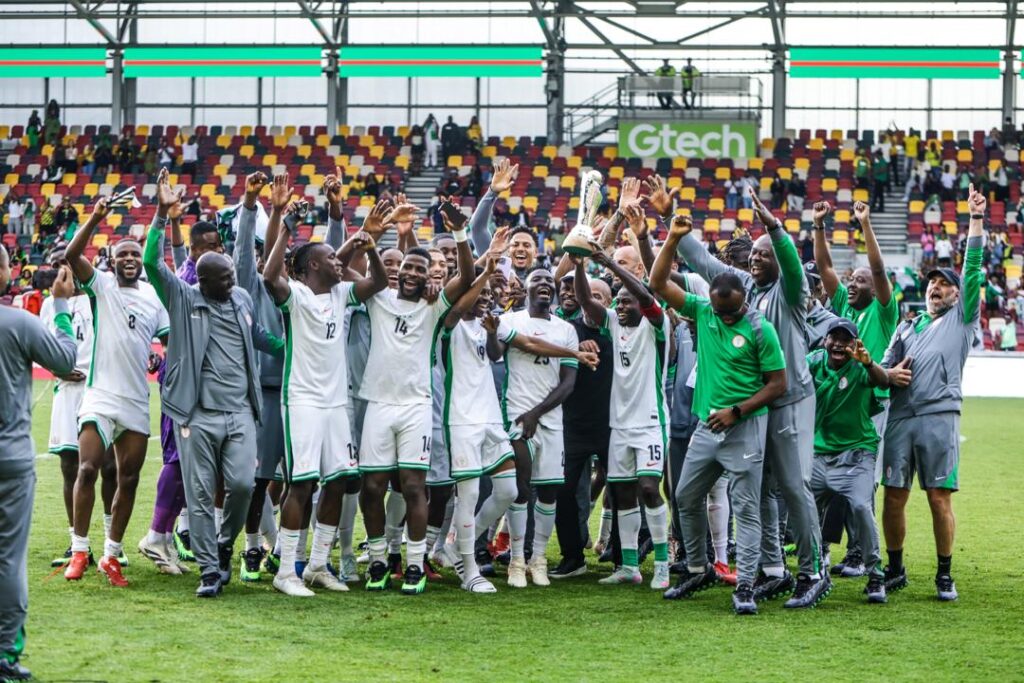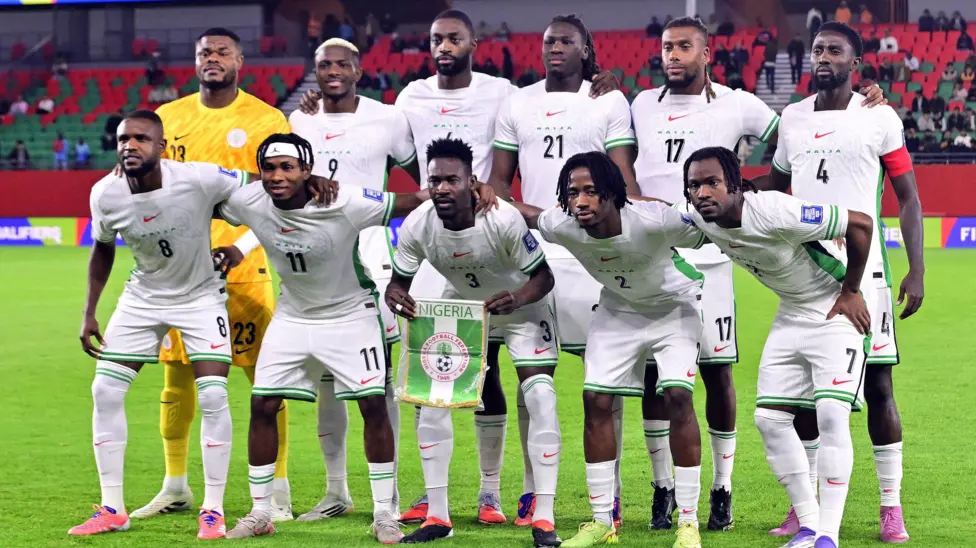
Nigerians can still be part of World Cup in 2026, though not the one to be staged in United States of America, Mexico and Canada, even as football fans continue to bemoan the failure of the Super Eagles to qualify for global football showpiece.
Nigeria has never failed to qualify for the World Cup back-to-back since the country made its debut at the 1994 World Cup incidentally in the United States of America, until the Amaju Pinnick and Ibrahim Gusau boards combined set this unenviable record.
However there seems to be a silver lining in the sky as Russia is proposing an alternative World Cup for countries that failed to qualify for the main World Cup in Mexico, Canada and United States of America, next year.
The Nigeria Football Federation (NFF) on June 6 arranged an international friendly game with Russia which ended in 1-1 draw.
The proposal still unofficial has quickly become one of the most debated football developments of the week.
A Parallel Tournament for Non-Qualifiers
According to emerging reports, Russia is considering staging a summer competition in 2026 involving national teams that failed to secure spots at the World Cup to be jointly hosted by the United States, Mexico, and Canada.
The event would feature countries from different confederations who endured disappointing qualifying campaigns.
Although no confirmed list has been released, media discussions have floated names such as Serbia, Greece, Italy, Chile, Peru, Venezuela, Nigeria, Cameroon, Benin Republic, and China footballing nations with pedigree but without tickets to North America.
In concept, the event would be a global gathering of strong yet absent teams, offering an alternative spectacle for fans.
Why Russia Is Pushing the Initiative
For Russia, the proposed tournament carries significance far beyond sport. Since 2022, Russian teams have been suspended from FIFA and UEFA competitions, leaving the country searching for avenues to maintain international relevance.
Analysts identify several motivations behind the proposal:
Restoring international visibility: With the national team sidelined, hosting an international event would keep Russia connected to the global football landscape.
Maintaining competitive activity: Without World Cup qualifiers, the Nations League, or European tournaments, Russia is seeking ways to sustain high-level competition.
Political signaling: Some observers argue the move could be a subtle challenge to FIFA, displaying Russia’s ability to attract teams and organize large-scale events outside the official system.
Re-engaging supporters: A summer tournament featuring well-known national teams would boost fan interest at home.
An Ambitious Idea With Significant Challenges
Despite the widespread fascination, the project remains speculative and fraught with obstacles.
Lack of official confirmation: Russian authorities have issued mixed signals, offering neither a formal announcement nor full details.
Legitimacy concerns: Any matches would fall outside FIFA’s jurisdiction, raising questions about player availability and federation involvement.
Uncertain participation: Countries may hesitate to join a politically sensitive event that coincides with the official World Cup.
Scheduling conflicts: June and July 2026 are dominated by the main World Cup, meaning broadcasters, sponsors, and clubs may prioritize the official tournament.
Why the Proposal Captured Global Attention
Despite its uncertain status, the idea quickly went viral. Three factors largely explain the rapid spread:
Striking timing: A competition positioned alongside the World Cup is inherently newsworthy.
Novelty appeal: Football fans are increasingly drawn to experimental formats, from new leagues to expanded tournaments.
Russia’s sporting isolation: Any attempt by Moscow to build parallel structures to FIFA triggers international curiosity.
Is the Tournament Feasible?
While a full-scale alternative World Cup seems unlikely due to political and logistical constraints, analysts suggest a smaller invitational tournament or friendly cup is more plausible. Russia’s extensive infrastructure from previous major events including the 2018 World Cup remains intact.
Regardless of whether the idea materializes, the discussion underscores a pivotal moment in global football. Political tensions, expanded competitions, and shifting alliances are reshaping the sport’s future.
If Russia succeeds in rallying several nations, fans could witness something unprecedented: a gathering of proud football teams with something to prove, competing outside FIFA’s spotlight part curiosity, part political statement, and part football experiment.